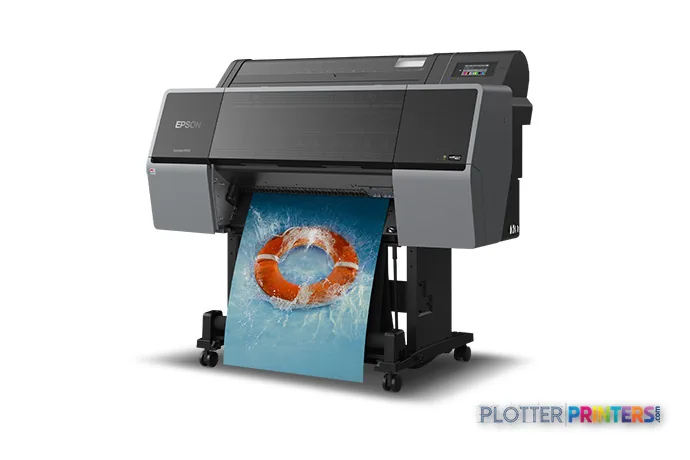
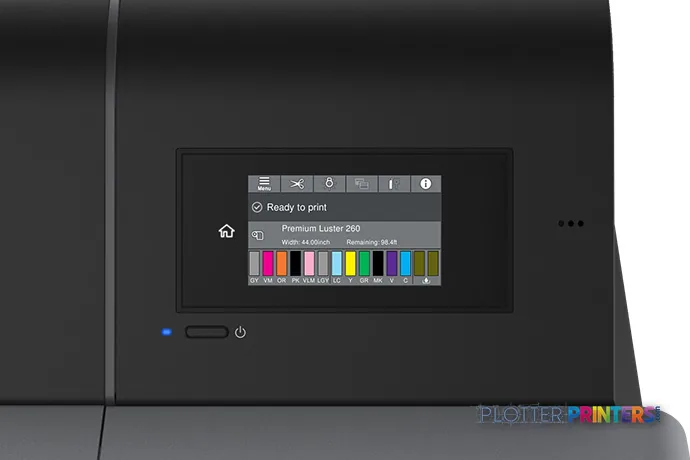
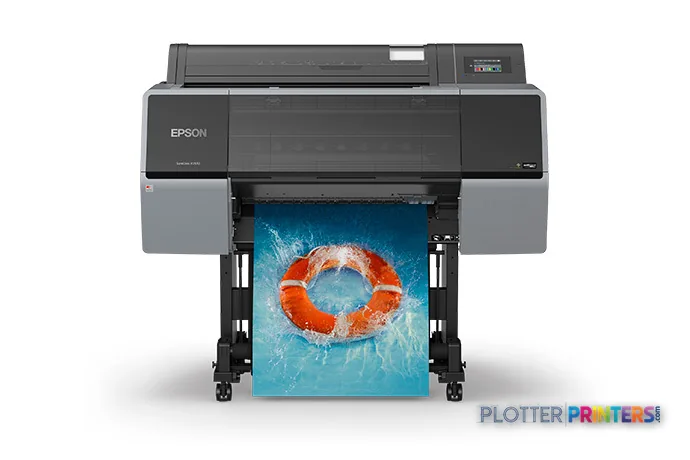
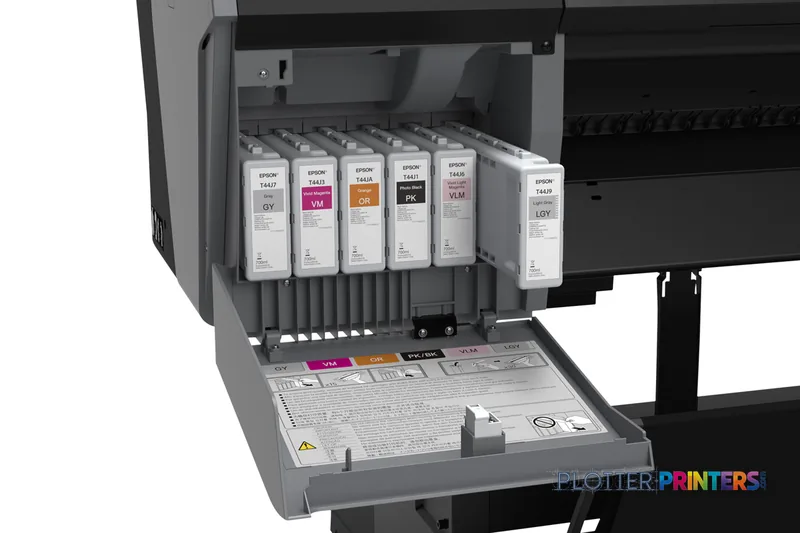
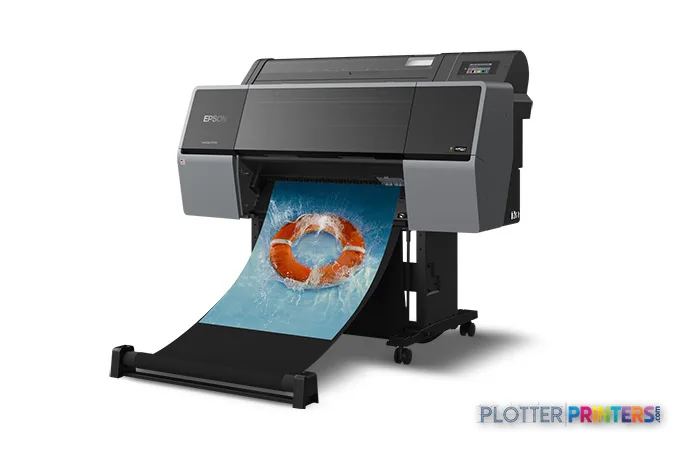
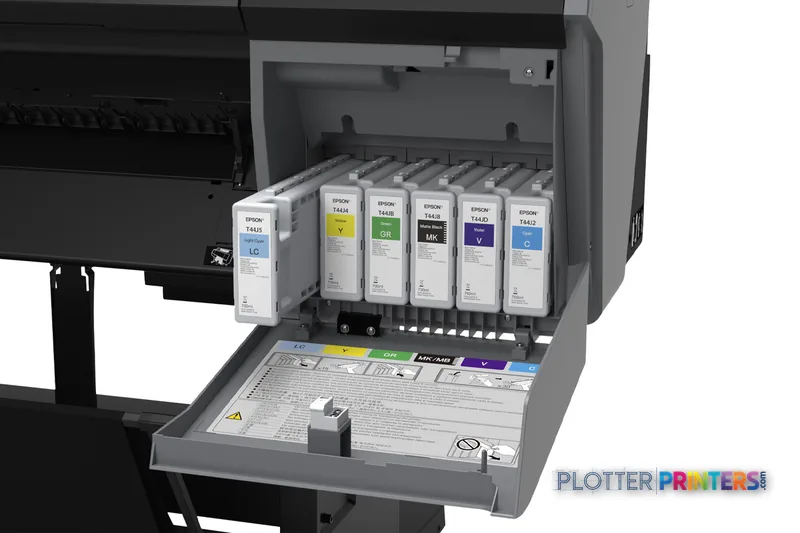
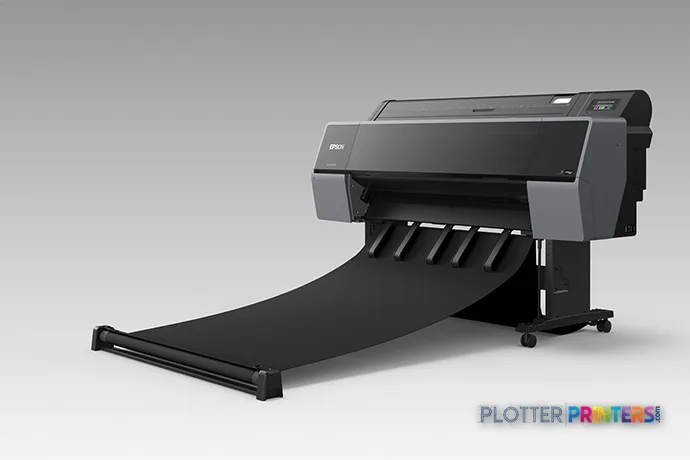
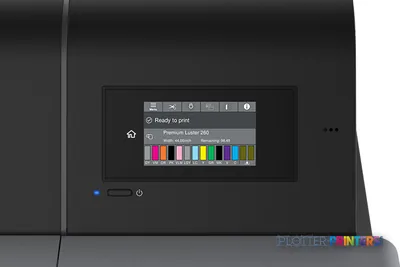
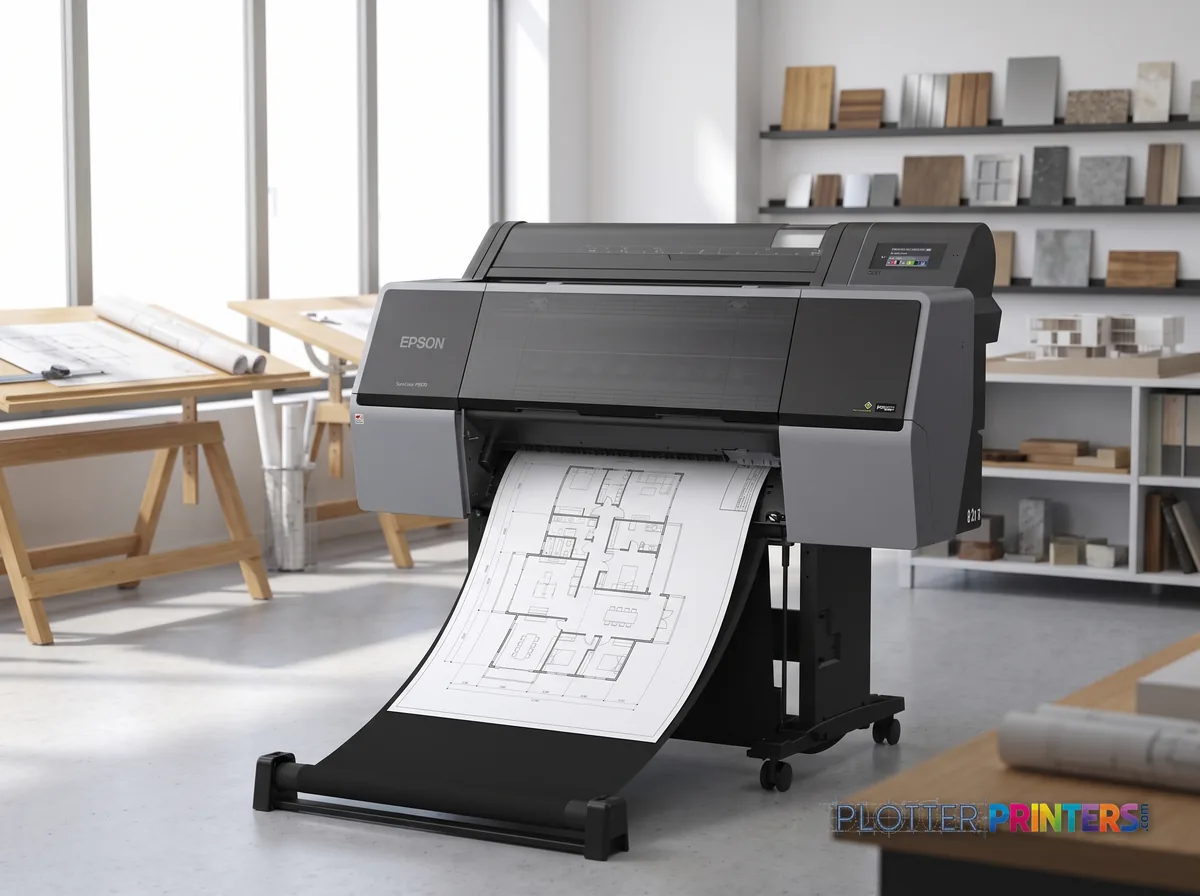
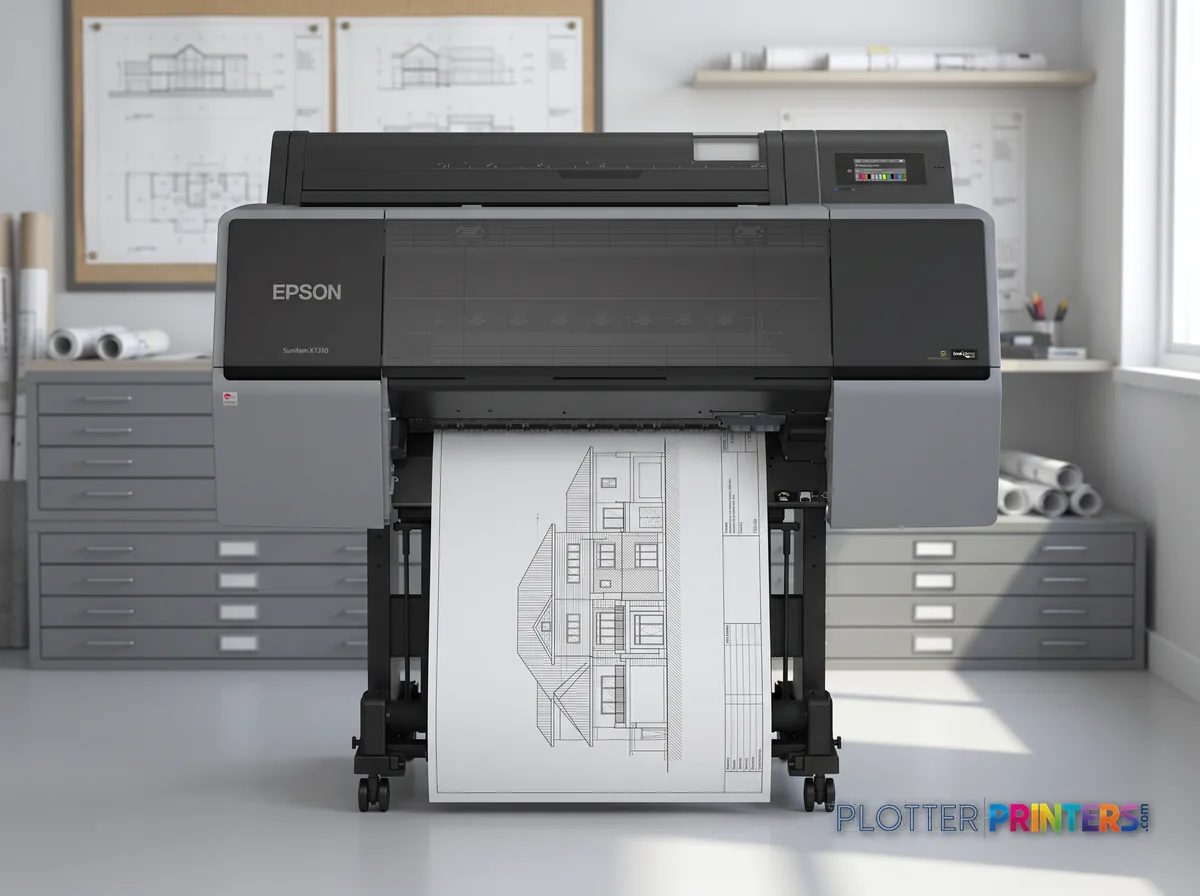
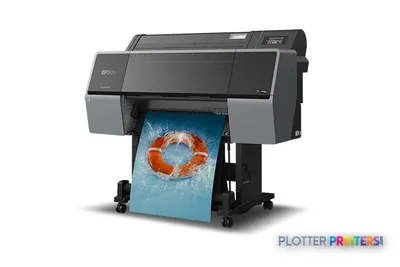
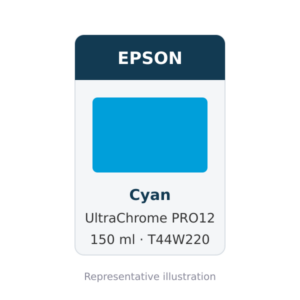
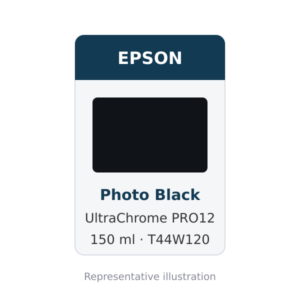
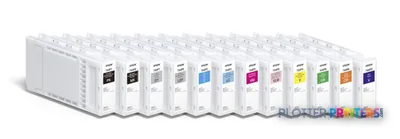
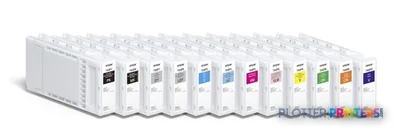
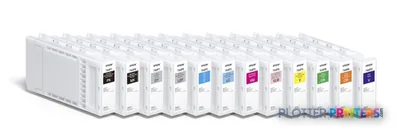
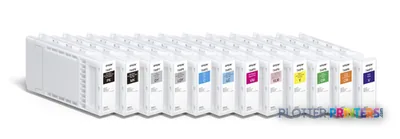
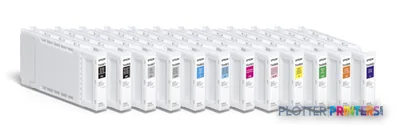
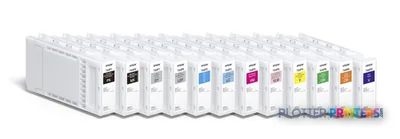
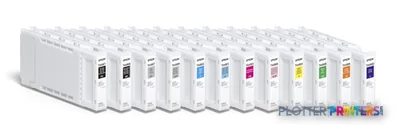
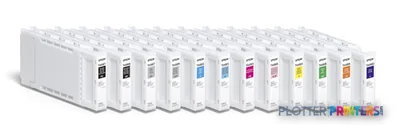
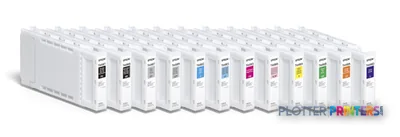
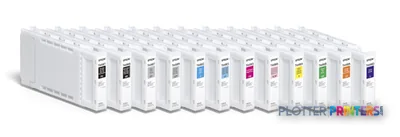
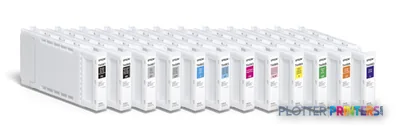
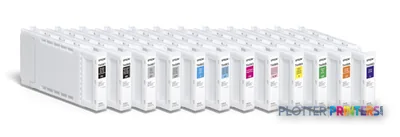
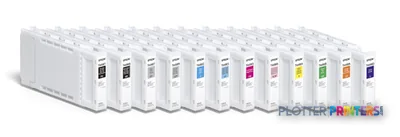
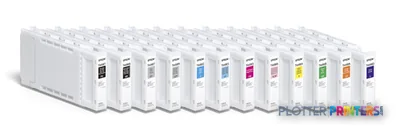
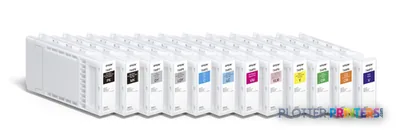
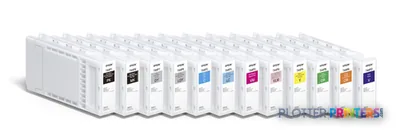
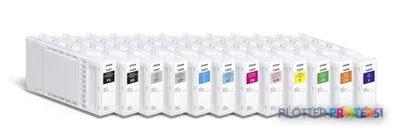
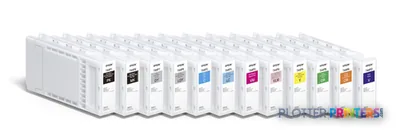
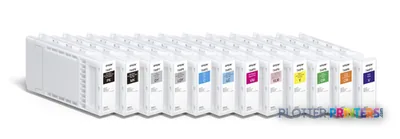
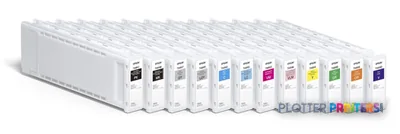
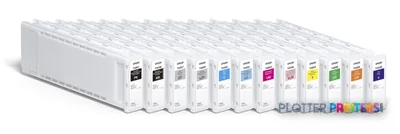
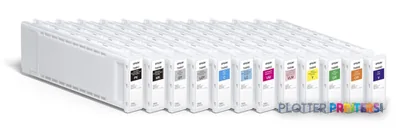
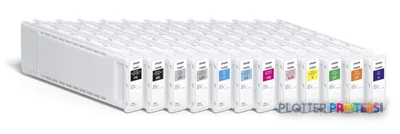
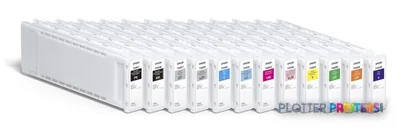
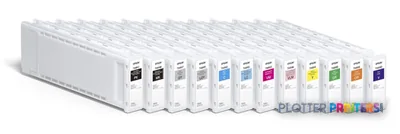
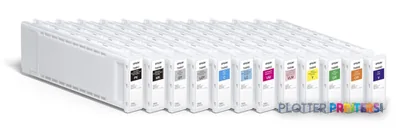
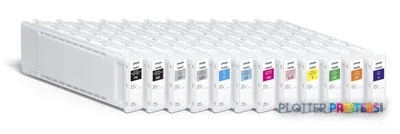
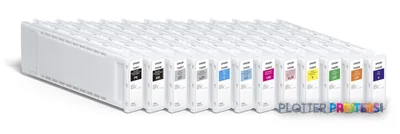
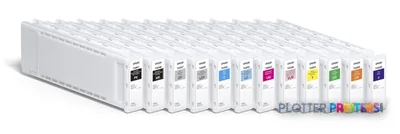
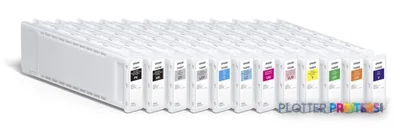
The Epson SureColor P7570 is a 24-inch aqueous pigment inkjet built around a 12-channel ink set — Cyan, Vivid Magenta, Vivid Light Magenta, Yellow, Orange, Green, Violet, plus Photo Black, Matte Black, Gray and Light Gray. That spread matters where AEC color actually lives: coordination drawings with dense overlapping trades, GIS maps where two adjacent zones must read as distinctly different, and rendered presentation boards where a saturated red needs to hold its edge rather than collapse into orange. The extra chromatic inks widen the reproducible gamut in exactly those saturated corners; the multiple grays keep neutral linework and grayscale renderings honest rather than tinted.
Studios producing color-critical presentation boards and renderings alongside working sets
GIS and infrastructure teams needing clean color separation across map zones
Firms running color-managed workflows — an optional spectrophotometer and PostScript expansion are available
Environments with wired Ethernet and optional internal Hard Disk Unit for print-room job handling
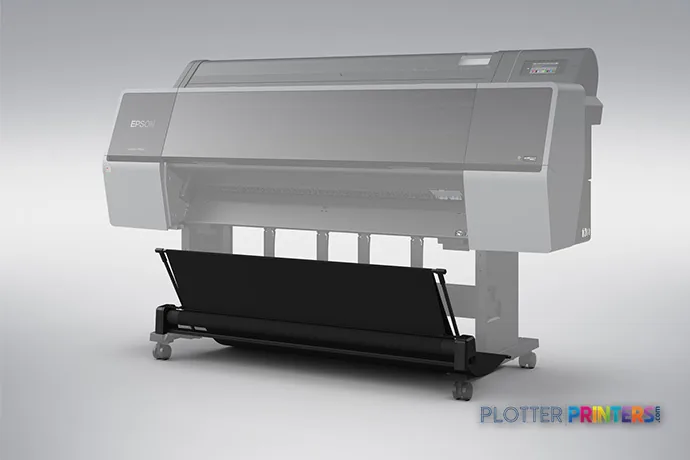
Takes rolls up to 24″ wide
Where it’s less appropriate: high-volume mono plan-set production doesn’t need 12 inks — a simpler CAD-focused machine, or a wider model like the Epson SC-P8000 44-in, may fit better. Teams needing more than 24 inches or dual-roll unattended runs should look at the Epson P8570DR 44-in or Epson P9570 44-in.
Epson states ~10.7 m²/h at normal quality (production 600 dpi)
Connectivity
Ethernet LAN and USB (no Wi-Fi)
Media handling
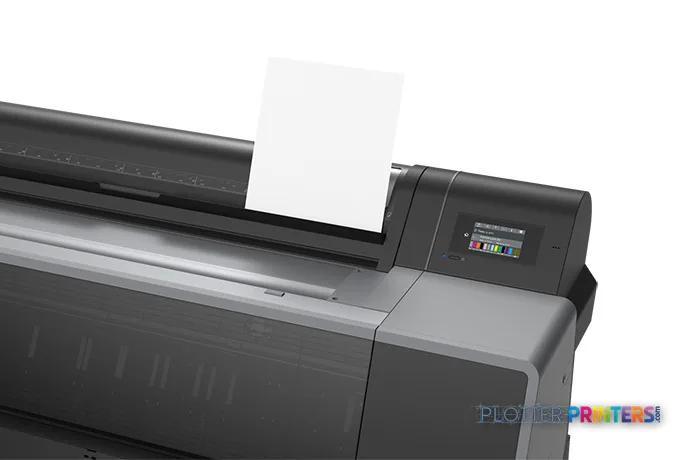
Roll and cut-sheet; photo paper supported
Power / weight
110–240 V, ~85 W typical; 269 lbs (122 kg)
Ideal for: color-managed AEC work — presentation boards, renderings, GIS maps and coordination drawings on a 24-inch roll. Not the tool for: high-volume monochrome plan sets, jobs wider than 24 inches, or unattended dual-roll production.
A 24-inch, ten-channel wide-gamut inkjet built for photographic-quality color, not high-volume line plotting.
The Orange, Green and Violet inks extend reproducible color beyond standard CMYK-plus-light-ink plotters.
Rated at 10.7 m²/h in normal quality — capable on drawings but slower than dedicated technical plotters.
Single-roll, 24-inch, Ethernet/USB only — no dual-roll auto-switching and no Wi-Fi.
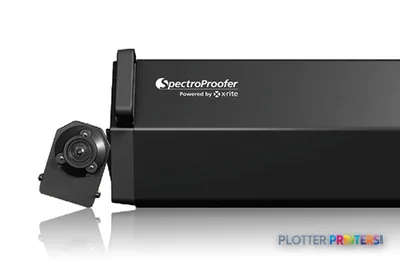
Optional inline spectrophotometer (ILS30EP) and PostScript 3 expansion unit support true soft-proofing workflows.
The SC-P7500 24-in is its near-twin; the P7300 is the plainer production option; move to 44-inch models for larger sheets.
Most wide-format machines an AEC firm buys are chosen for line weight and roll changes, not for what a rendered sunset looks like on coated paper. The Epson SureColor P7570 is the machine that reverses that priority — a 24-inch, ten-channel photographic printer that happens to be very capable of a permit set. If your studio produces glossy presentation boards and material-study renderings alongside its bid drawings, that dual identity is the whole point.
What sets it apart on paper is the ink set: ten channels drawn from a wider gamut palette including Orange, Green and Violet. That matters where photographs live — in the last five percent of a saturated red, or the cool depth of a shadowed elevation study.
10.7 m²/hPrint speed (normal quality)Epson rates ~109 in/min at 600 dpi production mode
269 lbs (122 kg)Weight
Where the color actually earns its keep
The Orange, Green and Violet channels extend the printer into regions that a standard CMYK-plus-light-inks plotter simply cannot reach. On the media we’ve measured, that shows up in the transitions — a green that walks smoothly from moss to lime without a muddy dip, skin tones in scale-figure renderings that hold rather than turning waxy. We say measured pointedly, because most of the industry quotes a 2-D marketing coverage percentage; the volume of color a printer can actually reproduce is a three-dimensional number, and it is the one that predicts whether your board matches your screen. Compare the measured envelopes yourself on our ICC gamut hub.
For genuine soft-proofing workflows, Epson offers an inline spectrophotometer accessory (the Epson Spectrophotometer ILS30EP) and the Epson Adobe® PostScript® 3™ Expansion Unit for reliable PDF and RIP handling — both worth budgeting for if color accuracy, not just color richness, is the goal.
Reproducing color beautifully and plotting a 30-sheet civil set quickly are different jobs. At its rated 10.7 m²/h in normal-quality mode, the P7570 is a photographic instrument first; it is capable of monochrome and color line work, but a firm whose day is dominated by high-volume as-builts and coordination sets will find a dedicated plotter faster and cheaper per sheet. Note too that this is a single-roll, 24-inch machine — no dual-roll automatic switching, no Wi-Fi. It connects by Ethernet LAN or USB, which most print rooms prefer anyway for security.
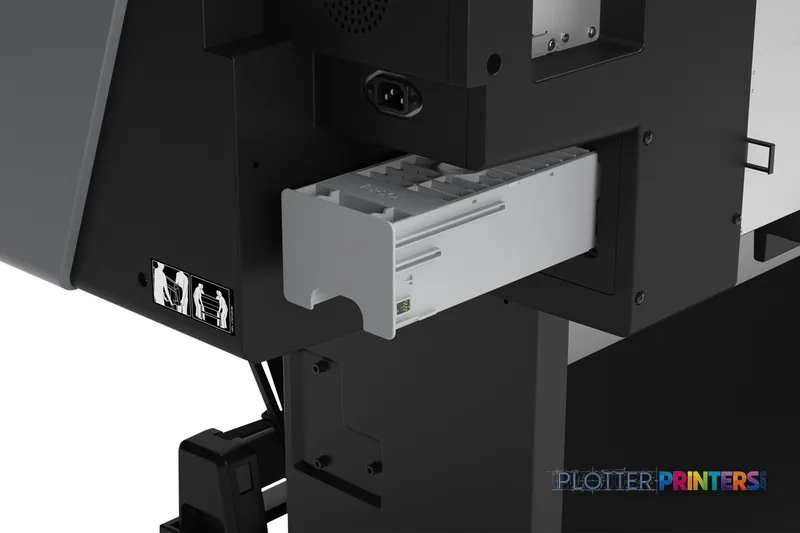
The optional Epson Hard Disk Unit adds job storage and reprint convenience where a shared machine sees repeat work.
Estimate plot times for your own run lengths.
One set: – · Weekly plotting time: –
Computed from the manufacturer's rated 1,135 ft²/h. Real-world mixed sets run slower — treat this as a best case for comparing machines, not a promise.
How it sits in its own family
Within the Epson line, the closest sibling is the SC-P7500 24-in, which shares the wide-gamut, ten-channel photographic approach at the same width — the two are near-twins for color work, and worth putting side by side in our compare tool. If your work is plainer and line-driven, the SureColor P7300 24-in is the more grounded, production-leaning option in the family. And if 24 inches is simply too narrow for D- and E-size plans, step out to the 44-inch SureColor P8000 44-in or the dual-roll P8570DR 44-in. Buyers weighing a pure-technical alternative should also look at the thermal-inkjet Canon GP-2000 24-in for faster line-set throughput.
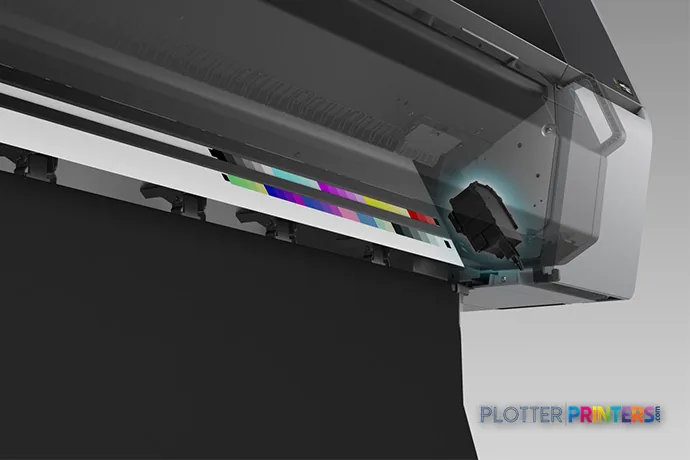
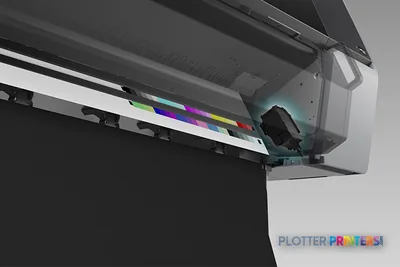
The P7570's ten-channel carriage — the Orange, Green and Violet inks are the difference you see on a saturated presentation board.
The read
The P7570 is well suited to architecture and design studios that need one 24-inch machine to render presentation boards and material studies with real color fidelity while still handling occasional bid and permit sets. The trade-off is speed and width: it is not the tool for a civil or survey department living on high-volume monochrome plots, nor for anyone needing 36-inch or wider output. Choose it when the quality of the color you can reproduce — not the sheets-per-hour you can push — is what the work is judged on. See where it ranks in class on our class leaderboard.
Graded on a curve against the best published spec among the wide-format printers we track — 100 = the catalog’s gold standard for that metric (the finest droplet, the longest warranty, the fastest rated speed actually on the market). Every input is a manufacturer-published spec; rated speeds are shown as listed, not timed throughput. Ticks mark the class best. How we grade →
Category leaders best color graphics & photo printers, by dimension
Measured on Hahnemühle Photo Gloss Baryta X 320 — the same paper we put every printer on, so the only thing that varies is the printer and its ink. Computed with ArgyllCMS from the paper maker’s ICC profile: real measured color data, not a spec-sheet claim.
914KCIELAB gamut volume — wider than the sRGB working space
69.4%of sRGB by volume
62.1%of Adobe RGB by volume
These are 3-D color-volume figures measured from the actual profile — a stricter, more honest gauge than the 2-D “% coverage” numbers on marketing spec sheets, which run considerably higher. Use them to compare printers on the same basis.
Media
Volume (Lab³)
sRGB
Adobe RGB
Photo Gloss Baryta (common basis)
914,449
69.4%
62.1%
Backlit film
1,011,747
70.6%
62.1%
Satin / semi-gloss photo
956,629
70.6%
62.9%
Fine-art
952,231
69.5%
62.2%
Premium glossy photo
923,325
69.2%
60.7%
Matte photo
865,818
67.5%
58.5%
Canvas
691,253
59.3%
50.7%
Vinyl
495,537
46.6%
36.9%
Plain / coated
416,217
41%
31.5%
Gamut volume is the size of the reproducible color solid in CIELAB, computed with ArgyllCMS iccgamut. Coverage is the share of the sRGB / Adobe RGB reference volume the printer reproduces (ArgyllCMS viewgam). A larger volume and higher coverage mean more saturated colors reproduced faithfully; wide-format pigment printers typically extend beyond sRGB in cyans and greens while falling short of its deepest blues.
manufacturer-verified = checked against the manufacturer’s official datasheet, not aggregator data. Everything else is standards-body / catalog data we consider reliable.
Genuine consumables that fit the Epson SureColor P7570 24-in Wide-Format Printer — only the cartridges, printheads and media compatible with this model.
Is the P7570 a good fit for a firm that mixes presentation renderings with permit and bid sets?
Yes — that dual role is where it makes the most sense. Its ten-channel wide-gamut ink set reproduces boards and renderings richly while still handling occasional drawing sets. A plot-heavy department would be better served by a faster technical plotter.
How fast is it for drawing sets?
Epson rates it at about 10.7 m²/h (roughly 109 in/min at 600 dpi production mode) in normal quality. That is respectable, but a firm producing large monochrome plot volumes daily should expect a dedicated plotter to be quicker and cheaper per sheet.
Does it support dual rolls or Wi-Fi?
No. The P7570 is a single-roll, 24-inch machine connecting by Ethernet LAN or USB. If you need automatic dual-roll switching, look to the 44-inch P8570DR in the same family.
What makes its color different from a standard plotter?
It carries Orange, Green and Violet channels alongside the usual inks, extending the volume of color it can actually reproduce — most visible in saturated reds, clean greens, and skin tones on scale figures. We assess this by measured 3-D gamut volume, not 2-D marketing percentages.
Can I do accurate soft-proofing on it?
With the optional Epson Spectrophotometer ILS30EP and the Adobe PostScript 3 Expansion Unit, yes — those accessories enable inline measurement and reliable RIP handling for color-critical work. Budget for them if fidelity, not just richness, matters.
How does it compare to the SC-P7500 24-in?
The two are close siblings sharing the wide-gamut, ten-channel photographic approach at the same 24-inch width. Put them side by side in our compare tool; for plainer line-driven work, the P7300 is the more production-oriented choice.