
Brand Desk — No. 02
Epson SureColor: Two Letters That Split the Line
Epson SureColor decoded: the letter tells you the job — T for CAD linework, P for proof-grade color — and picking the series is most of the decision.
Shop these machines
Ranked live by our spec-graded scoring — prices & stock are current. Free U.S. shipping on every printer.
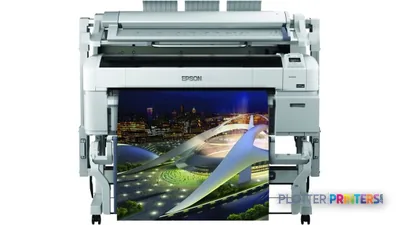 Epson SureColor T5270DR 36-in Dual-Roll PlotterSCT5270DR2880 dpiView details
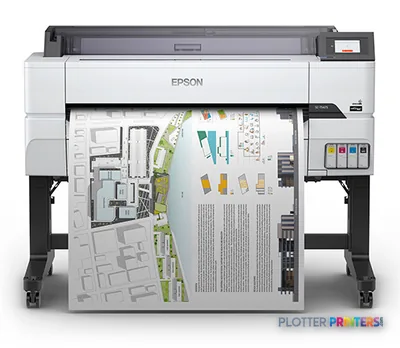 Epson SureColor T5475 36-in PlotterSCT5475SR36"2400 dpiWi-FiView details
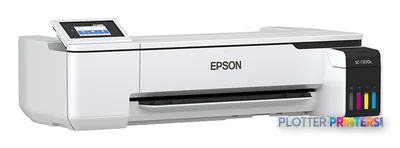 Epson SureColor T3170x 24-in Wireless PrinterSCT3170X24"2400 dpiView details
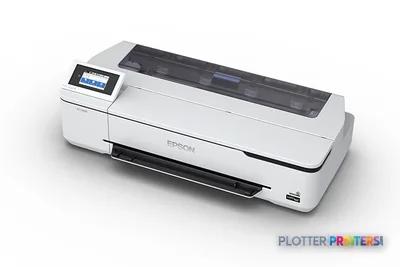 Epson SureColor T3170 24-in Wireless PrinterSCT3170SR24"2400 dpiWi-FiView details
Free U.S. shipping on printersKlarna & Affirm at checkoutTalk to a person: 980-536-0080

SureColor is Epson’s wide-format line, and the letter in the model name tells you what the machine is built for: T-series printers handle technical and CAD work — crisp linework on plain bond, plan sets, permit drawings — while P-series printers are photo and proof-grade color machines tuned for presentation boards, renderings and mapping. There is also an F-series, but that is dye-sublimation for textiles and hard goods, effectively another world; if you are printing drawings or color boards, ignore it.
For AEC buyers the choice narrows quickly. If your day is bid sets, redlines and as-builts, you want a T-series in the 24-inch or 36-inch class — the workhorse geometry for A1/D-size and ARCH E/A0. If you also need to scan and copy plans, a wide-format MFP variant adds an integrated scanner to that same technical engine. And if your output is where photographs and renderings live — where the last five percent of a saturated red actually matters — that is P-series territory.
What ties the family together is the ink. Epson runs pigment ink across the line, the archival, water- and UV-resistant chemistry that has become the AEC default. The same pigment lineage that lays down a clean 0.13 mm line on bond also underpins the wide gamut of the color machines. Below, the ranked picks render live with current prices and scores; this page explains how to read the line so those rankings mean something. When you know your series, the rest is roll count, footprint and budget.
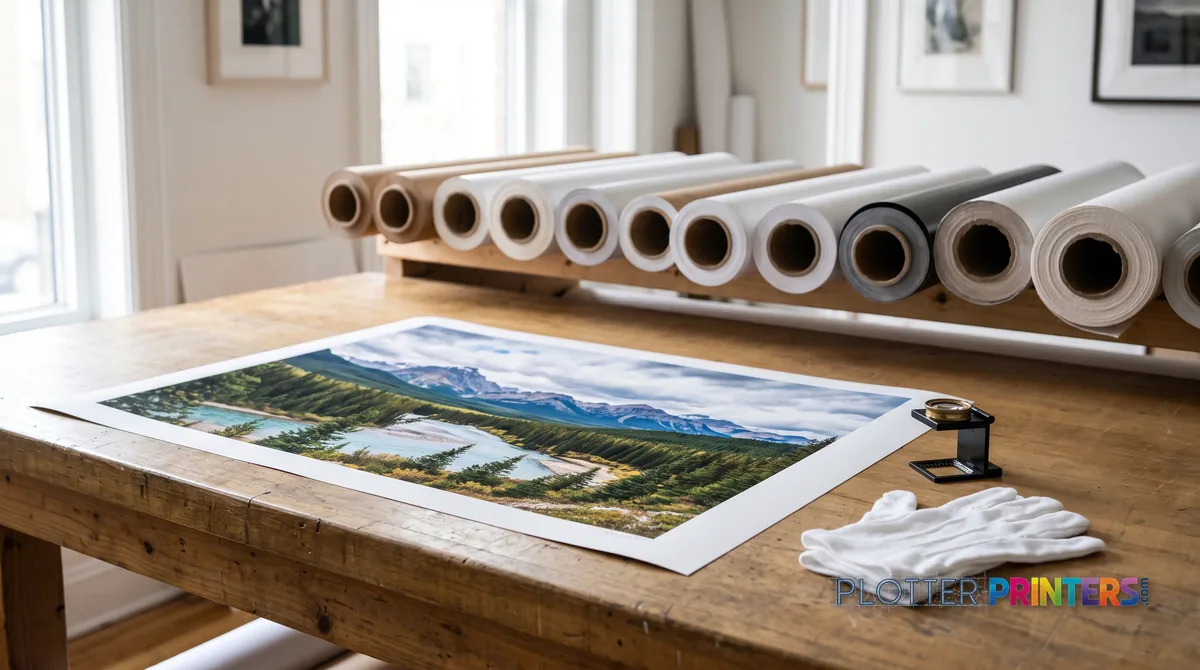
Read the letter, know the job
SHT 02 · PLOTTERPRINTERS ANALYST DESKMost of the SureColor decision is made the moment you know which letter you need. The T-series is the technical line — CAD plotters engineered for line quality and legibility on ordinary bond. This is where you find the 24-inch class for small studios that print occasionally, the 36-inch class that runs full ARCH E and A0 as an office workhorse, and MFP variants that fold an integrated scanner into that engine for plan rooms handling as-builts and field markups.
The P-series is the color line. Same pigment-ink heritage, but the machines are tuned for gamut and smooth gradients rather than fast monochrome throughput. These are the printers you reach for when a rendering has to hold its skin tones, when a GIS base map needs color-coded layers that stay distinct, or when a presentation board has to survive gallery lighting. Think graphics and photo class rather than plan-set class.
The F-series is dye-sublimation for fabric and textile transfer — a genuinely different tool family. It is worth naming only so you can set it aside: it will not print your drawings.
Pick the letter first. Once you have chosen T for technical or P for color, roll count, footprint and budget sort out the specific machine — and the step-by-step buying guide walks that narrowing with you.
The CAD workhorse
T-series technical plotters render crisp linework on plain bond, with compact footprints in the 24-inch class and floor-standing muscle in the 36-inch class for full ARCH E and A0. Entry pricing here is aggressive, which makes it a strong first plotter for a small architecture or engineering studio.
Scan-equipped for plan rooms
MFP variants fold an integrated scanner into the same technical engine, so a plan room can print, scan and copy from one machine. This is the tool for as-builts, redline capture and field markups where a drawing has to move from paper back into the workflow. MFP options are fewer than HP’s, so confirm the variant fits your scan needs.
Proof-grade pigment color
P-series machines are the graphics and photo class — pigment ink tuned for gamut and smooth gradients rather than fast monochrome throughput. Reach for these when renderings must hold their skin tones, GIS maps need color-coded layers that stay distinct, or presentation boards have to survive gallery lighting.
Each grid below shows the CURRENT machines in that series, ranked by our spec-graded scoring.
The ranked Epson machines
SHT 03 · PLOTTERPRINTERS ANALYST DESKEpson technical class — the T-series core
Ranked live; prices and stock are current.
Epson SureColor T5270DR 36-in Dual-Roll PlotterSCT5270DR2880 dpiView detailsEpson SureColor T5475 36-in PlotterSCT5475SR36"2400 dpiWi-FiView detailsEpson SureColor T3170x 24-in Wireless PrinterSCT3170X24"2400 dpiView detailsEpson SureColor T3170 24-in Wireless PrinterSCT3170SR24"2400 dpiWi-FiView detailsEpson MFPs — scan-equipped T-series
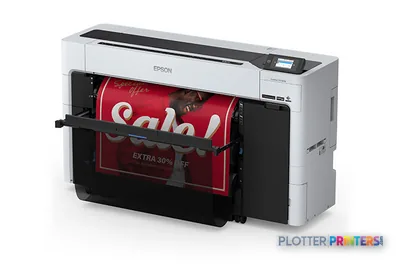 Epson SureColor T5770DM 36-in Multifunction PlotterSCT5770DM2400 dpiScanView details
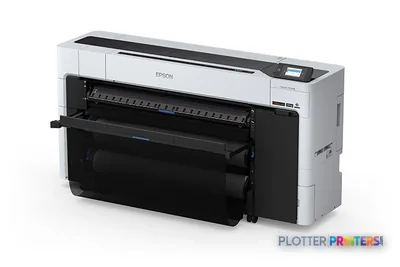 Epson SureColor T7770DM 44-in Wide-Format MFPSCT7770DM44"2400 dpiScanView details
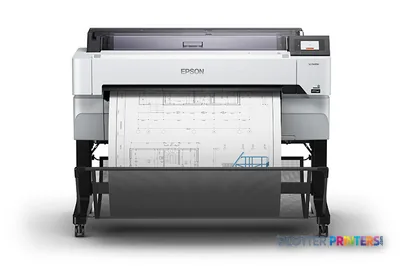 Epson SureColor T5470M 36-in Multifunction PlotterSCT5470M36"2400 dpiScanView details
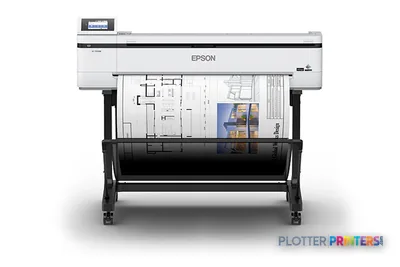 Epson SureColor T5170M 24-in Wireless MFPSCT5170M36"2400 dpiScanView details
Epson color class — P-series & graphics
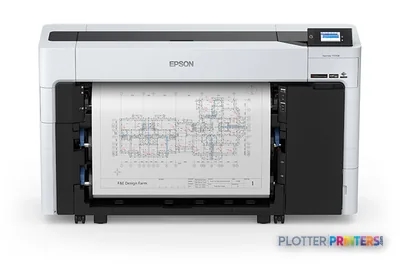 Epson SureColor T5770DR 36-in Dual-Roll PlotterSCT5770DR36"2400 dpiWi-FiView details
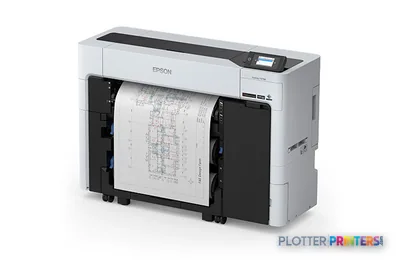 Epson SureColor T3770DR 24-in Wide-Format PrinterSCT3770DR24"2400 dpiWi-FiView details
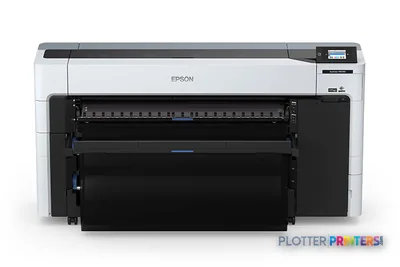 Epson SureColor P8570DR 44-in Dual-Roll PrinterSCP8570DR44"2400 dpiWi-FiView details
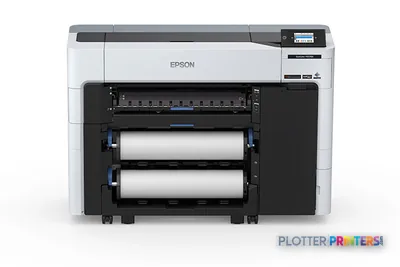 Epson SureColor P6570D Wide-Format PrinterSCP6570DR2400 dpiWi-FiView details
What Epson does well — and where HP argues back
SHT 04 · PLOTTERPRINTERS ANALYST DESKThree things characterize SureColor honestly. First, pigment ink runs line-wide. Where some competitors reserve pigment for premium tiers, Epson’s technical and color machines share that archival, water-resistant chemistry — which matters when a set gets rained on at a job site or an as-built has to survive a decade in a file drawer. Second, the T-series entry pricing is aggressive: the 24-inch and lower 36-inch class machines are genuinely strong value for a small firm buying its first plotter. Third, the P-series carries a real photo-color heritage — Epson has spent decades in fine-art and proofing, and that lineage shows in gradient handling.
The trade-offs deserve plain statement. HP’s DesignJet ecosystem is broader in fleet-management tooling, driver maturity across mixed environments, and the sheer number of MFP configurations — if you are standardizing a large multi-office fleet with heavy IT and job-accounting requirements, HP’s software depth often argues back. Epson’s MFP options are fewer, so plan rooms with specific scan-workflow needs should confirm the exact variant fits before committing.
None of this makes one brand universally right; it makes the choice workflow-dependent. A small studio buying value and archival linework leans Epson easily. A large engineering department with an entrenched HP fleet has real switching costs. We keep the detail current in the HP vs Epson head-to-head rather than pretend the answer is the same for everyone.
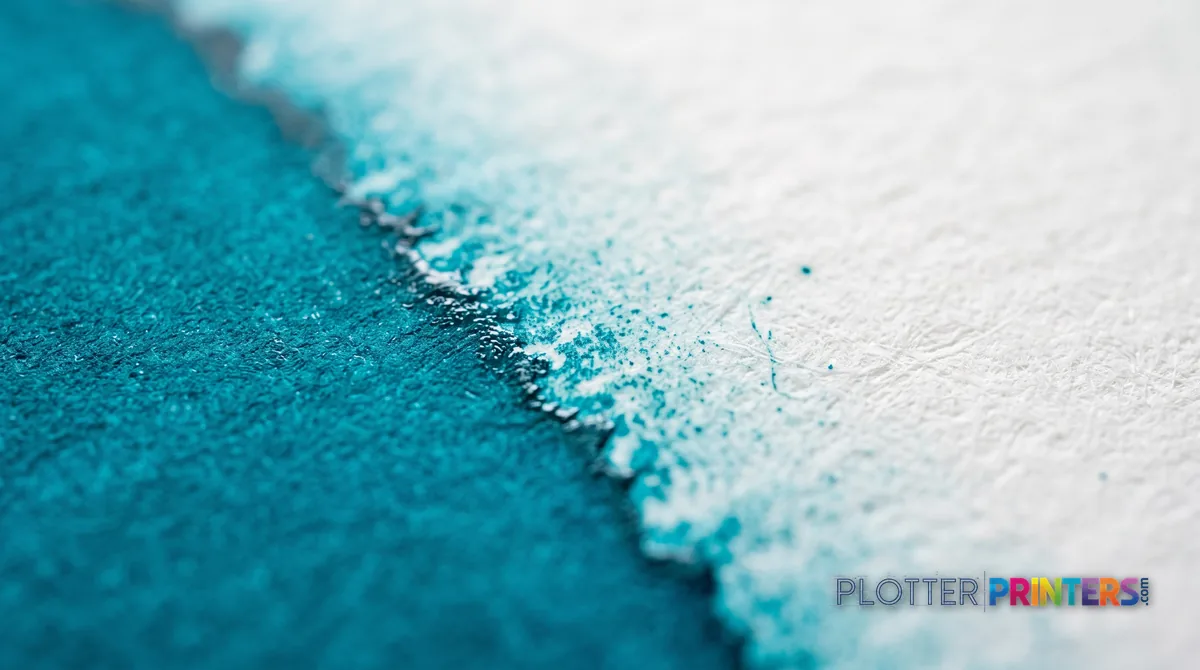
The color thread: one pigment lineage, CAD to boards
SHT 05 · PLOTTERPRINTERS ANALYST DESKThe reason the SureColor line hangs together is the ink. The same pigment chemistry that lays a clean, dense black line on plain bond in a T-series plotter is the foundation of the wide gamut in a P-series color machine. That continuity means a firm can start with technical linework and step up to proof-grade color without relearning how the ink behaves on paper — the shadows stay deep, the neutrals stay neutral, and archival stability comes along for the ride.
Where the two diverge is in what the extra inks buy you. A color machine adds channels that fill in the corners of the gamut — the saturated reds and the delicate transitions in a rendered sky — the places where a technical printer, built for speed and linework, simply is not aiming. The difference shows up exactly where photographs and renderings live: in the last five percent of a color, and in gradients that either band or breathe.
We do not ask you to take that on faith. Our desk measures ICC gamut volumes on the same media we put every printer on, so the numbers compare cleanly rather than quoting the 2-D marketing percentages the industry tends to publish. The measured color gamut rankings are the receipts — and the color-first class hub frames which jobs actually justify the color engine.
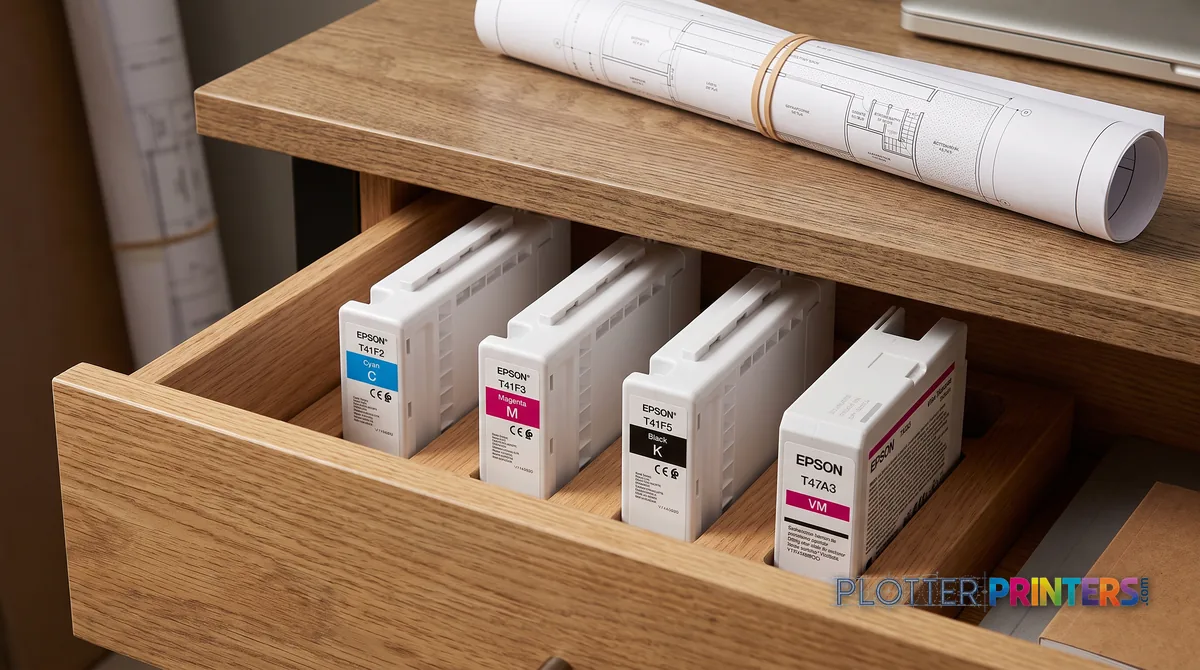
Living with a SureColor: cartridges, media and warranty in class terms
Ink cartridge families vary by series, and it is worth understanding the pattern before you buy. Technical T-series machines typically run a smaller ink set sized for economical linework, with cartridge capacities that scale with the class — a 24-inch desktop uses smaller cartridges than a floor-standing 36-inch workhorse, which matters if you print in bursts and do not want ink expiring between projects. P-series color machines carry more ink channels, because that is how the gamut gets built, and their consumable economics reflect the color work they are made for.
Media breadth is a genuine SureColor strength across both lines. Plain bond, coated and heavyweight coated papers for technical output; photo, matte fine-art and canvas-class media for the color machines. Dual-roll 36-inch configurations let you keep two stocks loaded at once — bond for check prints, a presentation media for the final — and switch without reloading.
Warranty coverage exists per machine and varies by class and configuration; extended service plans are generally available. We do not list SKUs or plan tiers here on purpose — they change, and the ranked picks below route to product pages that carry the exact supplies, capacities and warranty options for each machine. When you are ready to price a configuration with the right ink set and coverage, the quote funnel handles it.
Your questions, answered
SHT 07 · PLOTTERPRINTERS ANALYST DESKWhat does the letter in a SureColor model name mean?
The letter maps the machine to a job. T-series is Epson’s technical and CAD line, built for crisp linework on plain bond and plan-set production. P-series is the photo and proof-grade color line, tuned for gamut and gradients. F-series is dye-sublimation for textiles — a different tool family entirely. For drawings or color boards you are choosing between T and P, and that choice is most of the decision.
Is Epson SureColor good for CAD and technical drawings?
Yes. The T-series is purpose-built for it, laying down clean, legible linework on ordinary bond paper. The 24-inch class suits small offices printing occasionally; the 36-inch class handles full ARCH E and A0 as an everyday workhorse. Because Epson runs pigment ink across the line, technical output is also water- and UV-resistant, which matters for job-site sets and long-term as-built storage.
What is the difference between a T-series and a P-series SureColor?
Both share Epson’s pigment-ink lineage, but they aim at different work. The T-series prioritizes fast, crisp monochrome and color linework for CAD and plan sets. The P-series adds ink channels to fill in the corners of the gamut for saturated color and smooth gradients — presentation boards, renderings, photo and mapping work. If your output is drawings, choose T; if it is proof-grade color, choose P.
Does Epson use pigment or dye ink in its plotters?
Epson runs pigment ink across the SureColor T and P lines. Pigment is the AEC default because it is archival and resists water and UV fading — the reason a printed set survives a rainy site visit or a decade in a drawer. Dye inks are vivid and lower cost but fade faster, which is why they are not the standard for technical and proof-grade work.
Should I choose Epson SureColor or HP DesignJet?
It depends on your workflow. Epson leans strong on pigment ink line-wide, aggressive T-series entry value, and P-series color heritage. HP argues back with broader fleet-management tooling, mature drivers across mixed environments, and more MFP configurations. A small studio buying value tilts Epson easily; a large department with an entrenched HP fleet faces real switching costs. Our HP vs Epson head-to-head keeps the detail current.
Do I need a color plotter, or will a technical one do?
If your output is drawings, redlines and plan sets, a T-series technical machine is the right tool — it prints color adequately for coordination drawings while excelling at fast linework. You need a P-series color machine when the color itself is the deliverable: renderings, presentation boards, GIS base maps and photo work, where saturated reds and smooth gradients decide whether the output looks right.
Can a SureColor scan and copy plans?
Yes — the wide-format MFP variants of the T-series add an integrated scanner, so you can print, scan and copy from one machine. That is the configuration plan rooms want for as-builts, field markups and redline capture. Epson’s MFP options are fewer than HP’s, so if you have specific scan-workflow requirements, confirm the exact variant supports them before committing.
Are SureColor ink cartridges expensive to run?
Cartridge families vary by series and class, so running cost tracks the work. Technical T-series machines use smaller ink sets sized for economical linework, with capacities scaling from the 24-inch desktop up to the 36-inch workhorse. P-series color machines carry more channels because that is how the gamut is built. The ranked product pages carry exact capacities and supplies — we route there rather than quote figures that change.
What warranty comes with an Epson SureColor plotter?
Warranty coverage exists per machine and varies by class and configuration, and extended service plans are generally available. Because terms differ across the line, we keep specifics on the individual product pages rather than generalize here. When you configure a machine through the quote funnel, we confirm the coverage options that apply to that model before you commit.
What is the F-series, and do I need it?
The F-series is Epson’s dye-sublimation line for textile and hard-goods transfer — apparel, soft signage, promotional products. It uses a different ink and workflow and will not print your architectural drawings or color boards. For AEC document and presentation work, ignore it: your choice lives entirely within the T and P series.
The bottom line
SHT 08 · PLOTTERPRINTERS ANALYST DESK- The letter decides most of it: T-series for technical CAD linework, P-series for proof-grade color, F-series is dye-sub textile and irrelevant to drawings.
- Epson runs pigment ink across the whole SureColor line, giving both technical sets and color boards archival, water- and UV-resistant output.
- T-series entry pricing is aggressive, making the 24-inch and 36-inch classes strong value for a first plotter in a small firm.
- P-series buys you the corners of the gamut — saturated color and smooth gradients — where renderings, GIS maps and presentation boards actually live.
- HP's DesignJet ecosystem argues back on fleet tooling, driver maturity and MFP breadth; the right brand depends on your workflow, not a slogan.
- Cartridge families, media and warranty vary by series and machine — read the live ranked picks and their product pages for the exact numbers.
Ready to talk SureColor?
Authorized Epson dealer — we'll quote by series and workload, with measured color to back it.
Epson ink and paper, by machine
Each machine has its own supplies hub listing the cartridges, printheads, rolls and accessories verified against the manufacturer’s documentation for that model.
- Epson SureColor P6570D ink and paper
- Epson SureColor P6570E ink and paper
- Epson SureColor P7570 ink and paper
- Epson SureColor P8570DR ink and paper
- Epson SureColor P9570 ink and paper
- Epson SureColor P20570 ink and paper
- Epson SureColor T2170 ink and paper
- Epson SureColor T3170 ink and paper
- Epson SureColor T3170M ink and paper
- Epson SureColor T3170x ink and paper
- Epson SureColor T3475 ink and paper
- Epson SureColor T3770DR ink and paper
- Epson SureColor T3770E ink and paper
- Epson SureColor T5170M ink and paper
- Epson SureColor T5270DR ink and paper
- Epson SureColor T5470M ink and paper
- Epson SureColor T5475 ink and paper
- Epson SureColor T5770DM ink and paper