
Brand Desk — No. 03
Roland Print-and-Cut: A Different Tool for Different Work
Roland builds print-and-cut machines for vinyl and signage — not CAD plotters. Here's how to tell which one you actually need.

A Roland plotter is a print-AND-cut device: an inkjet print head and a contour-cutting blade in one chassis, built to print a graphic on vinyl and then cut it out along a line. It makes decals, labels, stickers, heat-transfer garments and signage — not architectural plan sets. If you typed “roland plotter” hoping to print drawings, you’re one word away from the wrong machine.
That’s the whole problem with the word “plotter.” It means two different tools in two different industries. In AEC, a plotter is a roll printer that PRINTS drawings — bid sets, permits, as-builts. In signage, a plotter is a cutting machine that CUTS media. Roland lives on the cutting/graphics side. Same word, different shop floor.
We’re an independent HP DesignJet and Epson SureColor dealer, and an authorized Roland dealer for selected models. This page is still a sort more than a sell: If your work is drawings on bond, you want a CAD plotter, and we’ll point you at the CAD plotter guide. If your work is stickers and vehicle wraps, you want print-and-cut, and we’ll tell you honestly where that fits and where a sign shop beats owning one. Either way you leave knowing whether you have a printing problem or a cutting problem. That distinction saves buyers thousands, because the two tool families barely overlap. Read on and self-diagnose in about four minutes.
What a print-and-cut machine actually does
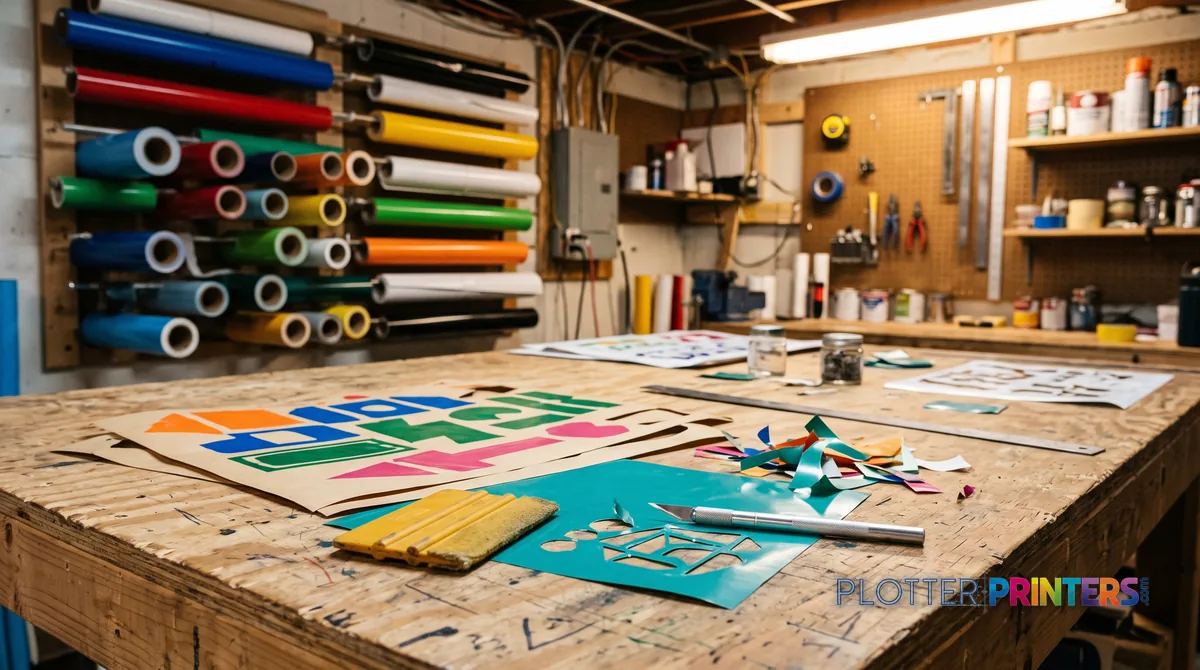
SHT 02 · PLOTTERPRINTERS ANALYST DESKPicture one chassis doing two jobs in sequence. First the inkjet head lays down a graphic — full color, edge to edge. Then a small blade drops and follows a contour line, cutting the printed shape out of the media. Print, then cut, no second machine, no re-registration by hand.
The media is the giveaway. These machines run vinyl and films on a roll, not bond paper. The inks are eco-solvent or resin — chemistries that bond to plastic film and survive outdoors, sun, rain and hand-handling. That’s the opposite of a CAD machine’s job, where pigment ink lays crisp black lines on plain paper indoors.
What comes off the roll: die-cut stickers and decals, product and prototype labels, vehicle graphics, wall and window graphics, and heat-transfer material you press onto apparel. The value is the contour cut. A garden-variety printer gives you a rectangle of vinyl you then trim by hand — forty logos, forty scissor cuts. A print-and-cut machine gives you forty finished shapes, weeded and ready.
Three questions tell you if this is your tool: Are you printing on vinyl or film, not paper? Do your outputs need to be cut to a shape, not left as a page? Do they need to survive outdoors? Three yeses and you’re in print-and-cut territory. Three noes and you’re looking at a CAD plotter — keep reading, we’ll route you.
Two industries, one confusing word
SHT 03 · PLOTTERPRINTERS ANALYST DESKHere’s the disambiguation this search needs, stated plainly. “Plotter” describes two unrelated machines.
The AEC roll plotter PRINTS. It’s a wide-format inkjet that pulls a roll of bond, gloss or film and lays down drawings — floor plans, sections, permit sets, as-builts. Nothing gets cut. The output is a printed sheet you fold or roll. This is what an architect, civil engineer or GC means by “plotter.”
The vinyl/cutting plotter CUTS. It drives a blade through media to make shapes. Roland’s print-and-cut machines add a print head to that cutter, but the cutting DNA is why they exist. This is what a sign maker means by “plotter.”
Roland lives on the cutting/graphics side. If you came here to print drawings, you’re in the wrong aisle — and that’s fine, it’s an easy fix. Start with the CAD plotter guide for machines that print linework on plain bond, or the broader wide-format families explained if you’re not sure which class fits. Need color renderings or GIS maps instead of pure linework? That’s the color-first class. Running plan sets by the hundred? Look at the production class. None of those cut anything. All of them print. That’s the line that matters.
Where print-cut sits near an AEC shop
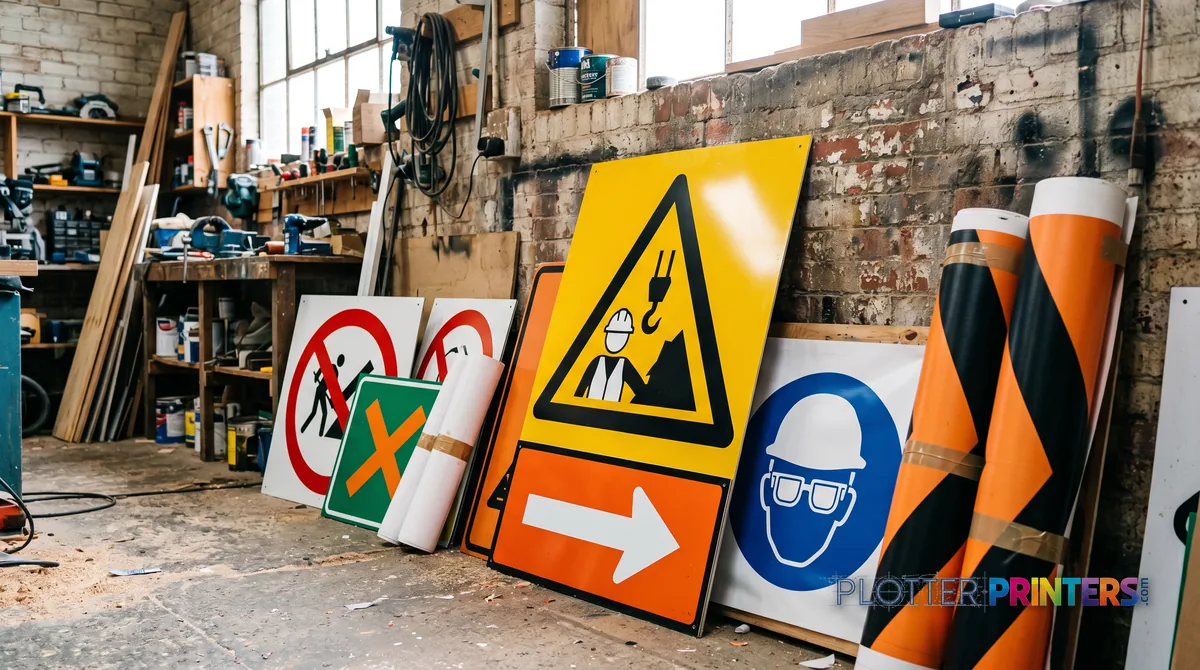
SHT 04 · PLOTTERPRINTERS ANALYST DESKThere’s a real overlap zone, so let’s be honest about it. AEC-adjacent shops do occasionally need cut vinyl: job-site signage, safety and hazard decals, wayfinding graphics for a completed building, branded hard hats, truck door logos, trade-show boards. Real work — just not drawings.
The question isn’t whether you need signage. It’s whether you need to OWN the machine that makes it. A print-and-cut machine is a second discipline: different ink, different media, different maintenance, weeding and application skills, and a learning curve for the operator. If your signage need is a batch of site placards twice a year, a local sign shop is almost always the right answer. You hand them a file, they hand you finished decals, and nobody on your team learns to weed vinyl.
Owning starts to pencil out only when the volume is steady and the turnaround is tight — a facilities group cranking wayfinding across many buildings, or a contractor branding a large fleet on a schedule. Three questions before you buy: Is the volume weekly, not yearly? Is turnaround too tight to outsource? Do you have an operator who’ll actually run it? If any answer is no, outsource the cutting and put your capital into the machine that prints your drawings — because that one runs every day.

What we can actually help with
Straight talk: we’re an authorized Roland DG dealer for a limited set of models — print-and-cut is a lane we serve selectively, quote-led. What we cover is the printing side of the shop — the HP DesignJet and Epson SureColor classes we spec-grade and lab-measure for color. If your real problem is drawings, renderings, GIS maps or plan sets, that’s exactly what those machines do, and we’ll match a class to your volume.
Not sure which problem you have? That’s the useful call. Tell us what comes off the machine — is it a printed sheet or a cut shape? — and we’ll tell you plainly whether you’re looking at a printing problem or a cutting problem. If it’s cutting, we’ll say so and point you at a sign shop. If it’s printing, start a quote or call us at 980-536-0080. No pressure to buy the wrong tool.
Your questions, answered
SHT 06 · PLOTTERPRINTERS ANALYST DESKIs a Roland plotter the same as a CAD plotter?
No. A Roland plotter is a print-and-cut machine for vinyl and signage — it prints a graphic then cuts it to shape. A CAD plotter is a roll printer that prints drawings on paper and cuts nothing. Same word, two industries. If you need bid sets, permits or as-builts, you want a CAD plotter, not a Roland.
Can a Roland machine print architectural drawings?
It can put ink on media, but it’s the wrong tool for plan sets. It’s built for eco-solvent or resin ink on vinyl and film, tuned for cut graphics, not crisp black linework on plain bond. For drawings you want a pigment-ink CAD plotter designed for readable fine lines. Check the CAD plotter guide for the right class.
What does 'print-and-cut' actually mean?
One machine does two steps in order. First an inkjet head prints a full-color graphic on vinyl or film. Then a blade follows a contour line and cuts the printed shape out. The result is a finished decal or sticker, weeded and ready to apply — not a rectangle of vinyl you trim by hand afterward.
Why does 'plotter' mean two different things?
History. In AEC, plotters evolved as machines that print drawings from CAD files. In signage, plotters evolved as machines that cut vinyl. Both got called plotters, and the word stuck in both industries. Roland lives on the cutting/graphics side; the machines that print your drawings are on the AEC side.
I searched 'roland plotter' but I need to print blueprints. What now?
You’re one aisle over. You need a CAD plotter — a wide-format roll printer that prints drawings on bond. Start with our CAD plotter guide, or the broader wide-format families page if you’re unsure which class fits your volume. Nothing there cuts anything; it all prints, which is what blueprints need.
Should my AEC firm buy a print-and-cut machine for site signage?
Usually not for occasional work. It’s a second discipline — different ink, media and skills, plus weeding and application. If you need site placards twice a year, a local sign shop is faster and cheaper. Owning makes sense only when signage volume is weekly, turnaround is tight, and you have someone to run it.
Do you sell Roland machines?
Selectively. We’re an authorized Roland DG dealer for a limited set of models, handled quote-led — call 980-536-0080 to check a specific machine. Our core lanes are HP DesignJet and Epson SureColor, and we cover print-and-cut editorially so buyers can tell the two plotter families apart. If your work is printing drawings, that’s our lane and we can quote it.
What's the difference between eco-solvent and pigment ink?
Eco-solvent and resin inks bond to vinyl and films and survive outdoors — the signage world. Pigment ink is the AEC default for archival, water- and UV-resistant prints on paper, and it lays crisp linework on plain bond. Different chemistries for different jobs: one for cut graphics, one for drawings.
Can PlotterPrinters help if I'm not sure which machine I need?
Yes, and that’s the useful call. Tell us what comes off the machine — a printed sheet or a cut shape. If it’s a printed drawing, that’s our lane and we’ll match a class to your volume. If it’s cut vinyl, we’ll say so and point you to a sign shop. Call 980-536-0080 or start a quote.
What kinds of work come off a print-and-cut machine?
Die-cut stickers and decals, product and prototype labels, vehicle and wall graphics, window graphics, and heat-transfer material for apparel. The common thread is a printed image cut to a shape on vinyl or film, built to survive handling and outdoor exposure — the opposite of a paper drawing.
The bottom line
SHT 07 · PLOTTERPRINTERS ANALYST DESK- Roland machines are print-AND-cut devices for vinyl and signage, not CAD plotters for drawings.
- 'Plotter' means two industries: AEC roll plotters print drawings; cutting plotters cut media — Roland is the cutting side.
- If you need blueprints or plan sets, you want a pigment-ink CAD plotter, not a print-and-cut machine.
- For occasional site signage, a local sign shop usually beats owning a print-and-cut machine.
- We're an authorized Roland dealer on a limited model set — the editorial coverage is so buyers can tell the two families apart.
- Ask one question to self-diagnose: does your output come off as a printed sheet or a cut shape?
Printing problem or cutting problem?
Tell us what you make — we'll point you at the right tool, even when it isn't ours to sell.