
Analyst Resource — No. 04
Plotter Paper Sizes: The Chart That Settles It
The three drawing-size families, their full ladders, and the one insight most charts skip: rolls buy machines, not sheets.
Shop these machines
Ranked live by our spec-graded scoring — prices & stock are current. Free U.S. shipping on every printer.
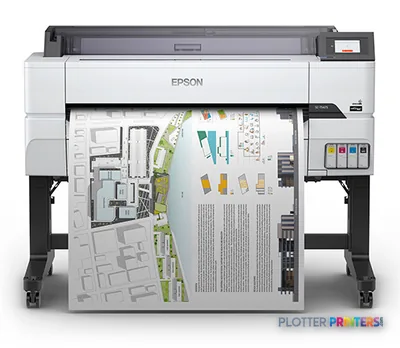 Epson SureColor T5475 36-in PlotterSCT5475SR36"2400 dpiWi-FiView details
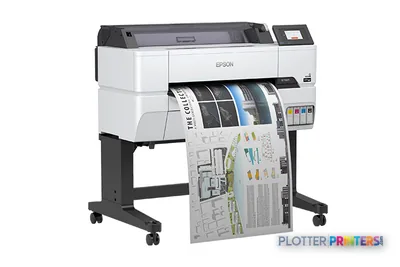 Epson SureColor T3475 24-in Wide-Format PrinterSCT3475SR24"2400 dpiWi-FiView details
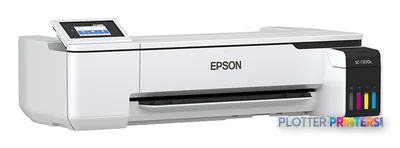 Epson SureColor T3170x 24-in Wireless PrinterSCT3170X24"2400 dpiView details
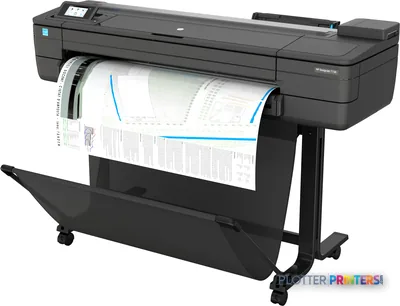 HP DesignJet T730 36-in PrinterF9A29D#B1936"2400 dpiWi-FiView details
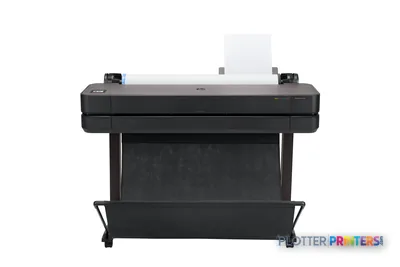 HP DesignJet T630 36-in Printer5HB11D36"2400 dpiWi-FiView details
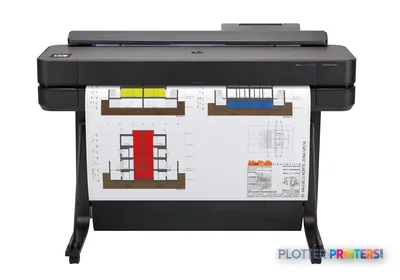 HP DesignJet T650 36-in Plotter5HB10D36"2400 dpiWi-FiView details
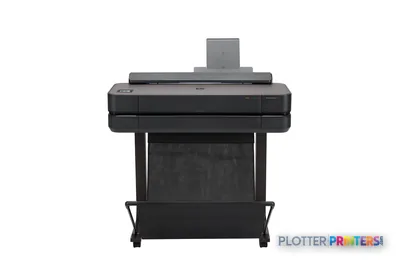 HP DesignJet T650 24-in Printer5HB08D24"2400 dpiWi-FiView details
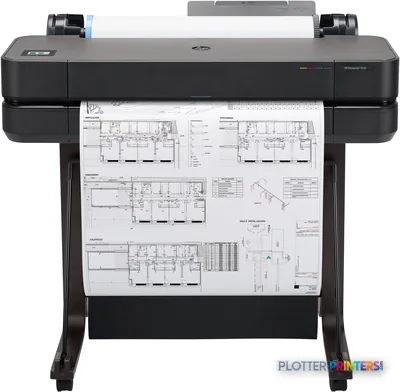 HP DesignJet T630 24-in Printer5HB09D24"2400 dpiWi-FiView details
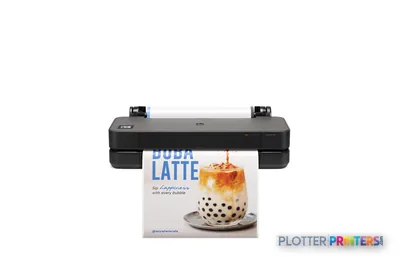 HP DesignJet T250 24-in Printer5HB06D24"2400 dpiWi-FiView details
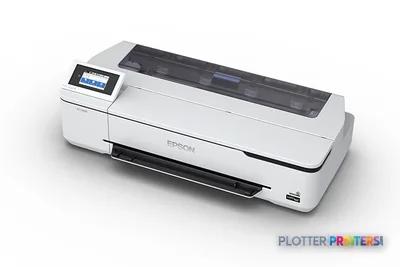 Epson SureColor T3170 24-in Wireless PrinterSCT3170SR24"2400 dpiWi-FiView details
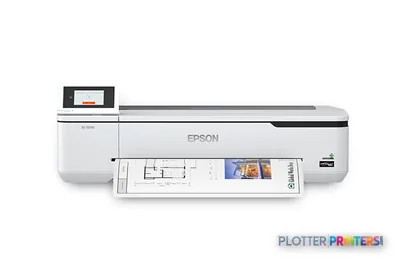 Epson SureColor T2170 24-in Wide-Format PrinterSCT2170SR24"2400 dpiWi-FiView details
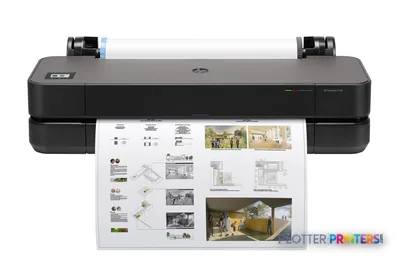 HP DesignJet T230 24-in Printer5HB07D24"2400 dpiWi-FiView details
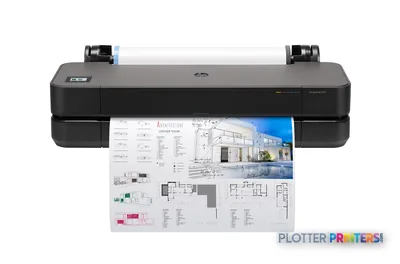 HP DesignJet T210 24-in Printer8AG32T24"2400 dpiWi-FiView details
Free U.S. shipping on printersKlarna & Affirm at checkoutTalk to a person: 980-536-0080

AEC drawings use three size families: ANSI (built up from letter size), ARCH (architectural), and ISO A (the international metric set). The two sheets you’ll meet most on a job are ARCH D, 24×36 inches, and ARCH E, 36×48 inches — printed off 24-inch and 36-inch rolls respectively. Scroll to the to-scale visualizer if you just need to eyeball one against another right now.
Here’s the part that matters when you’re standing at the tray at 4:45 with a bid set due. You don’t buy sheets. You buy roll width. A machine either fits the roll your title block was drawn for, or it doesn’t. So the size chart everyone memorizes is only half the story — the other half is which roll class prints it.
This page gives you both. The full ladders for all three families, in inches and millimeters, laid out the way a search engine can index and a human can scan. Then the mapping nobody puts on their chart: which sheet rides which roll, and what that means when you’re choosing a machine. If you’re fuzzy on what a plotter even is versus an office printer, we cover that on the plotter basics page. And if what you actually need is the stock rather than the sheet dimensions — which roll, which width, which surface — that is on plotter paper. Otherwise, keep reading — the answer you came for is directly below, and the live leaderboard of ranked machines sits right alongside it.
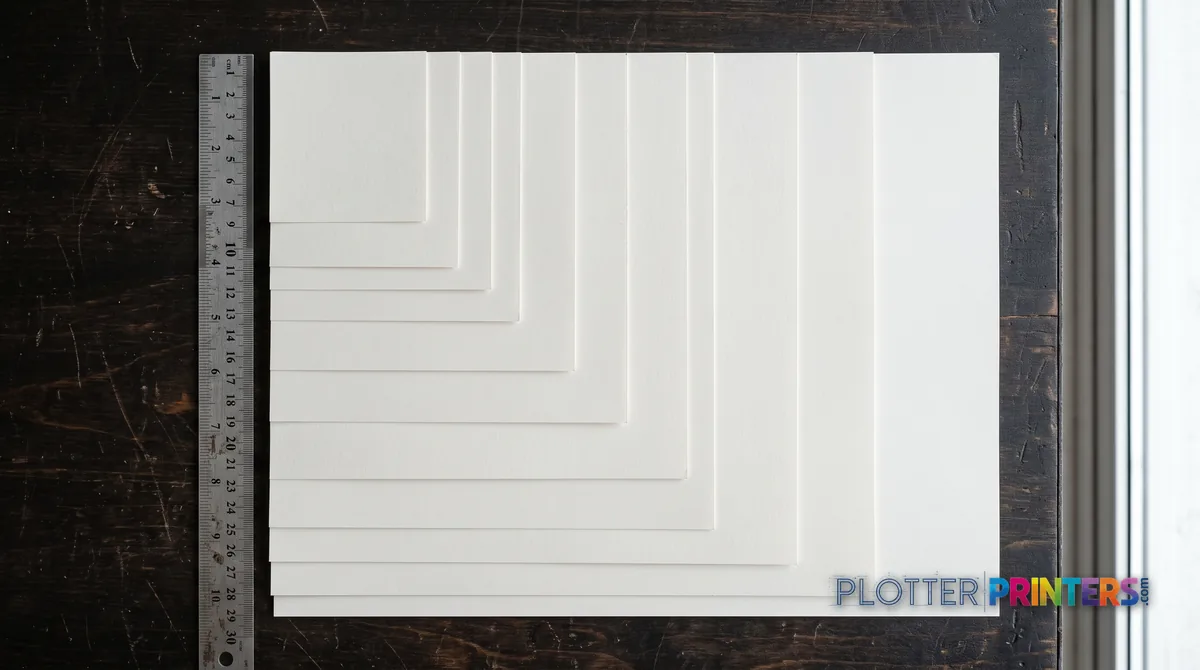
The three size families, full ladders
SHT 02 · PLOTTERPRINTERS ANALYST DESKThree systems, three logics. Learn the shape of each and you’ll never squint at a title block again.
ANSI starts at US letter and doubles up. Every step is the previous sheet turned and paired, so proportions alternate. It’s common on engineering drawings and anything born in a US office document workflow.
- ANSI A — 8.5 x 11 in
- ANSI B — 11 x 17 in
- ANSI C — 17 x 22 in
- ANSI D — 22 x 34 in
- ANSI E — 34 x 44 in
ARCH is the architect’s set, and it’s the one you’ll handle most in construction documents. The numbers are round, the ratios are friendly, and the whole industry speaks it. Note the extra rung: E1 at 30×42, a size that shows up constantly on real projects and gets left off lazy charts.
- ARCH A — 9 x 12 in
- ARCH B — 12 x 18 in
- ARCH C — 18 x 24 in
- ARCH D — 24 x 36 in
- ARCH E1 — 30 x 42 in
- ARCH E — 36 x 48 in
ISO A is the metric world, and it’s mathematically clean: each size is exactly half the one above it, same proportions all the way down. If your project touches European consultants or international standards, this is your ladder.
- A4 — 210 x 297 mm (8.3 x 11.7 in)
- A3 — 297 x 420 mm (11.7 x 16.5 in)
- A2 — 420 x 594 mm (16.5 x 23.4 in)
- A1 — 594 x 841 mm (23.4 x 33.1 in)
- A0 — 841 x 1189 mm (33.1 x 46.8 in)
Two kinships worth memorizing: A1 is the metric cousin of 24×36, and A0 is the cousin of 36×48. They aren’t identical, but they ride the same rolls — which is exactly where the next section goes.
Bottom line: ARCH D and ARCH E carry most AEC work; A1 and A0 are their metric neighbors.
Drawn to scale
Every standard sheet, at true proportion
ANSI, ARCH and ISO nested to scale — tap any sheet for its dimensions and the roll class that prints it.
Tap a sheet to inspect it.
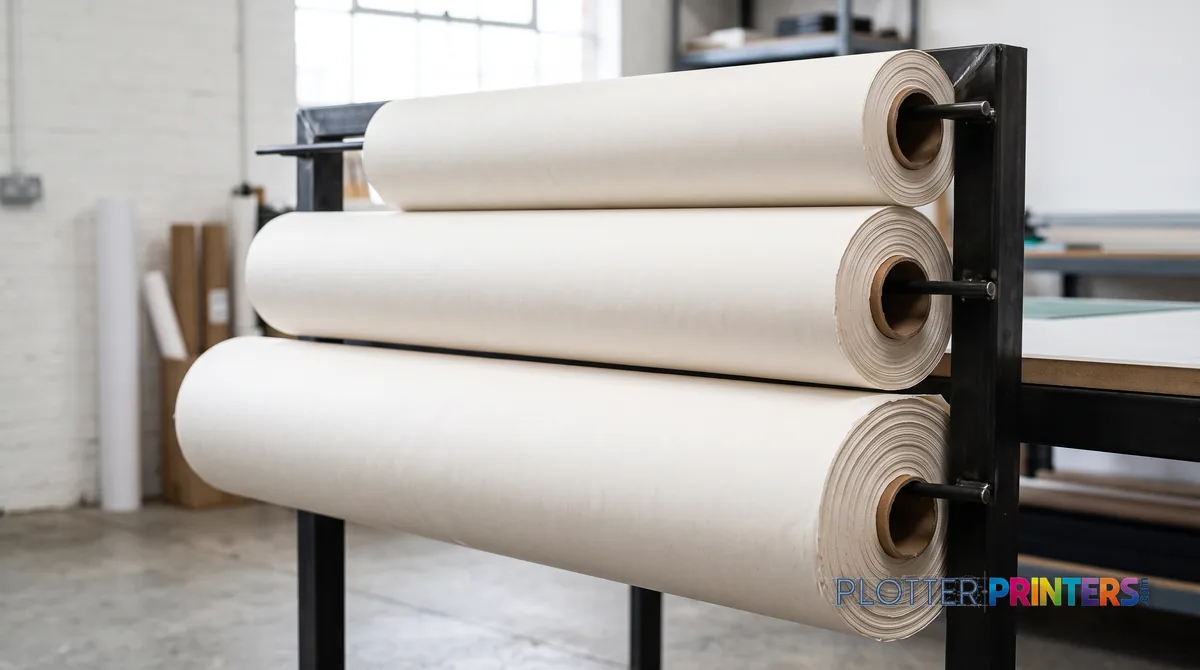
Rolls buy machines, not sheets
Here’s the insight most size charts skip. A sheet size is just a rectangle. What actually determines whether a machine can print your drawing is roll width — and there are two roll classes that cover nearly all of AEC.
A 24-inch roll prints the D-size tier: ARCH D (24×36), ANSI D (22×34), and ISO A1. That’s a huge share of everyday sheets — floor plans, details, single disciplines. These live on the 24-inch class: compact, single-roll, right for a small office that plots occasionally. If A1 is your daily size, the A1 buyer’s page narrows it further.
A 36-inch roll prints the E-size tier: ARCH E (36×48), ANSI E (34×44), and ISO A0. This is the AEC workhorse territory, and it’s where the 36-inch class lives — floor-standing, often dual-roll so you can keep bond and gloss loaded at once. For A0-first shops, see the A0 page.
And E1? ARCH E1 at 30×42 falls between the two classes. It’s wider than a 24-inch roll can handle, so it needs a 36-inch machine — but it doesn’t use the full 36 inches, so you print it on a 36-inch roll with margin to spare. If your firm standardizes on E1, buy 36-inch and don’t think twice.
Bottom line: match the roll to your largest routine sheet — 24-inch for D/A1, 36-inch for E/E1/A0 — and the sheet sizes take care of themselves.
Why AEC lives at half-size
SHT 04 · PLOTTERPRINTERS ANALYST DESKFull-size sheets are for the wall and the permit desk. Day to day, the industry runs at 50%. Halve a 24×36 and you get 11×17 — tabloid, fits a folder, reads fine at arm’s length. Halve a 36×48 and you get 18×24, the classic check-set size.
These half-size sets do the real work: markups, field copies, coordination reviews, the version that goes in the truck and comes back with coffee on it. Nobody wants to unroll a full E-size sheet on a tailgate in the wind.
Which tempts people into a trap. An 11×17-capable office machine is cheap and fast, so the thought creeps in: maybe that’s enough. It isn’t. A tabloid machine complements the roll — it never replaces it. The moment a client wants a full permit set or a presentation board, you’re back at the wide-format plotter. Run both: the roll machine for full-size and originals, the office printer for the flood of 11×17 check sets.
Bottom line: half-size is where the deadlines get met, but the roll is what makes half-size possible.
Picking a size without regret
SHT 05 · PLOTTERPRINTERS ANALYST DESKA few things learned the slow way, after plotting more sheets than I care to count.
Match the title block to the roll, not the other way around. If your standard sheet is ARCH D, standardize on a 24-inch roll and stop fighting it. Mismatched setups cost you margin trims and reprints on every deadline.
Watch the unprintable margin. Most plotters can’t print fully to the edge. If your title block hugs the border, budget a small margin or your border clips — and clipped borders come back rejected. Design the sheet knowing the machine leaves a lip.
Mind portrait versus landscape off the roll. A 24-inch roll gives you 24 inches of fixed width and as much length as you feed. An ARCH D at 24×36 runs landscape off a 24 roll cleanly — the 24 is the roll width, the 36 is the feed. Orient your sheets to the roll width and you waste nothing.
Standardize, then stock. Pick one or two sheet sizes per project and buy roll to suit. Fewer roll changes at 4:45 means fewer chances to load the wrong paper.
Bottom line: the visualizer above shows the sizes to scale — use it before you commit a title-block template.
Machines by the roll width you need
SHT 06 · PLOTTERPRINTERS ANALYST DESK24-inch class — prints through ARCH D / A1
Ranked live by our spec-graded scoring.
36-inch class — prints through ARCH E / A0
Your questions, answered
SHT 07 · PLOTTERPRINTERS ANALYST DESKWhat size is ARCH D?
ARCH D is 24 x 36 inches. It’s the most common architectural drawing size in US construction documents, carrying everything from floor plans to details. It prints off a 24-inch roll, which is why the 24-inch plotter class is so popular in AEC offices. Its metric cousin is ISO A1, which is close but not identical in dimensions.
What is 24×36 paper called?
A 24 x 36 inch sheet is ARCH D in the architectural size family. In the ANSI system the nearest step is ANSI D at 22 x 34 inches, which is slightly smaller. And ISO A1 at 594 x 841 mm is the metric neighbor. When someone in an AEC office says ‘D-size,’ they almost always mean the 24×36 ARCH sheet.
What size is ARCH E?
ARCH E is 36 x 48 inches, the largest sheet in the standard architectural set. It’s used for full presentation drawings and large permit sets. It needs a 36-inch roll and a 36-inch class plotter to print. Its metric cousin is ISO A0 at 841 x 1189 mm, which rides the same 36-inch roll width.
What's the difference between ANSI and ARCH sizes?
Both are US size families, but the proportions differ. ANSI is built up from 8.5×11 letter size and alternates ratios as it doubles. ARCH uses rounder numbers with a consistent architect-friendly proportion. ANSI D is 22×34; ARCH D is 24×36 — close but not the same. Engineers often use ANSI, architects use ARCH, and they’re printed on the same roll classes.
What is ARCH E1 (30×42) and what roll does it need?
ARCH E1 is 30 x 42 inches, an extra rung between ARCH D and ARCH E. It appears constantly on real projects but gets left off many size charts. Because it’s wider than a 24-inch roll can handle, E1 needs a 36-inch class machine — though it doesn’t use the full 36 inches, so you print it on a 36-inch roll with margin to spare.
Is A1 the same as 24×36?
No, but they’re close kin. ISO A1 is 594 x 841 mm, which works out to about 23.4 x 33.1 inches — slightly smaller than the 24 x 36 inches of ARCH D. Both ride a 24-inch roll and are handled by the same 24-inch class plotters, so for machine-buying purposes they’re interchangeable. For exact dimensions they are not.
What roll width do I need for A0 drawings?
ISO A0 is 841 x 1189 mm, roughly 33.1 x 46.8 inches. It needs a 36-inch roll and a 36-inch class plotter. A0 is the metric cousin of ARCH E (36×48) and rides the same roll width. If A0 is your standard size, the A0 buyer’s page narrows the machine choices for you.
Why do AEC firms print so many 11×17 sets?
11×17 is exactly half of 24×36, so it’s the natural half-size for D-size drawings. It fits a folder, reads at arm’s length, and survives the field. Firms run half-size sets for markups, check sets and coordination reviews, keeping full-size sheets for permits and walls. An office tabloid printer handles the 11×17 flood; the roll plotter handles everything else.
Can one machine print all these sizes?
A 36-inch class plotter covers the widest range: it prints ARCH E, A0 and E1 down through D, A1 and all the smaller sizes off a 36-inch roll. A 24-inch class machine covers D, A1 and below but cannot reach E or A0. Pick the class by your largest routine sheet, and everything smaller comes along for the ride.
Should I match my title block to the roll or the sheet size?
Match it to the roll width. If your standard drawing is ARCH D, build your title block for a 24-inch roll; if it’s ARCH E or A0, build for 36-inch. Account for the machine’s unprintable margin so borders don’t clip. Standardizing the sheet-to-roll relationship saves you trims and reprints on every deadline.
The bottom line
SHT 08 · PLOTTERPRINTERS ANALYST DESK- AEC uses three size families — ANSI, ARCH, and ISO A — but ARCH D (24×36) and ARCH E (36×48) carry most of the work.
- You don't buy sheets, you buy roll width: 24-inch prints D/A1/ANSI D, 36-inch prints E/A0/ANSI E.
- ARCH E1 at 30×42 sits between the classes and needs a 36-inch machine to print.
- A1 is the metric cousin of 24×36 and A0 of 36×48 — same rolls, slightly different exact dimensions.
- Half-size sets (11×17, 18×24) run the daily deadlines, but a tabloid office printer complements the roll and never replaces it.
- Design your title block to the roll width and the machine's unprintable margin, not to the raw sheet size.
Know your sheet, need the machine?
Tell us your biggest regular sheet — the roll class follows, and we'll shortlist from there.
Ink and paper by machine
Each machine has its own supplies hub listing the cartridges, printheads, rolls and accessories verified against the manufacturer’s documentation for that model.
- Epson SureColor P6570D ink and paper
- Epson SureColor P6570E ink and paper
- Epson SureColor P7570 ink and paper
- Epson SureColor P8570DR ink and paper
- Epson SureColor P9570 ink and paper
- Epson SureColor P20570 ink and paper
- Epson SureColor T2170 ink and paper
- Epson SureColor T3170 ink and paper
- Epson SureColor T3170M ink and paper
- Epson SureColor T3170x ink and paper
- Epson SureColor T3475 ink and paper
- Epson SureColor T3770DR ink and paper
- Epson SureColor T3770E ink and paper
- Epson SureColor T5170M ink and paper
- Epson SureColor T5270DR ink and paper
- Epson SureColor T5470M ink and paper
- Epson SureColor T5475 ink and paper
- Epson SureColor T5770DM ink and paper