
Size & Format Guide — No. 04
A1 Plotters: The Right Machine for 594 × 841
A1 is 594×841 mm. A 24-inch roll prints it full-size with margin to spare — here's why that's the machine you want.
Shop these machines
Ranked live by our spec-graded scoring — prices & stock are current. Free U.S. shipping on every printer.
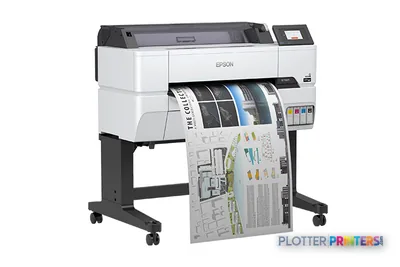 Epson SureColor T3475 24-in Wide-Format PrinterSCT3475SR24"2400 dpiWi-FiView details
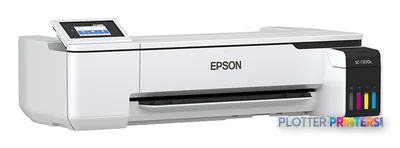 Epson SureColor T3170x 24-in Wireless PrinterSCT3170X24"2400 dpiView details
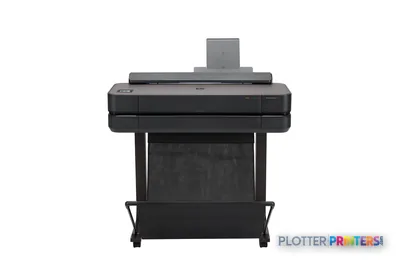 HP DesignJet T650 24-in Printer5HB08D24"2400 dpiWi-FiView details
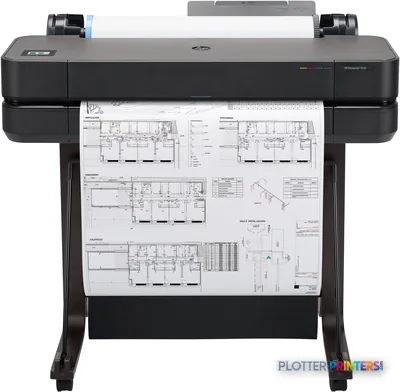 HP DesignJet T630 24-in Printer5HB09D24"2400 dpiWi-FiView details
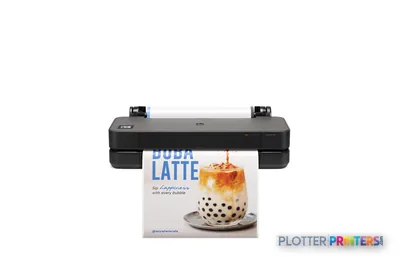 HP DesignJet T250 24-in Printer5HB06D24"2400 dpiWi-FiView details
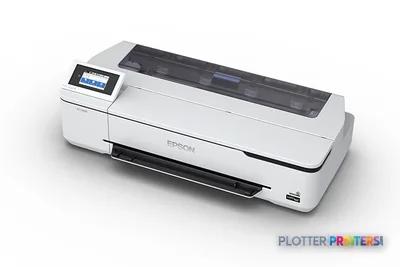 Epson SureColor T3170 24-in Wireless PrinterSCT3170SR24"2400 dpiWi-FiView details
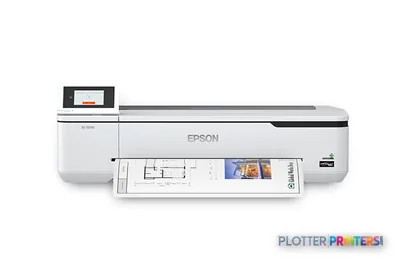 Epson SureColor T2170 24-in Wide-Format PrinterSCT2170SR24"2400 dpiWi-FiView details
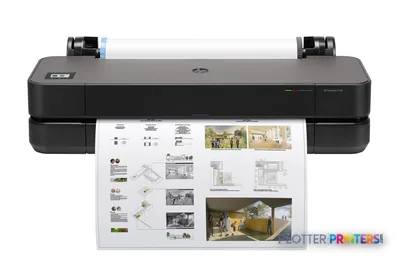 HP DesignJet T230 24-in Printer5HB07D24"2400 dpiWi-FiView details
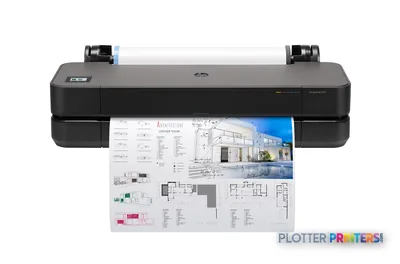 HP DesignJet T210 24-in Printer8AG32T24"2400 dpiWi-FiView details
Free U.S. shipping on printersKlarna & Affirm at checkoutTalk to a person: 980-536-0080

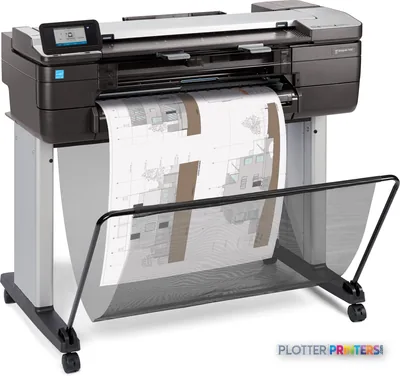
A1 measures 594 x 841 mm, and a 24-inch roll prints it full-size with room to spare. That single fact settles the shopping question: the 24-inch class is the natural A1 machine, and most of what people mean when they type “A1 plotter” lives right there. You don’t need to go wider to print A1 well. You need a machine built around a 610 mm roll, and that’s exactly what the 24-inch class is.
Here’s the arithmetic that matters at 4:45 p.m. A 24-inch roll is 610 mm wide. An A1 sheet is 594 mm on its long edge. Feed A1 across the roll and you’ve got 16 mm to spare — enough for a clean trim, enough that full-bleed A1 is genuinely in reach rather than a lab fantasy. What you can’t do on a 24-inch roll is A0. That sheet is 841 x 1189 mm, and it needs the 36-inch class. No workaround, no clever nesting. Wider roll or nothing.
So the decision tree is short. If A1 is your daily sheet and A0 shows up rarely or never, the 24-inch class does the job without wasting roll or money. If A0 title sheets are part of your regular output — tender covers, site plans, coordination drawings — you buy wider even though A1 is what you print most. Below you’ll find the ranked picks, live pricing, and a to-scale sheet visualizer so you can see the whole ISO family before you commit. Let’s make the mapping concrete.
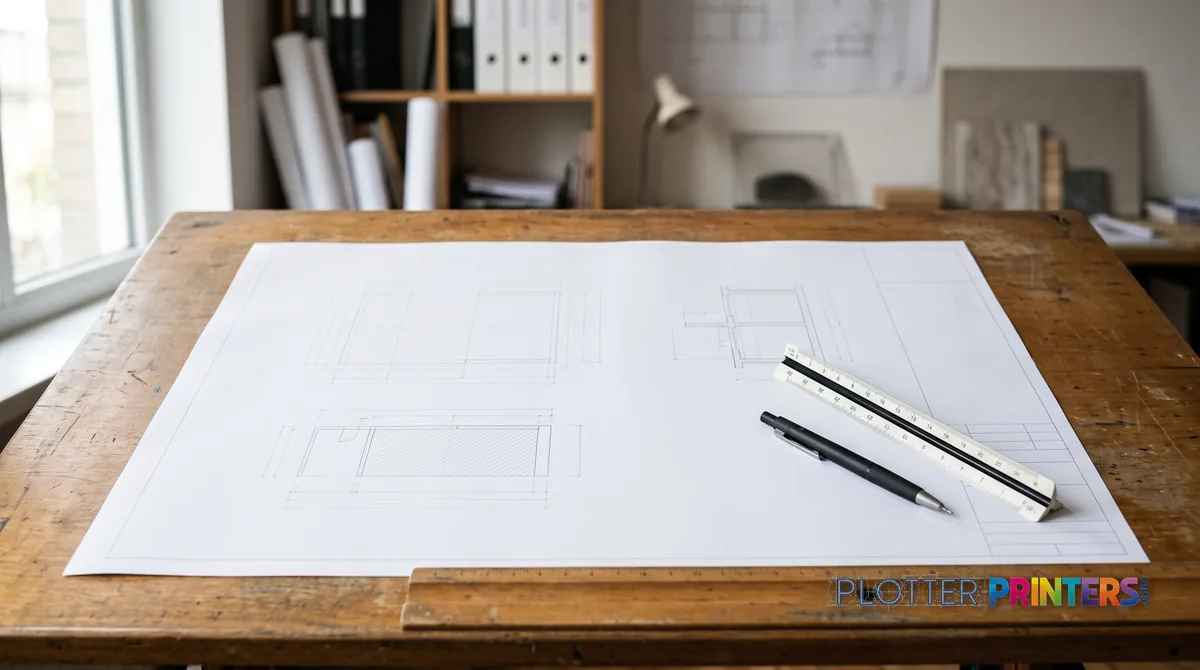
A1 on a 610 mm roll: the margin that makes it work
SHT 02 · PLOTTERPRINTERS ANALYST DESKStart with the numbers, because everything else follows from them. A1 is 594 x 841 mm. A 24-inch roll is 610 mm wide. Put the 594 mm dimension across the roll and you have 16 mm left over. That’s your trim margin, and it’s why the 24-inch class is the real “A1 plotter” — not a compromise, not a stretch, but a sheet width the machine was designed to swallow.
Sixteen millimetres doesn’t sound like much. It’s plenty. It gives the printer room to grip the media, keeps ink off the platen, and leaves a clean edge for full-bleed A1 when a presentation drawing needs to run color right to the boundary. Most CAD work doesn’t need bleed at all — linework on plain bond sits comfortably inside standard margins — but when you do need it, the 24-inch roll delivers.
What the 24-inch roll will not do is A0. An A0 sheet is 841 mm on its short edge, well past the 610 mm limit. There’s no nesting trick, no landscape rotation that fixes it. If A0 is in your workflow, you’re shopping the 36-inch class, which runs a 914 mm roll and prints A0 (841 mm) with margin to spare — the same relationship A1 has to a 24-inch machine, scaled up one size.
This is why, in practice, “A1 plotter” and “24-inch plotter” mean the same thing on a shopping page. See the full mapping on the size chart. Bottom line: A1 fits the 24-inch class with margin to trim; A0 does not fit at all.
Drawn to scale
A1 against everything else, at true proportion
Tap the ISO tab — every sheet from A4 to A0, nested to scale, mapped to the roll width it needs.
Tap a sheet to inspect it.
Machines that own the A1 sheet
SHT 03 · PLOTTERPRINTERS ANALYST DESKThe 24-inch class — A1’s natural home
Ranked live by our spec-graded scoring.
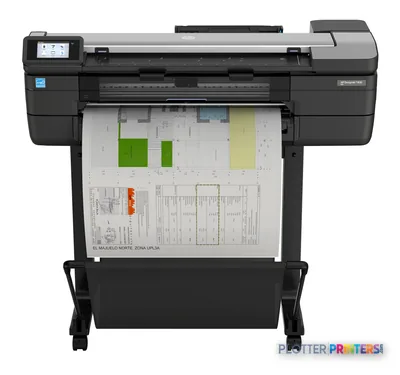
Portrait, landscape, and where the roll gets wasted
Orientation is where paper economy either works for you or quietly bleeds money. On a 24-inch roll, A1 runs landscape — the 594 mm dimension across the 610 mm roll, the 841 mm length pulled off the roll as long as the drawing needs. That’s the efficient orientation, and it’s the one the 24-inch class is built around.
Now flip it. A1 portrait — 594 mm wide going down the length of a wider roll — opens a different door on the 36-inch class. A 914 mm roll is wide enough that two A1 sheets can sit side by side across the roll: two-up printing. For a volume shop pushing plan sets by the dozen, that’s real throughput. You feed the roll once and get twice the sheets per pass, with less roll-change downtime between deadlines.
But two-up only pays if your volume justifies the wider, pricier machine and the RIP or driver handles nesting cleanly. For an office printing a handful of A1 sheets a week, two-up is a solution to a problem you don’t have. The 24-inch class in landscape wastes almost nothing on A1 — 16 mm of trim and that’s it. Bottom line: single A1 sheets belong on a 24-inch roll in landscape; two-up A1 is a volume argument for going wider, not a reason to go wider by default.
Running ANSI and ISO on the same machine
SHT 05 · PLOTTERPRINTERS ANALYST DESKPlenty of firms live in both worlds. A US practice on an international project prints A1 and A2 for the client, then turns around and runs 24×36 (ARCH D) and 11×17 for the local permit set. The good news: the 24-inch class covers both without changing anything. A 610 mm roll prints ARCH D, ANSI D, and ISO A1 from the same media — you just tell the driver which sheet size you’re sending.
Half-size sets are where this gets convenient. An A3 (297 x 420 mm) review set and an 11×17 (ANSI B) set both come off a 24-inch roll cut down, or off a smaller roll if you keep one loaded. A single machine handles the full range from A4 checkprints up to full A1, and from letter up to D-size, without a second device.
The question that decides whether you want a second roll width is simpler than it looks: do you switch media types often, or just sheet sizes? Sheet sizes are a driver setting on one roll. Media types — plain bond one hour, coated or gloss the next — are what dual-roll machines solve, and that capability lives in the 36-inch class. Bottom line: mixed ANSI/ISO sizes need one roll and a good driver; mixed media types are the argument for two rolls.
When to buy the 36-inch class anyway
SHT 06 · PLOTTERPRINTERS ANALYST DESKSometimes A1 is your daily sheet and you should still buy wider. Here are the honest signals.
A0 shows up at all. Tender sets, government submissions, and infrastructure work often mandate A0 cover sheets or overall site plans. One A0 requirement a month is enough — you can’t fake it on a 24-inch roll, and outsourcing that single sheet every deadline gets old fast. If A0 is on the table, read the A0 buyer’s page before you commit.
Speed under deadline. The 36-inch class generally moves faster and, with dual rolls, doesn’t stop mid-set to reload. When a bid closes at 5 p.m. and you’re printing a 40-sheet set, the machine that doesn’t pause for a roll change is the one that gets you home.
Two media types loaded at once. Bond for check prints, coated or gloss for the presentation sheet — dual roll switches between them without you touching the machine.
Everything else? The 24-inch class is the right buy. It costs less, takes less floor, and prints A1 without wasting a millimetre it doesn’t have to. Bottom line: buy wider for A0, for speed, or for dual media — otherwise A1 belongs on a 24-inch machine. Not sure which side you’re on? Get a quote and we’ll size it to your actual work.
Your questions, answered
SHT 07 · PLOTTERPRINTERS ANALYST DESKWhat size roll do I need to print A1?
A 24-inch roll, which is 610 mm wide. An A1 sheet is 594 mm on its long edge, so it fits across a 24-inch roll with about 16 mm to spare for trim. That margin is why the 24-inch class is the natural A1 machine — it prints A1 full-size, including full-bleed color when you need it, without wasting roll width.
Can a 24-inch plotter print A0?
No. A0 is 841 x 1189 mm, and 841 mm is well beyond the 610 mm width of a 24-inch roll. There’s no nesting or rotation trick that fixes this — A0 requires the 36-inch class, which runs a 914 mm roll and prints A0 with margin to spare. If A0 appears in your workflow even occasionally, buy the wider machine.
Is 'A1 plotter' the same as a 24-inch plotter?
In practice, yes. A1 (594 mm) fits comfortably on a 24-inch (610 mm) roll, so when people shop for an A1 plotter they’re shopping the 24-inch class. The same machines also print ANSI D and ARCH D (24×36 inches), which is why one device covers both metric and imperial drawing work. See the ranked picks on this page for current options.
Can I print both A1 and 24×36 inch drawings on one machine?
Yes, easily. A 24-inch roll prints ISO A1, ANSI D, and ARCH D from the same media — you just select the sheet size in the driver. Firms working across international and US standards run both without changing anything but a setting. Half-size A3 and 11×17 sets also come off the same roll, cut down, or from a smaller roll if you keep one loaded.
Should I get dye or pigment ink for A1 drawings?
Pigment ink is the AEC default. It’s water- and UV-resistant and holds up in the field and in archives, which matters for as-builts and record sets. Dye ink is more vivid and lower cost per print but fades faster, making it a poor choice for drawings that need to last. For technical linework on plain bond, pigment is the safe answer.
What's two-up printing and do I need it for A1?
Two-up means printing two A1 sheets side by side across a wider 36-inch roll in a single pass — real throughput for high-volume shops. You don’t need it for occasional A1 work. On a 24-inch roll, A1 runs efficiently in landscape with minimal waste. Two-up is a volume argument for buying wider, not a reason to go wider by default.
How much margin do I lose printing A1 on a 24-inch roll?
Very little. A1 is 594 mm wide, the roll is 610 mm, so you have about 16 mm of spare width — enough for a clean trim and even full-bleed color when a presentation drawing needs it. Compared to the roll waste you’d see forcing an odd size onto the wrong machine, A1 on a 24-inch roll is about as efficient as it gets.
When is a wide-format MFP worth it over a plain A1 plotter?
When you scan and copy as well as print. The wide-format MFP class adds an integrated scanner for reproducing existing drawings, capturing field markups, and building as-built records. If your work is scan-heavy — plan rooms, archives, redline capture — the MFP earns its footprint. If you only print, a straight plotter is the leaner buy.
Do I need dual rolls for A1 work?
Only if you switch media types often. A second roll lets you keep two media loaded at once — for example, plain bond for check prints and coated or gloss for presentation sheets — and switch between them without touching the machine. Dual roll lives in the 36-inch class. If you only change sheet sizes, one roll and a good driver handle it.
I mostly print A1 but occasionally need A0. What should I buy?
Buy the 36-inch class. You can’t produce A0 on a 24-inch roll at all, and outsourcing one A0 sheet every deadline gets old fast. Even if A1 is 90 percent of your output, a single recurring A0 requirement — common on tender and government sets — justifies the wider machine. Check the A0 buyer’s page before deciding.
The bottom line
SHT 08 · PLOTTERPRINTERS ANALYST DESK- A1 is 594×841 mm and fits across a 24-inch (610 mm) roll with about 16 mm of trim margin, making the 24-inch class the natural A1 machine.
- A0 (841×1189 mm) cannot print on a 24-inch roll under any circumstances — it needs the 36-inch class and a 914 mm roll.
- One 24-inch machine covers both ISO A1 and ANSI/ARCH D (24×36 inches), plus half-size A3 and 11×17 sets, so mixed metric-and-imperial firms need only one device.
- Two-up A1 printing on a wider 36-inch roll is a volume play, not a reason to go wider by default.
- Buy the 36-inch class if A0 appears at all, if you need speed under deadline, or if you want two media types loaded at once.
- For everything else, the 24-inch class prints A1 full-size for less money and less floor space — pigment ink for anything that needs to last.
Printing A1 daily?
Tell us your sheet mix — we'll match the roll class and shortlist machines.