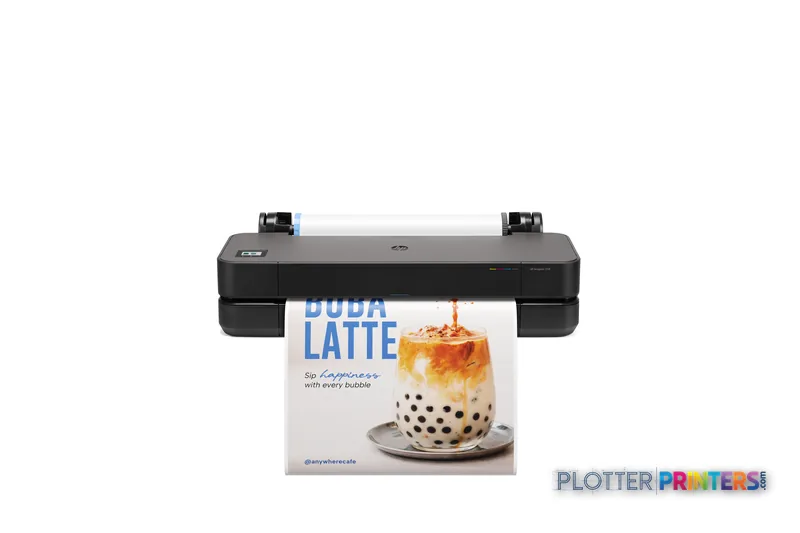
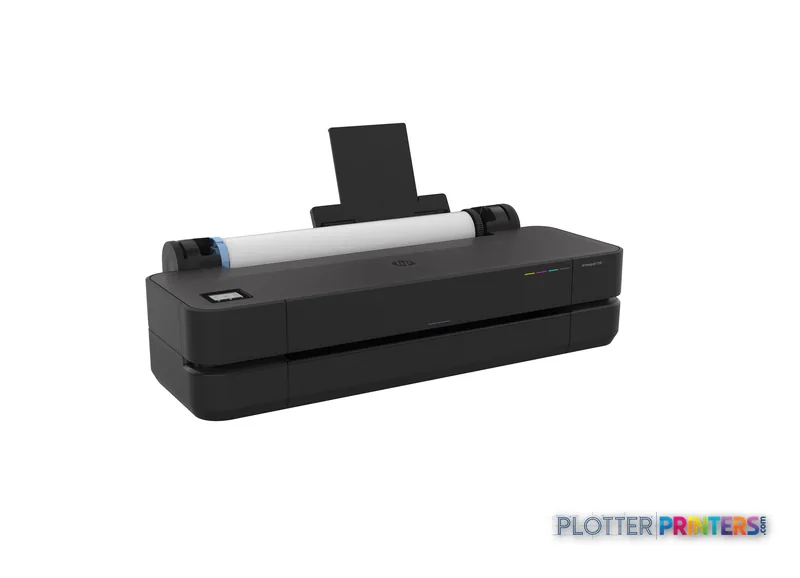
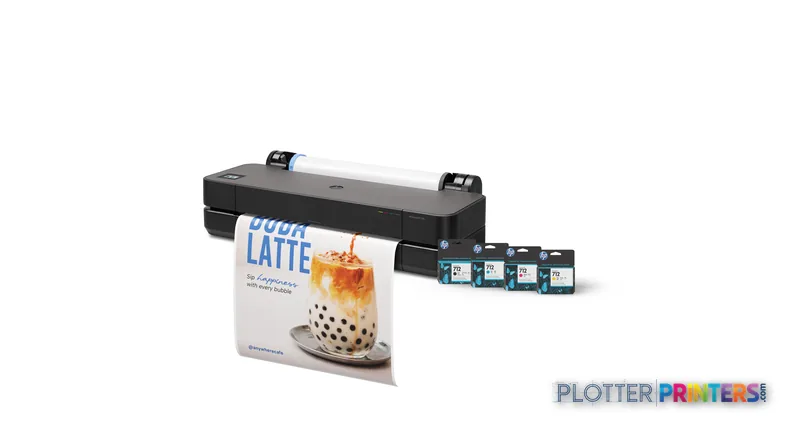
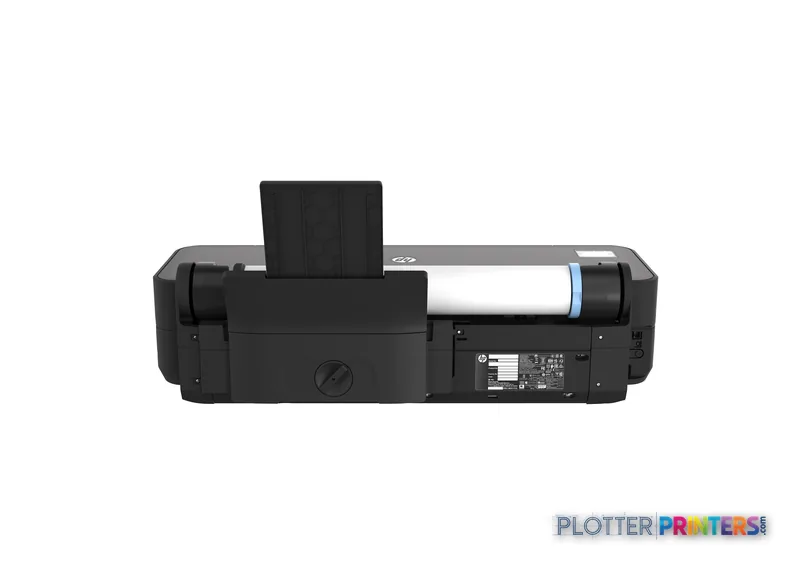
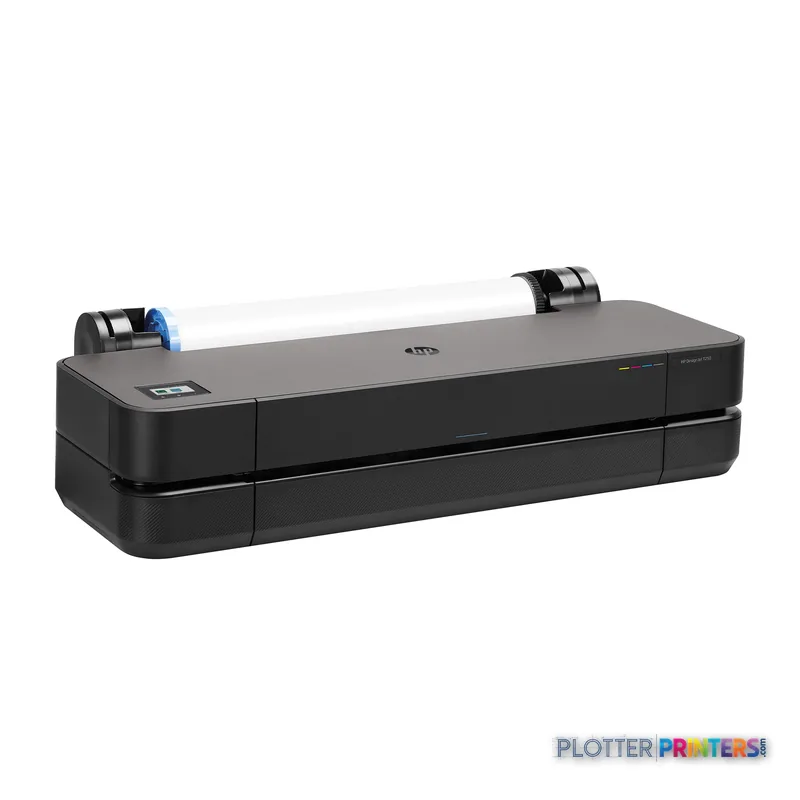
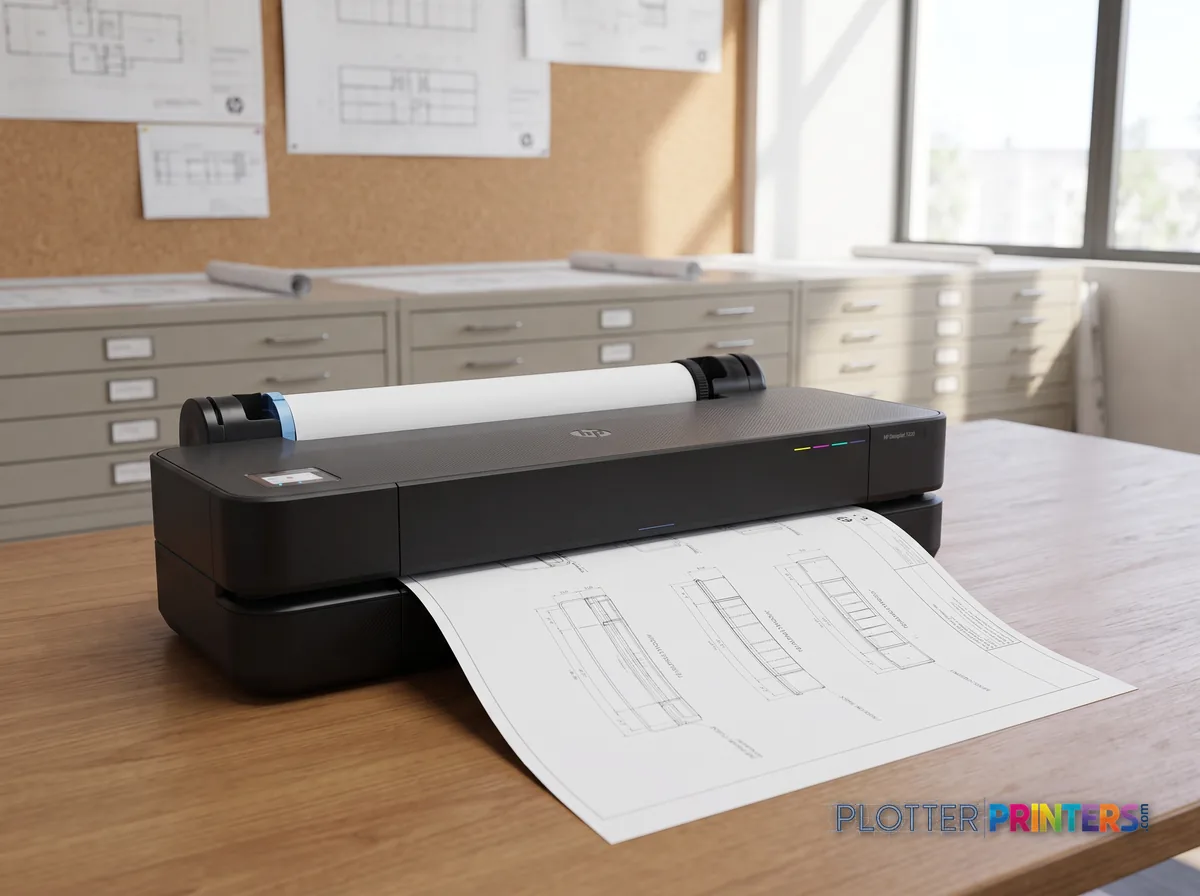
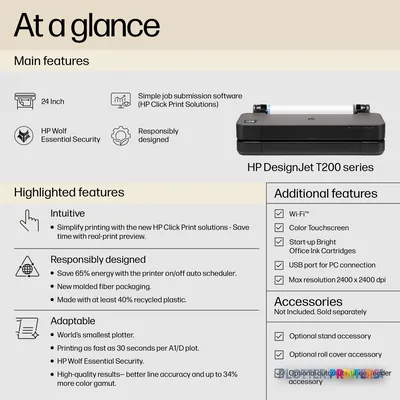
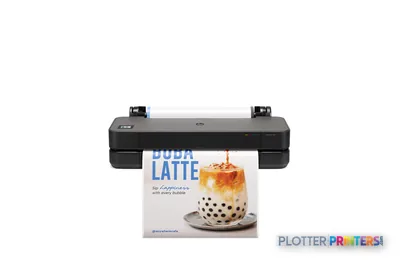
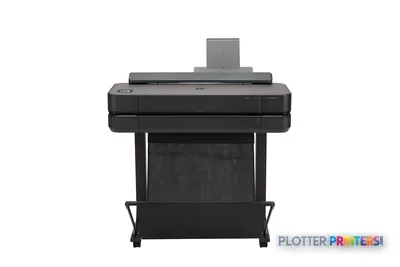
Picture the person standing at the tray at 4:45 p.m.: a solo architect or a small civil team that needs a clean D-size check set before the client shows up. That’s who the T250 is built for. It’s a 24-inch thermal inkjet plotter that prints color at 2400 x 1200 DPI and lays down an A1 line drawing in about 47 seconds at normal quality (HP rates it at 76 A1 prints per hour). Line work and small text on bond come out legible, which is what a permit set actually needs.
Small studios printing a handful of D-size sheets a week, not all day
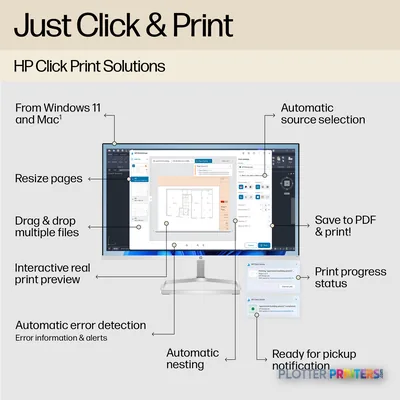
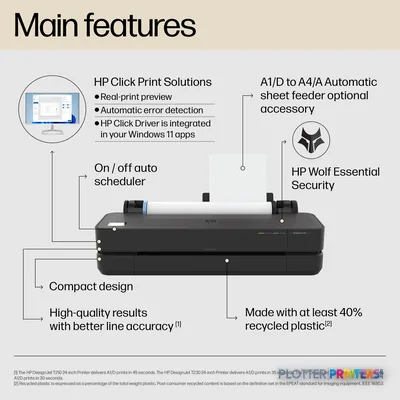
Firms that want Wi-Fi, Ethernet and USB, plus HP Click for drag-and-drop PDF submission
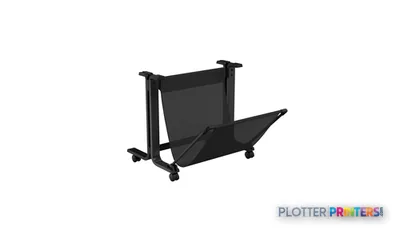
Offices tight on space — it’s roughly 40 in. wide and under 50 lbs on the optional stand
Anyone who prints from phone or tablet via AirPrint or the HP app
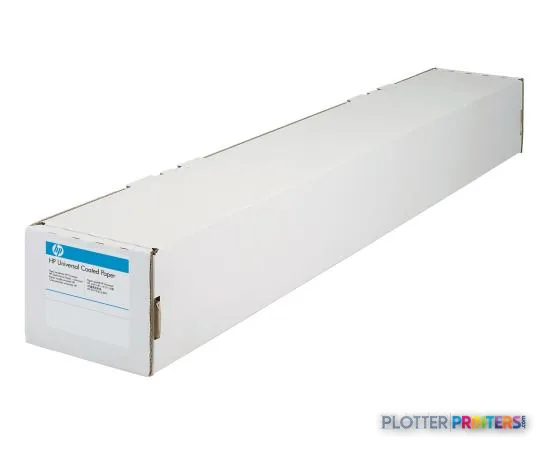
Takes rolls up to 24″ wide
Two things to know. It’s a single-roll, single-printhead machine — no scanner, no copy, no automatic roll switching. Higher-volume shops burn through the small HP 712 carts fast. Note also that HP now lists the T250 as discontinued/legacy, still sold as refreshed stock. If you scan and copy, step to the T830. Need a wider sheet? Look at the T520 33-in.
76 A1 prints/hour (normal, per HP) — roughly 47 sec/sheet
Connectivity
Gigabit Ethernet, Wi-Fi, Wi-Fi Direct, USB 2.0
Consumables
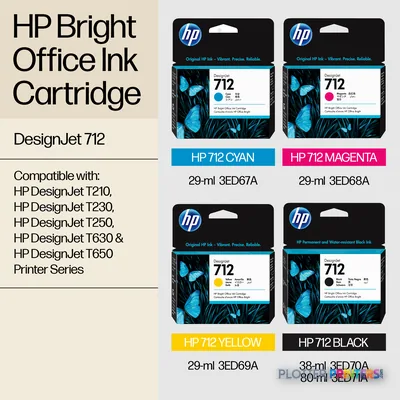
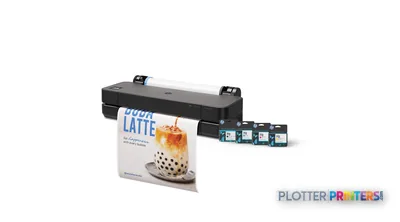
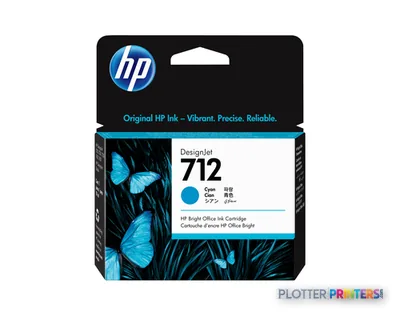
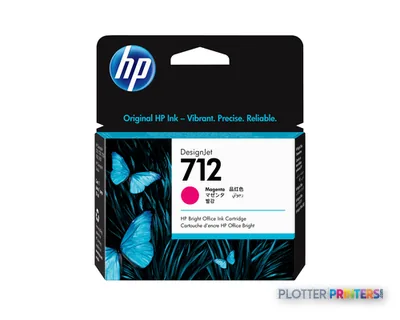
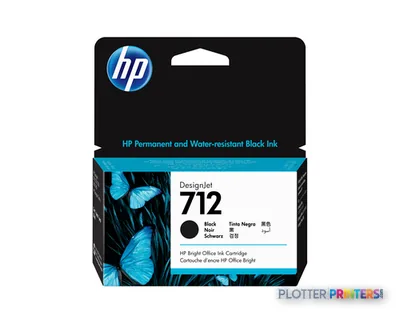
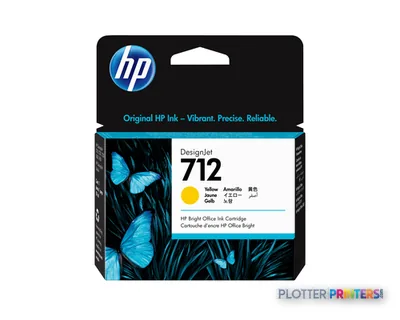
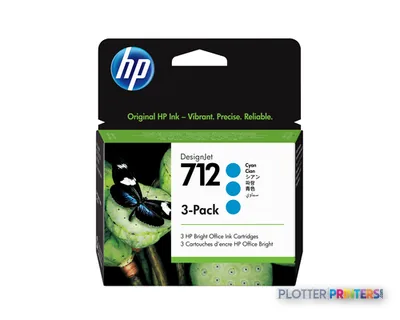
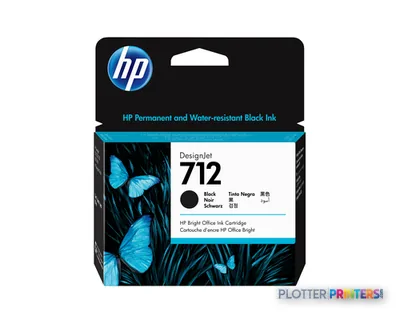
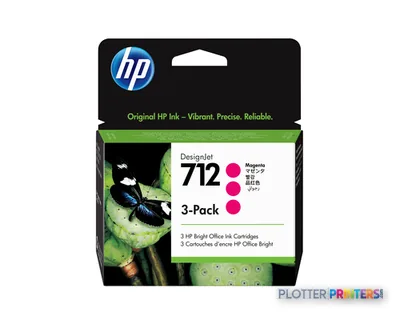
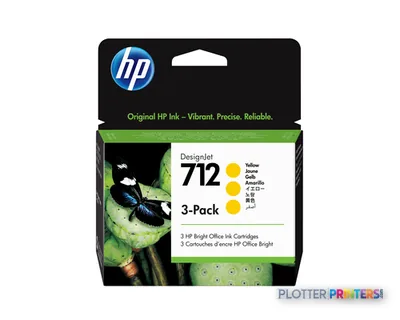
HP 712 inks, HP 713 printhead
Footprint / weight
39.9" W x 17.3" D x 11.2" H; 47.4 lbs
Media handling
Single roll (3.94" max dia.) + cut sheets; media to 0.012" thick
Ideal for: solo architects and small civil/MEP teams printing a few color check or permit sets per week in a tight office. Not the tool for: high-volume plan rooms, anyone needing scan/copy, or shops that can’t stop to swap rolls mid-deadline.
The T250 is a discontinued 2024-era 24-inch single-roll thermal inkjet, still sold as clearance stock with ongoing ink and firmware support.
At 2400 x 1200 DPI it holds fine CAD lines and small text cleanly on plain bond.
One roll and small cartridges make it a light-duty machine; running cost climbs past a couple dozen sheets a month.
No scanner, copier or built-in display — you drive it from PC, phone or tablet.
The rated 76 A1 pph is a lab figure; first-page-out and manual roll swaps matter more at deadline.
Firms mixing media or running big sets should look at the dual-roll T1600dr 36-in or the wider T520 33-in.
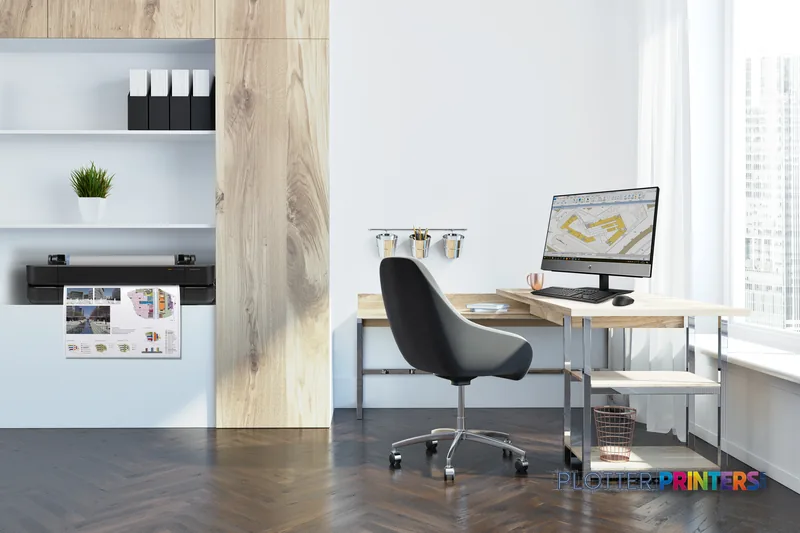
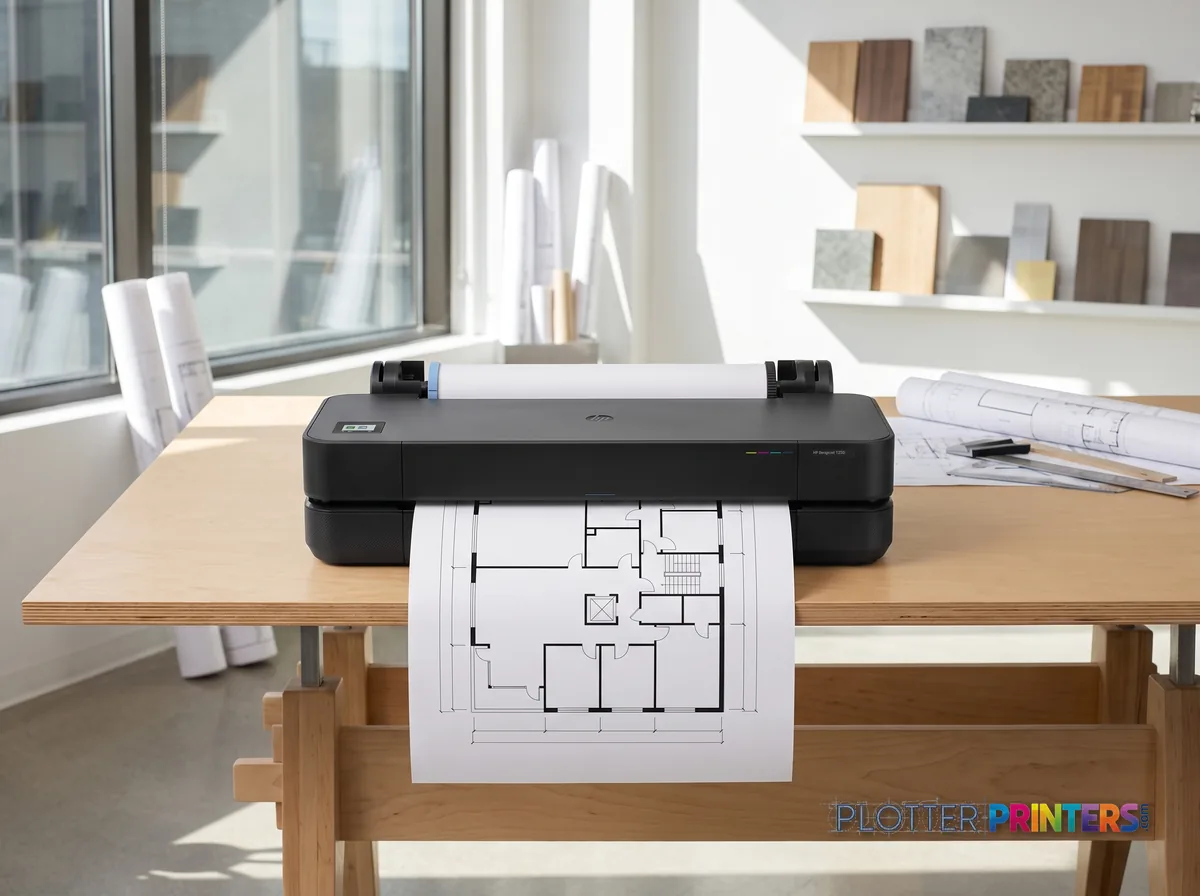
It’s 4:30 on a Thursday. The permit set is due in the morning, and someone in a two-person studio needs a clean 24-inch D-size plot without babysitting a plotter the size of a filing cabinet. That’s the job the HP DesignJet T250 24-in was built for. Small footprint, single roll, quiet enough to sit in the corner of a working office.
One caveat up front: as of 2026 HP classifies the T250 as discontinued. It’s a tail-end machine now, still on shelves as clearance stock, still getting ink and firmware support. That changes the buying math more than any spec on the sheet.
24" x 75" (610 x 1897 mm)Print widthSingle roll, D-size and long plots
76 pphA1 print speedHP rated, normal quality — lab number, not a promise
2400 x 1200 DPIResolutionFine enough for dense CAD linework
47.4 lbs (21.5 kg)WeightSits on a desk or the optional stand
What it actually is
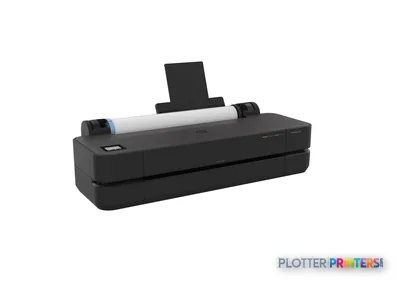
Four-color thermal inkjet. One printhead, CMYK. It runs on HP 712 inks and the HP 713 printhead. There’s no scanner, no copier, no built-in display — you drive it from your PC, phone or tablet over Wi-Fi, Ethernet or USB, or through the HP Click app.
The line quality is where it earns its keep. At 2400 x 1200 DPI it holds thin CAD lines and small callout text on plain bond without smearing them into mush. For architects, civil and MEP folks pushing check prints, redlines and permit sets, that’s the whole point. It handles cut sheets too, and roll media up to a 3.94-inch diameter — which brings us to the trade-off.
Where the deadline math bites
Small roll. Small cartridges. The rear roll caps at about 9 lbs, and the cartridges here are modest. On light monthly volume that’s fine — you swap media occasionally and move on. Push past a couple dozen sheets a month and the running cost climbs faster than you’d like. HP claims the T250 uses up to 95% less ink for routine maintenance versus competitors, which they say frees up to 100 extra A1 pages a month. Treat that as HP’s number, not mine.
The rated 76 A1 pages per hour is a lab figure. What matters at 4:45 is first-page-out and the fact that there’s one roll. Change from bond to a presentation sheet mid-set and you’re standing there doing it by hand. If you routinely mix media or run bigger sets, the dual-roll 36-inchT1600dr is a different class of tool. Need width but not two rolls? The T520 33-in steps up the sheet size.
Where the T250's rated A1 speed lands against other 24-inch machines in its class. Remember: this is throughput on paper, not the first plot out the door. See the full class ranking →
The step-down and the neighbors
Inside the family, the T230 and the entry T210 sit just below it — same 24-inch thermal inkjet platform, trimmed features. If line quality can drop to 1200 x 1200 DPI for your work, the T125 is the budget end. Cross-shopping other brands? The Canon GP-200 24-in is the obvious same-class rival worth a look. Run the side-by-side comparison before you commit.
Desktop-class footprint — 39.9 inches wide, 47.4 lbs. It fits where a big plotter won't.
Feed in your typical bid-set size and see roughly how long a run takes at the T250's rated speed. Adjust down for first-page-out and roll swaps.
One set: – · Weekly plotting time: –
Computed from the manufacturer's rated 511 ft²/h. Real-world mixed sets run slower — treat this as a best case for comparing machines, not a promise.
The T250 is a light-duty office plotter that prints a clean D-size sheet and stays out of the way. For a small studio doing a handful of check prints and permit sets a month, it does the job at a low entry cost. But it’s discontinued, the roll and cartridges are small, and the per-sheet cost climbs on real volume. Buy it as clearance stock if the math works for light use — and go in knowing support has a clock on it.
Graded on a curve against the best published spec among the wide-format printers we track — 100 = the catalog’s gold standard for that metric (the finest droplet, the longest warranty, the fastest rated speed actually on the market). Every input is a manufacturer-published spec; rated speeds are shown as listed, not timed throughput. Ticks mark the class best. How we grade →
Category leaders best technical / CAD plotters, by dimension
30 sec/page on A1/D; up to 76 A1/D prints/hourmanufacturer-verified
Maximum resolution
Up to 2400 x 1200 optimized dpi
Maximum roll length
300 ft (91 m)manufacturer-verified
Ethernet LAN
Gigabit Ethernet (1000Base-T)
Wi-Fi
Wi-Fi 802.11b/g/n
Internal memory
512 MB
Page description languages
JPEG, URF (no PostScript)
Weight
47.4 lbs (21.5 kg)
manufacturer-verified = checked against the manufacturer’s official datasheet, not aggregator data. Everything else is standards-body / catalog data we consider reliable.
Specifications
Full technical detail
Print technologyThermal inkjet
Max resolution2400 x 1200 DPI
Max print width24"
ColorColor
ConnectivityEthernet (Gigabit LAN), USB, Wi-Fi
Use caseCAD / Technical
Printing
Color
Yes
Print head
1 (cyan, magenta, yellow, black)
Printing colors
Black, Cyan, Magenta, Yellow
Print technology
Thermal inkjet
Resolution color
2400 x 1200 DPI
Maximum resolution
2400 x 1200 DPI
Number of print cartridges
4
Page description languages
JPEG, URF
Print speed (normal quality, A1)
76 pph
Performance
HP segment
Business
Certification
Compliant with Class B requirements, including: USA (FCC rules), Canada (ICES), EU (EMC/RED Directives), Australia (ACMA), New Zealand (RSM), China (CCC), Japan (VCCI); Certified as Class B product: Korea (KCC)
Product color
Gray
Internal memory
512 MB
Built-in display
No
Country of origin
China
Introduction year
2024
Paper handling
Cut sheets
Yes
Media thickness
0.3 mm
Custom media sizes
210 x 279 to 610 x 1897 mm
Maximum print size
610 x 1897 mm
Maximum roll diameter
3.94" (10 cm)
Paper tray media types
Coated paper, Plain paper, Semi-glossy paper, Glossy paper, Bond paper, Photo paper, Matte paper, Heavy paper, Satin paper
Roll weight (rear roll)
9.04 lbs (4.1 kg)
ISO A-series sizes (A0…A9)
A1, A2, A3, A4
Ports & interfaces
Wi-Fi
Yes
USB port
Yes
Ethernet LAN
Yes
Wi-Fi Direct
Yes
Direct printing
Yes
USB 2.0 ports quantity
1
Ethernet LAN data rates
10,100,1000 Mbit/s
Mobile printing technologies
Apple AirPrint
Technical details
Box contents
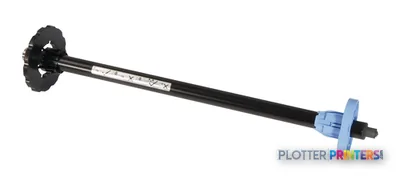
HP DesignJet T250 24-in Printer, printhead, introductory ink cartridges, spindle, quick reference guide, setup poster, power cord
Weight & dimensions
Depth
17.3" (440 mm)
Width
39.9" (1013 mm)
Height
11.2" (285 mm)
Weight
47.4 lbs (21.5 kg)
Power
AC input voltage
100 – 240 V
AC input frequency
50/60 Hz
Power consumption (off)
0.2 W
Power consumption (sleep)
2.1 W
Power consumption (standby)
0.2 W
Power consumption (typical)
35 W
Operational conditions
Operating altitude
0 – 118110.2" (0 – 3000 m)
Storage temperature (T-T)
-25 – 55 °C
Operating temperature (T-T)
5 – 40 °C
Operating relative humidity (H-H)
20 – 80%
Other features
UNSPSC-code
43212104
Electromagnetic compatibility
Compliant with Class B requirements, including: USA (FCC rules), Canada (ICES), EU (EMC/RED Directives), Australia (ACMA), New Zealand (RSM), China (CCC), Japan (VCCI); Certified as Class B product: Korea (KCC)
Copying
Copying
No
Scanning
Scanning
No
Packaging data
Package depth
22.6" (575 mm)
Package width
45.5" (1155 mm)
Package height
15.9" (405 mm)
Package weight
59.5 lbs (27 kg)
Bundled software
HP Click App for Windows and macOS, HP Click Driver for Windows 11, HP app for Windows, macOS, Android and iOS
Sustainability
Sustainability compliance
Yes
Sustainability certificates
ENERGY STAR
Carbon footprint
Total carbon footprint (kg of CO2e)
270
Carbon emissions, logistics (kg of CO2e)
14
Carbon emissions, end-of-life (kg of CO2e)
15
Carbon emissions, manufacturing (kg of CO2e)
200
Total carbon emissions, w/o use phase (kg of CO2e)
No. HP classifies it as discontinued as of 2026, but it remains available as clearance stock, and HP continues ink supplies, firmware updates and service support during its tail-end lifecycle.
What ink and printhead does it use?
It runs on HP 712 inks in CMYK and a single HP 713 printhead. Note that HP dynamic security is enabled on this model.
Can it scan or copy drawings?
No. The T250 is print-only, with no scanner, copier or built-in display. If you need integrated scanning for as-builts and redlines, look at an MFP-class machine like the HP DesignJet T830 24-in instead.
How big a roll does it take?
The rear roll runs up to about 9 lbs with a maximum roll diameter of 3.94 inches, and it prints up to 24 inches wide and 75 inches long. That’s fine for light use but means more frequent media changes on busy weeks.
Is it a good fit for a high-volume engineering department?
Not really. It’s built for light monthly volume; running cost rises quickly on real throughput. A dual-roll model like the HP DesignJet T1600dr 36-in is the more appropriate tool for sustained production.
How does it connect to my workflow?
Wi-Fi, Wi-Fi Direct, Gigabit Ethernet and USB, plus the HP Click app and driver for Windows and macOS, and mobile printing via Apple AirPrint and the HP app on Android and iOS.