
Analyst Resource — No. 03
Plotter vs Printer: The Five Differences That Decide It
A printer stops at 11×17; a plotter runs rolls for full-size plans, maps and drawings. Here is the honest line between them.
Shop these machines
Ranked live by our spec-graded scoring — prices & stock are current. Free U.S. shipping on every printer.
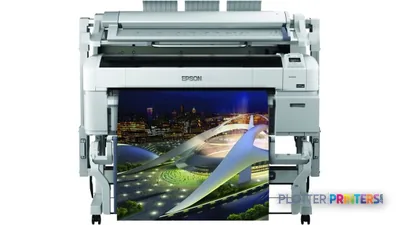 Epson SureColor T5270DR 36-in Dual-Roll PlotterSCT5270DR2880 dpiView details
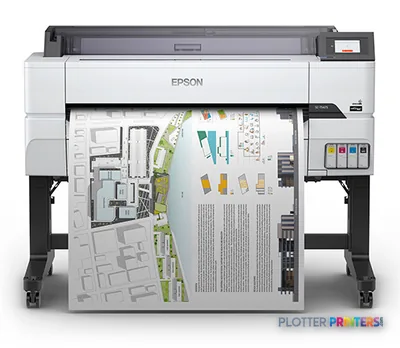 Epson SureColor T5475 36-in PlotterSCT5475SR36"2400 dpiWi-FiView details
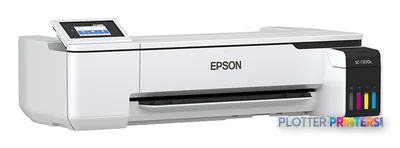 Epson SureColor T3170x 24-in Wireless PrinterSCT3170X24"2400 dpiView details
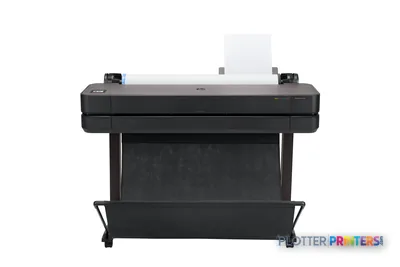 HP DesignJet T630 36-in Printer5HB11D36"2400 dpiWi-FiView details
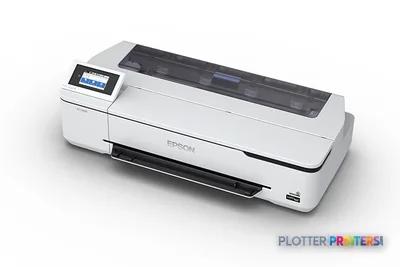 Epson SureColor T3170 24-in Wireless PrinterSCT3170SR24"2400 dpiWi-FiView details
Free U.S. shipping on printersKlarna & Affirm at checkoutTalk to a person: 980-536-0080

Here is the clean answer: a printer handles cut sheets up to tabloid, which is 11×17 inches (ANSI B), while a plotter is a roll-fed wide-format machine that produces full-size technical documents on 24-inch rolls and wider. If your documents are plans, maps or diagrams larger than 11×17, you need a plotter. If everything you print fits on a letter or tabloid sheet, your office printer is doing its job.
That is the whole distinction in one breath, but it hides a few practical truths worth spending five minutes on. A 24-inch roll prints an ARCH D or ISO A1 sheet (24×36 inches, give or take); a 36-inch roll reaches ARCH E and A0 (36×48). Those are the sizes an architect, engineer or surveyor actually issues for construction. An office copier cannot make them, no matter how patient the operator is.
The confusion usually starts because both devices spray or fuse marks onto paper and both sit near a network. But they are built for different jobs, driven by different software, and they cost money in different shapes. One is a document machine; the other is a drawing machine. Below you will find a to-scale sheet visualizer that makes the size argument better than any paragraph can, plus a live leaderboard of current wide-format models ranked on spec and measured color. First, the five differences that actually decide the question, and one popular shortcut that never quite works.
The five real differences
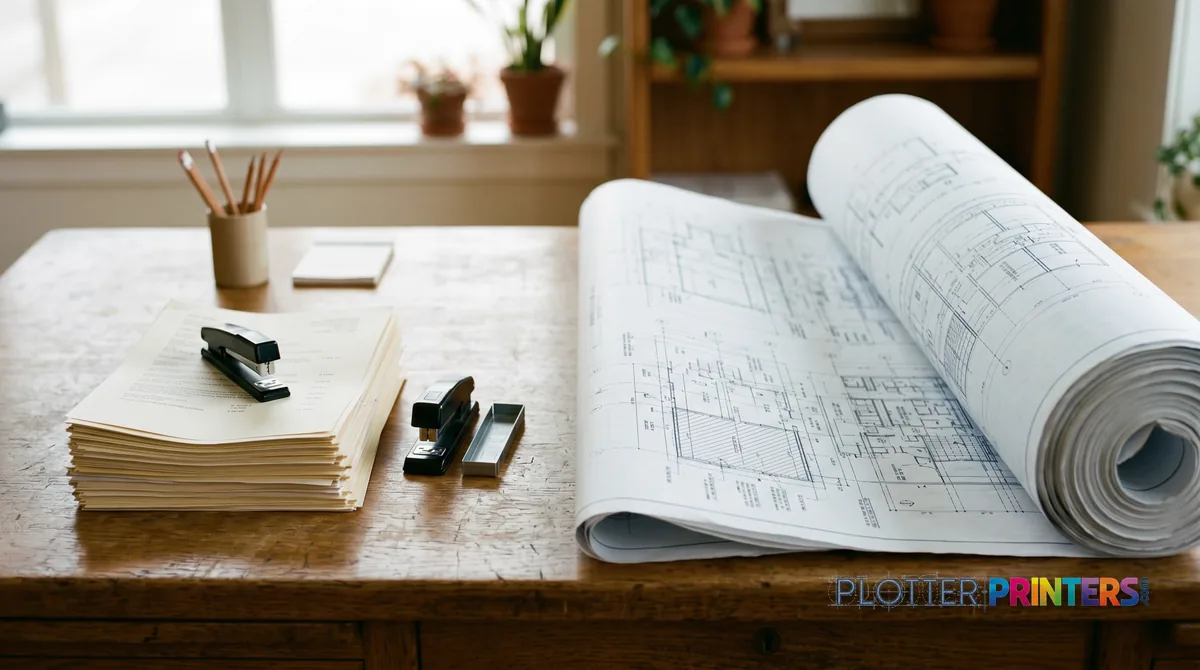
SHT 02 · PLOTTERPRINTERS ANALYST DESKMedia and feed. A printer pulls discrete cut sheets from a tray, one at a time, capped at 11×17 on the larger office machines. A plotter feeds continuous paper off a roll and cuts to length, so a single job can be a 24×36 sheet or a run of them without reloading. Some 36-inch-class machines carry two rolls at once — bond on one, gloss or a second width on the other — and switch automatically. That is a workflow difference, not a size difference.
Purpose. Printers are built for documents: memos, reports, half-size check sets, the occasional presentation handout. Plotters are built for drawings: floor plans, site plans, structural details, GIS base maps, the things drawn to scale where a line is data, not decoration. The mechanical precision reflects that — technical plotters lay crisp thin linework on plain bond that a toner copier smears or thickens.
Drivers and page setup. This is where offices get surprised. Office printers speak in Letter, Legal, Tabloid. CAD and PDF workflows speak in ARCH and ISO page sizes, and expect the driver to honor them at true scale. A proper plotter driver understands D-size and A1, holds dimensional accuracy, and handles the oversized page geometry your Revit or Bluebeam file was set up in. An office driver simply has no page size to select.
Footprint. A printer sits on a desk. A 24-inch-class plotter lives on a stand or cart; the 36-inch class is floor-standing furniture with a defined spot in the room. Plan for the media path and the output basket, not just the box.
Running-cost shape. Printers bill by the click — a per-page toner cost. Plotters bill by ink and roll consumed, which scales with coverage and sheet size. Neither is universally cheaper; they are simply different curves, and comparing them per-page-of-A4 misses the point entirely.
The visual argument
Office paper vs plotter paper, drawn to scale
Tap through ANSI, ARCH and ISO — the size gap explains the whole category.
Tap a sheet to inspect it.
The tiling trap
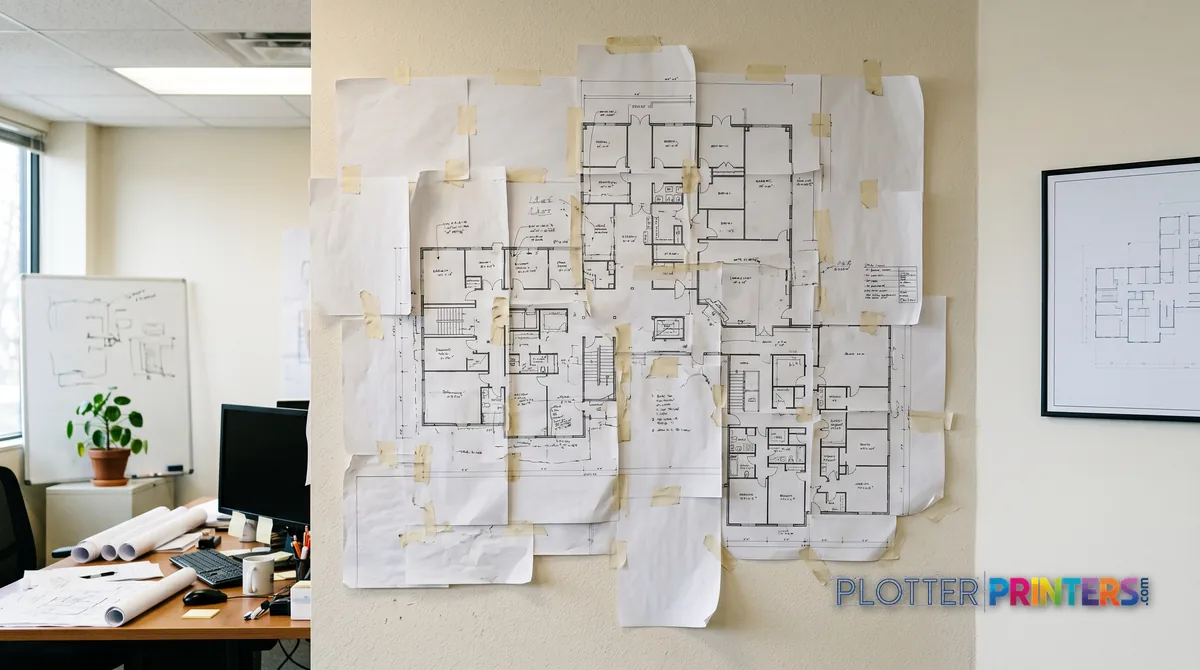
Someone always asks: can’t I just print the plan across twenty letter sheets and tape them together? Technically, yes. Professionally, no — and here is why.
First, scale drift. Each sheet carries a tiny margin and a tiny alignment error, and twenty of them compound into a plan that no longer measures true. An engineer who scales a dimension off your taped mosaic is scaling off a lie. Second, the seams. Tape lines fall across linework, page edges never quite meet, and the whole thing telegraphs “we don’t own the right equipment.” Third, the hours. Someone prints, trims, aligns and tapes twenty sheets — call it thirty to forty minutes of skilled-person time per plan, times however many plans in the set. Money is minutes, and this is a lot of minutes.
Then the client unrolls a real plotted sheet next to your quilt. That comparison is the actual cost. Tiling is fine for a rough internal sketch; it is not fine for anything you hand to a permit office or a job site.
The honest gray zone
SHT 04 · PLOTTERPRINTERS ANALYST DESKNot every question resolves cleanly to “plotter,” and pretending otherwise would be dishonest. A tabloid-capable office machine handles a lot of real AEC work: half-size check sets printed at 11×17 (a common ARCH D drawing reduced by half fits neatly), redline reviews, coordination markups passed around a design meeting. For a small studio that issues full-size sets only occasionally, an 11×17 machine plus an outside repro service covers the year without buying a plotter at all.
The line gets crossed the moment full-size output stops being occasional. When you are issuing ARCH D or E sheets weekly, sending drawings to an outside service every time turns into a turnaround problem and a courier bill. That is when a plotter earns its footprint.
The common, sensible answer is two machines: the office multifunction for documents and half-size sets, a plotter for full-size drawings. A 24-inch-class plotter pairs neatly with an existing tabloid copier — it covers A1 and D-size while the copier keeps doing the paperwork. One node does documents; the other does drawings; nobody tapes anything.
Where to go next
SHT 05 · PLOTTERPRINTERS ANALYST DESKIf you are still fuzzy on what a plotter actually is and does, start with our plain-language explainer and the paper sizes page — or just work the to-scale sheet visualizer on this page, which shows exactly how much bigger a D-size plan is than the tabloid sheet you know. When you have decided a plotter belongs in your workflow, the buying guide walks the width, roll and ink decisions in order. The ranked picks below are live, score-ordered and current-priced; read them after you know which class you need, not before. When it is time for numbers on paper, the quote funnel is the fastest path.
If the answer is 'plotter'
SHT 06 · PLOTTERPRINTERS ANALYST DESKCurrent CAD-class machines, ranked live
From our graded catalog; prices and stock are current.
Your questions, answered
SHT 07 · PLOTTERPRINTERS ANALYST DESKWhat is the main difference between a plotter and a printer?
A printer handles cut sheets up to tabloid size (11×17 inches) and is built for documents. A plotter is a roll-fed wide-format machine that prints full-size technical drawings on 24-inch rolls and wider, reaching ARCH D (24×36) and ARCH E (36×48) sizes. If your output is larger than 11×17, you need a plotter; if it fits on tabloid, a printer is enough.
Can a regular office printer print blueprints or plans?
Only at reduced scale. A tabloid-capable office machine can print a half-size check set on 11×17 — a common way to review ARCH D drawings shrunk by half. It cannot produce a full-size plan, because it has no roll feed and no oversized page path. For construction-issue drawings at true scale, you need a plotter.
What size can a plotter print?
It depends on roll width. A 24-inch-class plotter prints ARCH D, ANSI D and ISO A1 sheets (roughly 24×36 inches). A 36-inch-class machine reaches ARCH E and ISO A0 (36×48). Wider rolls of 44 inches and up exist for graphics and production work. Both widths can also produce half-size sets like 11×17 and 12×18.
Is a plotter just a big printer?
Mechanically they overlap, but they are built for different jobs. A plotter feeds continuous roll paper, holds dimensional accuracy across large sheets, and speaks CAD and ISO page sizes that office drivers do not offer. Technical plotters lay crisp thin linework on plain bond for scaled drawings. A printer is a document machine; a plotter is a drawing machine.
Can I tile a large drawing across several small sheets instead?
You can, and it fails professionally. Each sheet’s margin and alignment error compounds, so scale accuracy drifts across the finished mosaic. Seams cross linework, and the labor — thirty to forty minutes of trimming and taping per plan — adds up fast. Tiling is fine for a rough internal sketch, never for anything handed to a permit office or job site.
Do I need a plotter or will an 11×17 printer do?
If you issue full-size drawings only occasionally, an 11×17 machine plus an outside repro service can cover the year. Once full-size output becomes weekly, outsourcing turns into a turnaround and cost problem, and a plotter earns its footprint. Many firms run both: the office machine for documents and half-size sets, the plotter for full-size drawings.
What's the difference between dye ink and pigment ink for plotters?
Dye ink is vivid and lower cost but fades faster with light and moisture. Pigment ink is archival, water- and UV-resistant, and is the AEC default because construction documents live outdoors and in the field. For presentation boards and photo-grade color you may want a graphics-class pigment machine tuned for gamut; for crisp technical linework, standard technical plotters handle it well.
How much space does a plotter need compared to a printer?
A printer sits on a desk. A 24-inch-class plotter lives on a stand or rolling cart, so it fits a small office corner. The 36-inch class is floor-standing and needs a defined spot with room for the media path and the output basket. Plan for the paper path and stacking area, not just the machine’s footprint.
Why do plotters and printers cost money differently?
Office printers bill by the click — a per-page toner charge. Plotters bill by ink and roll paper consumed, which scales with sheet size and ink coverage. Neither is universally cheaper; they are different cost curves for different work. Comparing them by cost-per-A4-page misses the point, since the plotter’s job is producing sheets a printer physically cannot make.
What is a wide-format MFP and how is it different from a plotter?
A wide-format MFP adds an integrated scanner to the plotter, giving you print, scan and copy in one machine. It is the standard for plan rooms, as-built capture and scanning field markups back into your document system. A plain plotter only prints. If you regularly digitize existing drawings, the MFP class saves a separate scanning step.
The bottom line
SHT 08 · PLOTTERPRINTERS ANALYST DESK- A printer stops at 11×17 cut sheets; a plotter runs rolls for full-size drawings at ARCH D (24×36) and ARCH E (36×48).
- The real split is purpose: printers make documents, plotters make scaled drawings on plain bond.
- Office drivers only offer Letter/Legal/Tabloid; CAD workflows need a driver that honors ARCH and ISO page sizes at true scale.
- Tiling a plan across taped letter sheets drifts out of scale and burns skilled-person minutes — fine for a sketch, never for issue.
- A tabloid office machine covers half-size check sets; a plotter takes over the moment full-size output becomes routine.
- Decision rule: fits on 11×17 and stays there, keep the printer; anything larger or issued at full scale, buy a plotter — most busy firms run both.
Still on the fence?
Tell us what you print and how often — we'll say plainly which side you're on.