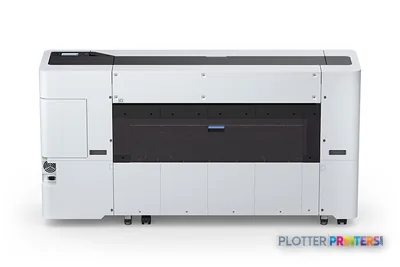
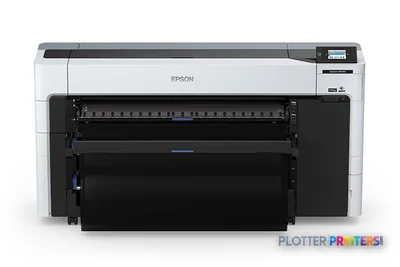
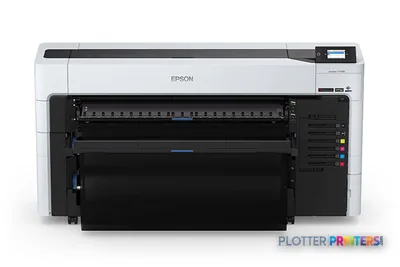
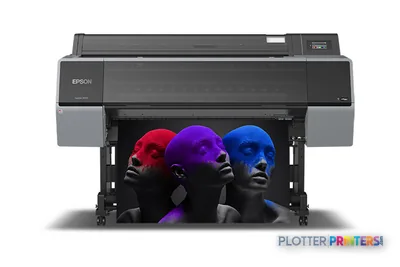
Every AEC office eventually runs into a printing job that its plan plotter handles poorly: the client-facing rendering, the awards-submission board, the marketing spread, the framed presentation panel that has to survive a lobby or a jury room. A workhorse line printer will push out a rendering, but it rarely does justice to the gradients, the material studies or the photographic site imagery that carry a design story. The Epson SureColor P9300 Spectro is aimed squarely at that second problem. It is a 44-inch, roll-fed, 10-ink on-demand inkjet built for graphics and photographic output rather than for high-volume bid-set production.
That framing matters, because it shapes almost everything about how this machine fits into a practice. It is not a general-purpose office plotter, and treating it as one would misread its strengths.
Who it actually fits
Think of the P9300 Spectro as a presentation and imaging engine for a firm that already does its everyday plotting elsewhere. It suits an architecture studio or multidisciplinary practice that produces competition boards, high-end renderings, material and lighting studies, or marketing collateral where color fidelity and smooth tonal transitions are the point. Our spec-derived use-case scoring reflects this bias directly: it lands only moderately for a field-office role (44/100), and it scores low for an as-builts and archives workflow (29/100), largely because there is no integrated scanner. If your priority is the redline-to-as-built loop, this machine cannot close it on its own — you would pair it with a separate wide-format scanner, and at that point you are buying two devices to do what an integrated MFP does in one.
Where it becomes compelling is any environment that treats printed output as part of the deliverable, not just a byproduct. A design-focused studio, an in-house marketing group inside a larger firm, or a reprographics operation that wants to add fine-art and photographic capability to its menu will read the same specs very differently than a civil department cranking out permit sets.
What the verified data tells us
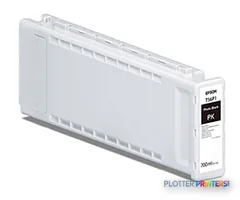
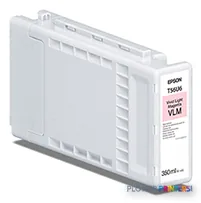
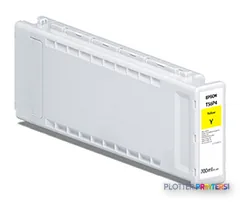
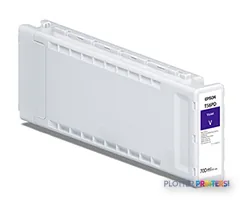
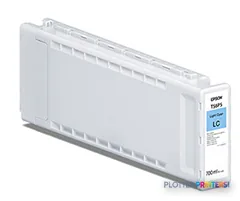
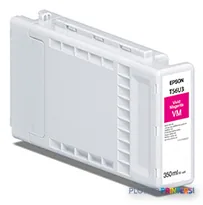
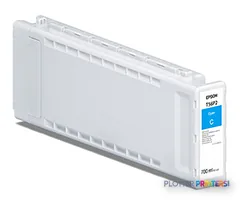
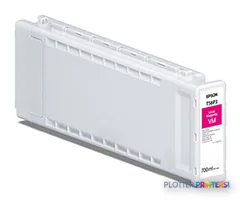
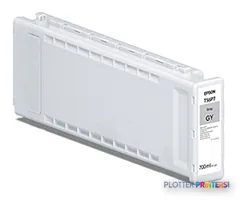
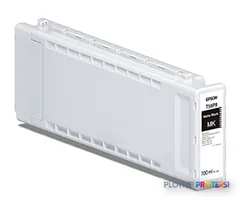
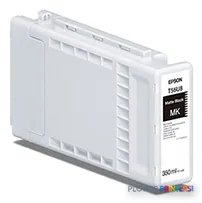
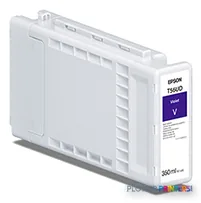
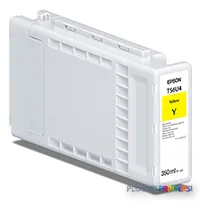
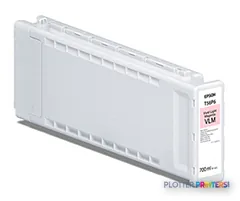
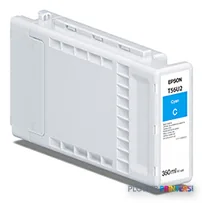
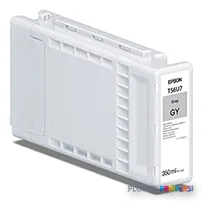
The core hardware is a 44-inch (111.8 cm) roll platform with a 10-color ink set: Cyan, Vivid Magenta, Yellow, Light Cyan, Vivid Light Magenta, Violet, Photo Black, Matte Black, Gray and Light Gray. The presence of both Photo Black and Matte Black, plus a three-step gray ramp (Gray and Light Gray alongside black), is the tell that this is built for photographic and neutral-tone reproduction. That is what earns it a strong color rating in our scorecard (90/100). The printhead is specified at 800 nozzles per color across all 10 colors, and Epson lists a maximum resolution of 2400 x 1200 dpi.
On the electronics side, the datasheet gives 2.0 GB of internal memory and 2.0 GB of internal storage — modest but adequate for the raster and PDF handling this class of work involves. Page description language support covers ESC/P raster and Adobe PDF 1.7, which is useful: native PDF handling matters when your output pipeline runs through Bluebeam or PDF-based submission workflows rather than legacy HP-GL/2 CAD streams. Connectivity is Gigabit Ethernet (10/100/1000BASE-T, plus Energy Efficient Ethernet) and Hi-Speed USB. One honest note here: the product is marketed on a USB 3.0 designation, but the manufacturer datasheet specifies the interface as Hi-Speed USB. For a networked printer that distinction rarely affects real workflow, since submission goes over the wire, but it is worth knowing the datasheet figure.
One thing the dossier does not give us is a manufacturer-quoted print speed — the productive-speed dimension has no data on file. We will not invent a throughput number. In practical terms, a 10-ink graphics printer at high resolution is optimized for image quality over raw pages-per-hour, so no one should expect it to behave like a monochrome line plotter under a heavy plan-set load.
Ink and media economics
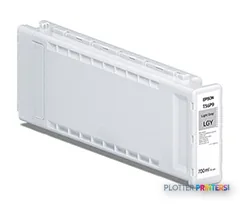
The ink system uses Epson’s special ink cartridges, available in 700 ml, 350 ml and 150 ml capacities. The larger 700 ml option is the one that makes sense for any operation running steady volume, since it lowers the cost-per-milliliter and reduces cartridge-swap interruptions. We don’t have published yields or prices on file, so we won’t estimate a running cost; qualitatively, a 10-ink pigment-class platform with large-format cartridges tends to reward high, consistent utilization and penalize sporadic use, where the maintenance and startup cycles consume ink relative to what you print.
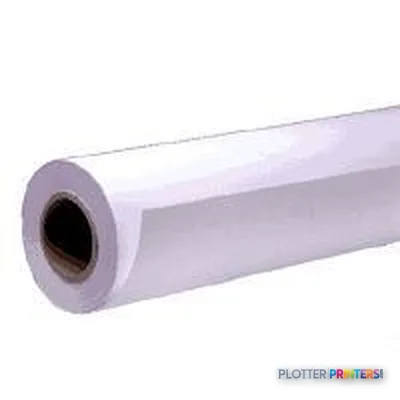
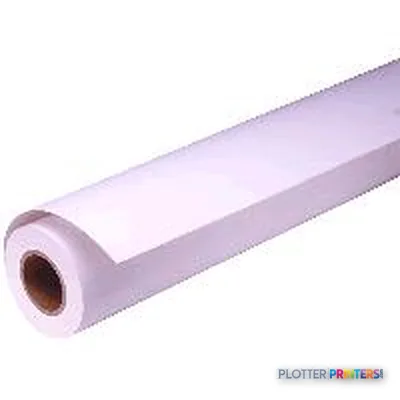
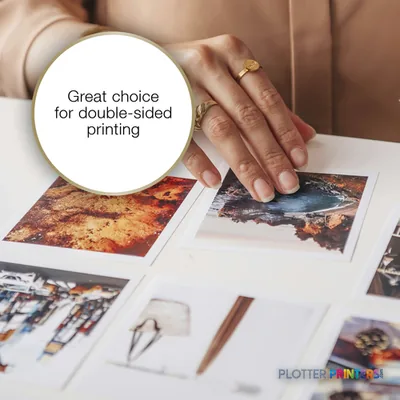
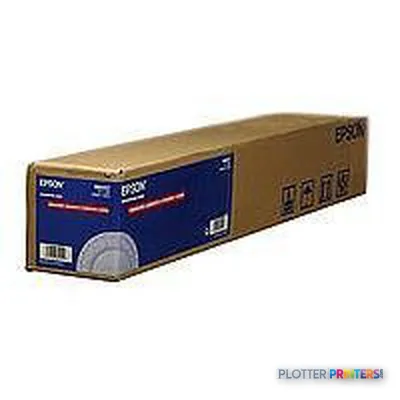
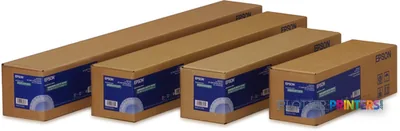
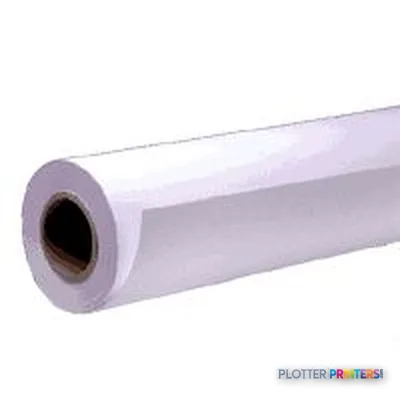
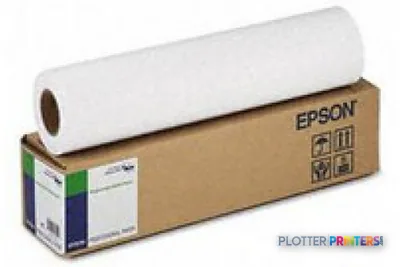
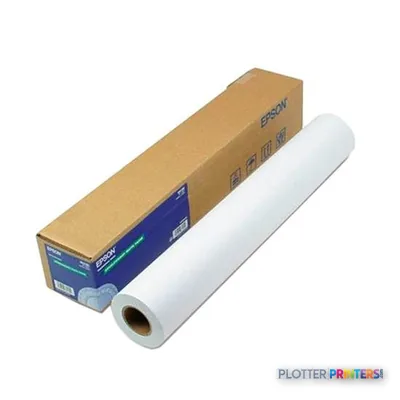
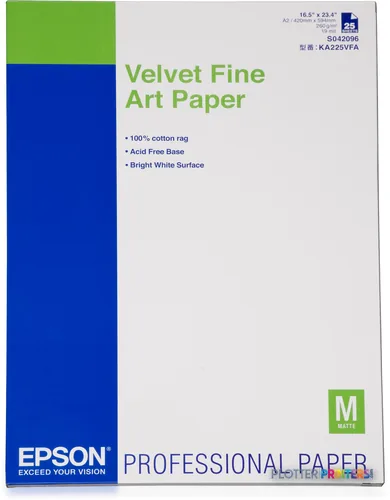
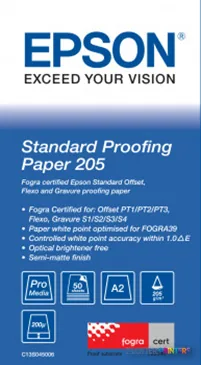
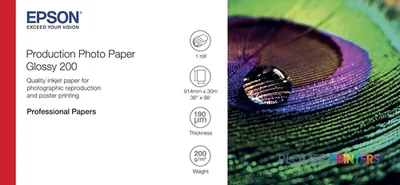
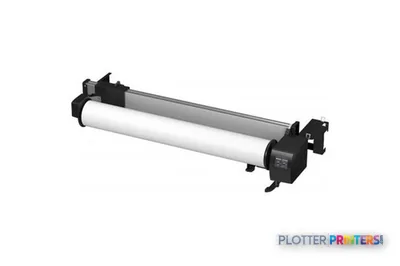
Media flexibility is a genuine strength. Epson lists support for baryta, matte fine art paper, matte and satin canvas, Japanese paper and thin Japanese paper, plus non-Epson media via a Custom Paper mode. Rolls run from 10 in up to the full 44-in width, on 2-inch or 3-inch cores. The datasheet cites two maximum roll diameters (103 mm and 150 mm) depending on configuration. That range — from thin art papers to canvas — is the practical justification for the machine in a firm that wants to produce framed boards, canvas presentation pieces or archival-quality prints in-house rather than outsourcing them.
How it compares
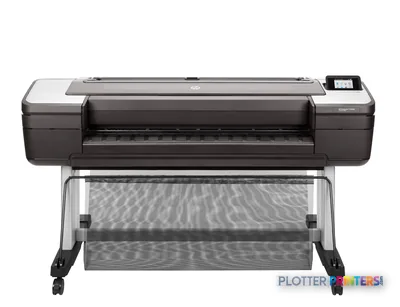
Within its scored cohort, the closest cross-vendor comparisons on file are the HP Designjet 5500 family — the 5500UVPS (42 in, current), and the discontinued 5500, 5500UV and 5500PS (all 42 in). The most decision-relevant delta is lifecycle: three of those four HP models are discontinued, which raises real questions about long-term parts and consumable availability. The Epson is a current product. If you are weighing a current 44-inch Epson platform against an aging HP line where only one variant remains on the market, the succession and support outlook favors the Epson for a new purchase. The HP 5500 line, where you already own one, remains a capable graphics device — but as a fresh acquisition, buying into a mostly-discontinued family is a harder case to make.
Width and variant guidance
This model is sold in the 44-inch width only; there is no narrower or wider sibling on file to choose between.
Lifecycle and procurement
The P9300 Spectro is listed as on-market and shares its ink platform with 28 other Epson SureColor devices, including models such as the SC-T3700D and the SureColor P7300 — a broad common family that generally bodes well for consumable continuity. Warranty is one year as standard. Physically, plan for the footprint: roughly 75.2 in wide, up to 51.9 in deep and 48 in high, at about 333 lb. This is floor-standing equipment for a dedicated print space, not a corner of an open office. Power draw is low for the class — approximately 80 W operating, 32 W ready, 3.2 W sleep and 0.3 W off.
What we could not verify
Two gaps a buyer should confirm directly. First, there is no manufacturer print-speed figure or duty-cycle rating in our data, so productive throughput and recommended monthly volume should be confirmed with Epson or the dealer against your real job mix. Second, we have no independent lab reviews on file for this specific model, so color-accuracy and line-quality claims here rest on the datasheet and platform reasoning rather than tested results. Ink yields and street pricing are also not on file — get those in writing before you model total cost of ownership.