
Home / Wide-Format Printers / Canon imagePROGRAF
Canon · Wide-Format Plotter
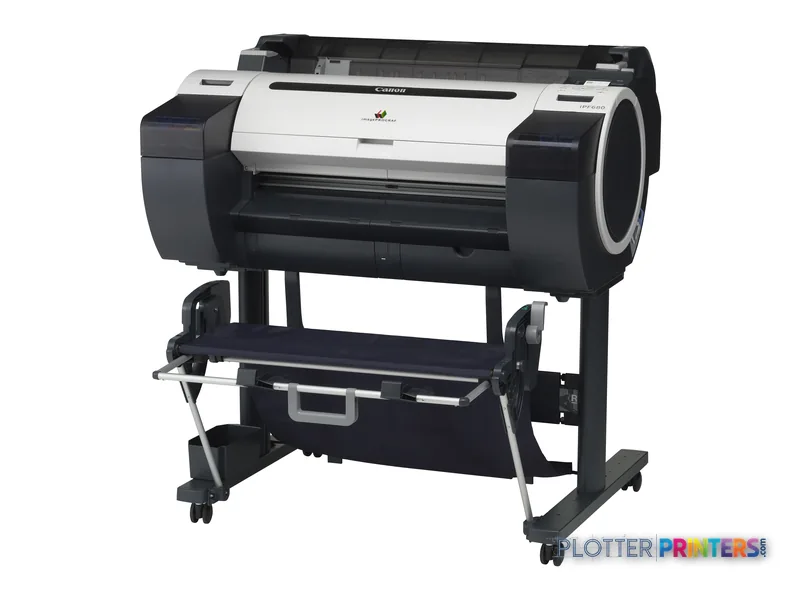
Canon imagePROGRAF iPF680
24" technical / CAD plotter
- ModeliPF680
- Prints24" wide
Genuine OEM hardwareAuthorized U.S. distribution
Manufacturer warrantyExtension plans available
Free shippingContinental U.S.
Plotter specialistsAEC experts, not just sellers
Analyst take
- The Canon iPF680 24-in supports roll media from 10 to 24 inches wide and cut sheets from 8 to 24 inches wide.
- Its 2400 x 1200 DPI maximum resolution is relevant to detailed CAD drawings, annotations, and color-coded coordination documents.
- HP-GL/2, HP-RTL, GARO, USB, direct printing, and Gigabit Ethernet support mixed technical-print workflows.
Not sure if the iPF680 is right for you?
Compare key specs and an AI analyst read-out against similar models.
- Wide-format reach Prints up to 24" wide on rolls and sheets.
- Fine detail 2400 x 1200 DPI maximum resolution for crisp line work.
- Ink platform Black, Cyan, Magenta, Matte black, Yellow.
- Connectivity Ethernet for shared team printing.
Overview
Built for the work
Canon imagePROGRAF iPF680, Inkjet, 2400 x 1200 DPI, GARO, HP-GL/2, HP-RTL, Black, Cyan, Magenta, Matte black, Yellow, PF-04, Coated paper, Cut sheet, Plain paper, Roll
Expert analysis
What you should know

Key takeaways
- The Canon iPF680 24-in supports roll media from 10 to 24 inches wide and cut sheets from 8 to 24 inches wide.
- Its 2400 x 1200 DPI maximum resolution is relevant to detailed CAD drawings, annotations, and color-coded coordination documents.
- HP-GL/2, HP-RTL, GARO, USB, direct printing, and Gigabit Ethernet support mixed technical-print workflows.
- The 24-inch width is the deciding constraint; routine 36-inch drawing output points to a wider in-family device.
- Plan replacement supplies around the Canon PF-04 print head and Canon MC-10 maintenance item rather than waiting for a deadline failure.
It is 4:45 p.m., the permit set has changed, and somebody needs a clean 24-inch sheet before the courier run. The Canon iPF680 24-in is built for that sort of technical-print duty: CAD sheets, PDF markups, GIS maps, and color-coded coordination drawings in a compact office footprint.
This is a five-color inkjet printer with black and matte black inks, HP-GL/2 and HP-RTL support, direct printing, USB, and Gigabit Ethernet. It handles rolls from 10 to 24 inches wide and cut sheets from 8 to 24 inches wide. That makes it a sensible fit for teams producing smaller plan sheets, detail packages, field copies, and review sets—not a substitute for a wider production device when full-size 36-inch drawings are routine.
2400 x 1200 DPIMaximum print resolutionUseful headroom for dense CAD linework and small annotation text.
10"–24"Roll media widthSized for 24-inch technical drawings and narrower output.
708.7" (18 m)Maximum roll lengthA longer roll reduces interruptions during recurring drawing output.
39.3" (997 mm)Printer footprintWorth checking against the counter, stand, and service-clearance space.
Where it earns its desk space
The iPF680 fits small architecture studios, engineering pods, survey teams, and construction offices that need color technical output without dedicating a room to the printer. Its 24-inch ceiling is well matched to detail sheets, reduced plan sets, presentation-ready site plans, and field copies where color calls out revisions, utilities, phasing, or discipline coordination.
HP-GL/2 and HP-RTL matter in older and mixed CAD environments. They give the printer a direct connection to common technical drawing languages, while GARO provides the native page-description path listed for this unit. Ethernet supports shared office use; USB and direct printing give an operator another route when the network is having one of its little moments.
Bottom line: This is a practical technical printer when 24-inch output is the normal job, not the occasional compromise.
Media, color, and the daily print-room reality
The printer accepts plain paper, coated paper, cut sheets, and roll media, with supported media thickness from 0.003 to 0.031 inches. That range gives an AEC team latitude for ordinary bond drawings and heavier presentation-oriented sheets, provided the selected stock stays within the stated limits.
The five printing colors are black, matte black, cyan, magenta, and yellow. For AEC work, that is most relevant when a plain drawing needs legible linework plus color layers, redlines, utility routes, or coordination notes. The 256 MB of internal memory deserves context: it is a stated hardware fact, not a promise that every large, graphics-heavy PDF will arrive at the tray at the same pace.
Replacement items listed for this machine include Canon 6704B001, Canon 6705B001, Canon 6706B001, Canon 6707B001, and Canon 6708B001 inks, plus the Canon PF-04 print head and Canon MC-10 maintenance item. Keep those planned, not discovered during a bid deadline.
Bottom line: The media range and five-color system suit everyday technical documents, but the workflow remains a 24-inch, single-device workflow.
What to compare before you commit
Stay with the iPF680 when its width matches the work and a shared color technical printer is the need. If your files regularly require 36-inch output, the Canon iPF710 36-in is the more relevant in-family width comparison. A 24-inch device cannot create the missing width by force of optimism.
Within the same 24-inch family, compare the Canon iPF670 24-in and Canon iPF685 24-in against the iPF680 using the functions your office actually uses. The supplied catalog data confirms their shared 24-inch class and resolution, but it does not establish a meaningful feature hierarchy by itself. For a side-by-side starting point, use the iPF680 and iPF685 comparison.
For IT, confirm driver deployment, print permissions, accounting requirements, and whether direct USB printing fits site policy. For the print-room lead, test the actual PDFs: a dense civil base map, a Revit export with transparency, and a marked-up bid sheet. That is where a printer stops being a line item and starts earning its keep.
Bottom line: Choose by drawing width and workflow, then validate with your nastiest real file.
Useful next checks
Canon iPF710 36-inA wider in-family option for teams that routinely issue 36-inch drawings.Canon iPF685 24-inA same-width family comparison point.24-inch technical-printer rankingSee where this model sits within its class.How we assess technical printersOur methodology for workflow-focused product evaluation.
The read
The Canon iPF680 24-in is a grounded choice for AEC teams whose day is dominated by 24-inch CAD, PDF, and color coordination output. It offers technical page languages, network connectivity, direct printing, roll and sheet support, and a compact physical footprint. The trade-off is simple: firms issuing full-size 36-inch plan sets, or relying on wider construction documents, should start with a wider machine such as the Canon iPF710 36-in. Bottom line: Buy this for consistent 24-inch technical work, not for the job you hope it will become later.
Verified specifications
The specs that decide it
| Maximum print width | 24 in |
|---|---|
| Print technology | Inkjet |
| Maximum resolution | 2400 x 1200 DPI |
| Printing colors | Black, Cyan, Magenta, Matte black, Yellow |
| Page description languages | GARO, HP-GL/2, HP-RTL |
| Internal memory | 256 MB |
| Media thickness | 0.07 – 0.8 mm |
| Maximum roll diameter | 5.91" (15 cm) |
| Ethernet | Yes |
| Sound level (printing) | 47 dB |
| Power consumption | 140 W |
Specifications
Full technical detail
Print technologyInkjet
Max resolution2400 x 1200 DPI
Max print width24"
ColorColor
ConnectivityEthernet (Gigabit LAN), USB
Use caseCAD / Technical
Printing
| Color | Yes |
|---|---|
| Print head | PF-04 |
| Printing colors | Black, Cyan, Magenta, Matte black, Yellow |
| Print technology | Inkjet |
| Maximum resolution | 2400 x 1200 DPI |
| Page description languages | GARO, HP-GL/2, HP-RTL |
Performance
| Certification | RoHS, TED, WEEE |
|---|---|
| Product color | Black, Blue, White |
| Internal memory | 256 MB |
| Sound power level (standby) | 35 dB |
| Sound pressure level (printing) | 47 dB |
Paper handling
| Media thickness | 0.003"–0.031" (0.07 – 0.8 mm) |
|---|---|
| Maximum roll length | 708.7" (18 m) |
| Media width (rolls) | 10"–24" (254 – 609.6 mm) |
| Media width (sheets) | 8"–24" (203.2 – 609.6 mm) |
| Maximum roll diameter | 5.91" (15 cm) |
| Paper tray media types | Coated paper, Cut sheet, Plain paper, Roll |
| ISO A-series sizes (A0…A9) | A1, A2, A3 |
| ISO B-series sizes (B0…B9) | B2, B4 |
Ports & interfaces
| USB port | Yes |
|---|---|
| Ethernet LAN | Yes |
| USB connector | USB Type-A |
| Direct printing | Yes |
| USB 2.0 ports quantity | 1 |
| Ethernet LAN data rates | 10/100/1000 Base-T/TX |
| Ethernet interface type | Gigabit Ethernet |
Weight & dimensions
| Depth | 29.8" (757 mm) |
|---|---|
| Width | 39.3" (997 mm) |
| Height | 20" (507 mm) |
| Weight | 101.4 lbs (46 kg) |
Power
| Power consumption (off) | 0.5 W |
|---|---|
| Power consumption (standby) | 5 W |
| Power consumption (typical) | 140 W |
Operational conditions
| Storage temperature (T-T) | 15 – 30 °C |
|---|---|
| Operating relative humidity (H-H) | 10 – 80% |
Sustainability
| Sustainability certificates | ENERGY STAR |
|---|
Questions
Straight answers
What AEC work is the Canon iPF680 24-in suited to?
It fits 24-inch CAD drawings, PDF markups, GIS maps, detail sheets, field copies, and color-coded coordination documents. Its supported roll and sheet widths make it less appropriate for routine 36-inch plan-set production.
Can the iPF680 print directly from a USB device?
Yes. The listed specifications include direct printing and one USB 2.0 Type-A port, alongside Ethernet LAN connectivity.
Does this printer support technical CAD languages?
Yes. Its listed page-description languages are GARO, HP-GL/2, and HP-RTL. That is relevant for offices maintaining HP-GL/2 or HP-RTL drawing workflows.
What media can the iPF680 handle?
It supports coated paper, cut sheets, plain paper, and roll media. Listed media thickness is 0.003 to 0.031 inches.
Which consumables should the print-room team keep track of?
The listed compatible items are Canon 6704B001, Canon 6705B001, Canon 6706B001, Canon 6707B001, Canon 6708B001, the Canon PF-04 print head, and the Canon MC-10 maintenance item.
When should I compare it with the Canon iPF710 36-in?
Compare them when your team regularly needs 36-inch drawings. The iPF680 is limited to 24-inch roll and sheet media, while the Canon iPF710 36-in is the relevant wider in-family option listed here.
Ready to put the Canon imagePROGRAF iPF680 to work?
We’ll point you to the current equivalent and quote it for your workflow.