Expert analysis
What you should know

By Ray KowalczykSenior Technical Editor — CAD & Technical Printing Key takeaways
- The iPF6300 is a 24-inch color printer suited to detailed AEC drawings, maps, proofs, and presentation-oriented output.
- Its supported architectural sizes include 24 x 36", making it usable for common full-size plan sheets.
- The listed 44 sqf/h best-quality speed should be treated as a quality-mode measure, not mixed-set production throughput.
- Roll media and support for paper, film, vinyl, and proofing media make it more flexible than a bond-only plan printer.
- Teams with routine wide-format or sustained plan-set work should evaluate a wider device before committing.
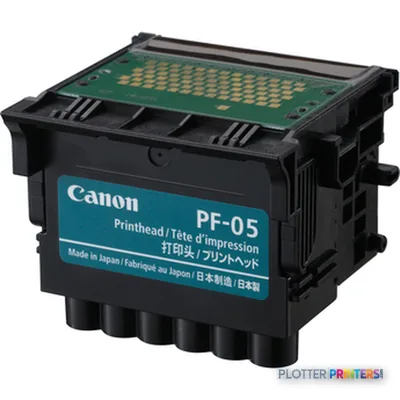
- The Canon PF-05 printhead and Canon ST-25 are the listed compatible consumable and accessory families.
It is 4:45 p.m. The architect needs a clean 24 x 36 plan, the engineer has a color coordination sheet behind it, and nobody wants a media-loading lecture before the courier cutoff. The Canon iPF6300 is a 24-inch color wide-format printer for that desk-side AEC role: drawings, maps, presentation output, and proof-oriented work where detail matters more than brute production volume.
Its listed media support covers roll paper plus coated, glossy, photo, proofing, opaque paper, opaque film, and vinyl media. That gives a small studio or departmental print room room to move between ordinary plan output and visual deliverables without bringing in a second device. Bottom line: this is a detail-focused 24-inch printer, not a plan-room production engine.
33 inPrint widthSupports architectural sizes through 24 x 36".
2400 x 1200 DPIMaximum resolutionUseful when small notes, linework, and color overlays need close inspection.
44 sqf/hBest-quality print speedA quality-mode figure, not a promise for a mixed bid-set deadline.
0.003"–0.031" (0.07 – 0.8 mm)Media thicknessSupports a range of paper and film applications.
Where it earns its floor space
The iPF6300 fits architecture and engineering teams that need color drawings alongside technical output: permit sheets with review marks, GIS maps, color-coded MEP coordination plans, landscape layouts, and presentation boards within its supported media range. The 4 pl ink drop and 2400 x 1200 DPI maximum resolution point toward careful line and image work, especially when a drawing will be reviewed at arm’s length rather than filed and forgotten.
It accepts roll paper and supports standard office sizes through 22 x 34″, plus architectural sizes from 9 x 12″ through 24 x 36″. Gigabit Ethernet and USB 2.0 provide the basic connections expected in a shared office. The LCD helps at the machine when paper or consumables need attention. Bottom line: it makes sense where color communication is part of the drawing, not an occasional afterthought.
The trade-offs show up during a deadline
A 24-inch printer is naturally constrained when the job calls for wider construction graphics or a steady stream of large plan sets. Its listed best-quality speed is 44 sqf/h, which deserves context: a single detailed sheet is one thing; a run involving different sheet sizes, media changes, and hand sorting is another. The printer supports rolls up to 708.7″, but roll capacity does not turn a quality-oriented device into an unattended reprographics line. Paper has a way of choosing 4:45 p.m. for its little dramas.
At 46.3 x 34.3 x 39″ and 145.5 lbs, it needs a deliberate location rather than a spare corner. Listed printing sound pressure is 47 dB, while standby sound power is 35 dB. For teams that need a broader format option, review the Canon iPF840 44-in. For 24-inch Canon alternatives, compare the Canon iPF6400 24-in and Canon iPF6300S 24-in against the actual media and output mix. Bottom line: do not buy a 24-inch machine to solve a wider-format production problem.
Supplies, network fit, and the questions worth asking
The listed ink set includes BK, MBK, C, M, Y, PC, PM, GY, PGY, R, G, and B, with the Canon PF-05 printhead. The Canon ST-25 is the listed accessory. Network support includes HTTP, TCP/IP, IPv4/IPv6, SNMP, and IPX/SPX, with one RJ-45 port. That is useful baseline information for IT, but it does not answer the questions that cause trouble later: driver deployment, authentication policy, accounting requirements, and who owns first-line support.
Before committing, run your own PDFs with fine text, screened fills, and color-coded markups. Confirm the media you actually stock. Ask who handles a failed printhead and what the service path looks like locally. If a wider 36-inch workflow is the real requirement, put it beside the Epson SC-T5100 36-in in the comparison tool rather than assuming width is a minor detail. Bottom line: test the files that create your deadline, not a tidy demo page.
Compare related wide-format options
The read
The Canon iPF6300 is a credible fit for a small AEC team or department that values detailed 24-inch color output across paper and specialty media. It is less appropriate for high-volume, mixed-size plan-set production or work that regularly needs more than 24 inches of width. Choose it for the work it is built to handle, and let a wider or more production-oriented device take the jobs that would otherwise keep somebody in the print room after everyone else has gone home.