
Brand Desk — No. 04
Canon vs HP Plotters, Compared Honestly
Canon imagePROGRAF vs HP DesignJet, graded on the same nine dimensions and the same measured color — by a shop that only sells one of them.
Shop these machines
Ranked live by our spec-graded scoring — prices & stock are current. Free U.S. shipping on every printer.
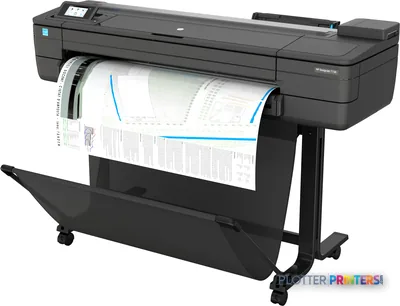 HP DesignJet T730 36-in PrinterF9A29D#B1936"2400 dpiWi-FiView details
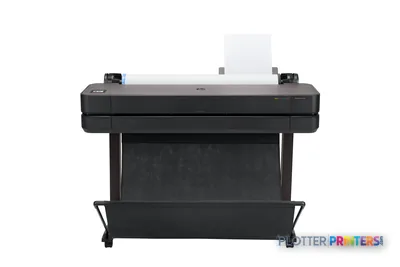 HP DesignJet T630 36-in Printer5HB11D36"2400 dpiWi-FiView details
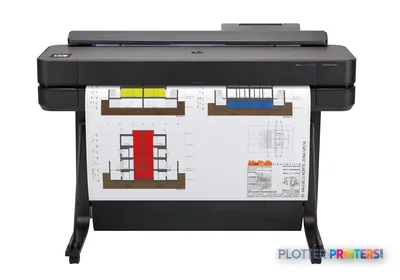 HP DesignJet T650 36-in Plotter5HB10D36"2400 dpiWi-FiView details
Free U.S. shipping on printersKlarna & Affirm at checkoutTalk to a person: 980-536-0080

Canon’s imagePROGRAF and HP’s DesignJet are the two wide-format lines most AEC buyers cross-shop, and both are genuinely good. Each splits into technical/CAD machines, MFPs with integrated scanners, and color/graphics families. The differences that matter aren’t ‘one brand is better’ — they’re differences of emphasis, ecosystem and who answers the phone when a printhead dies mid-bid.
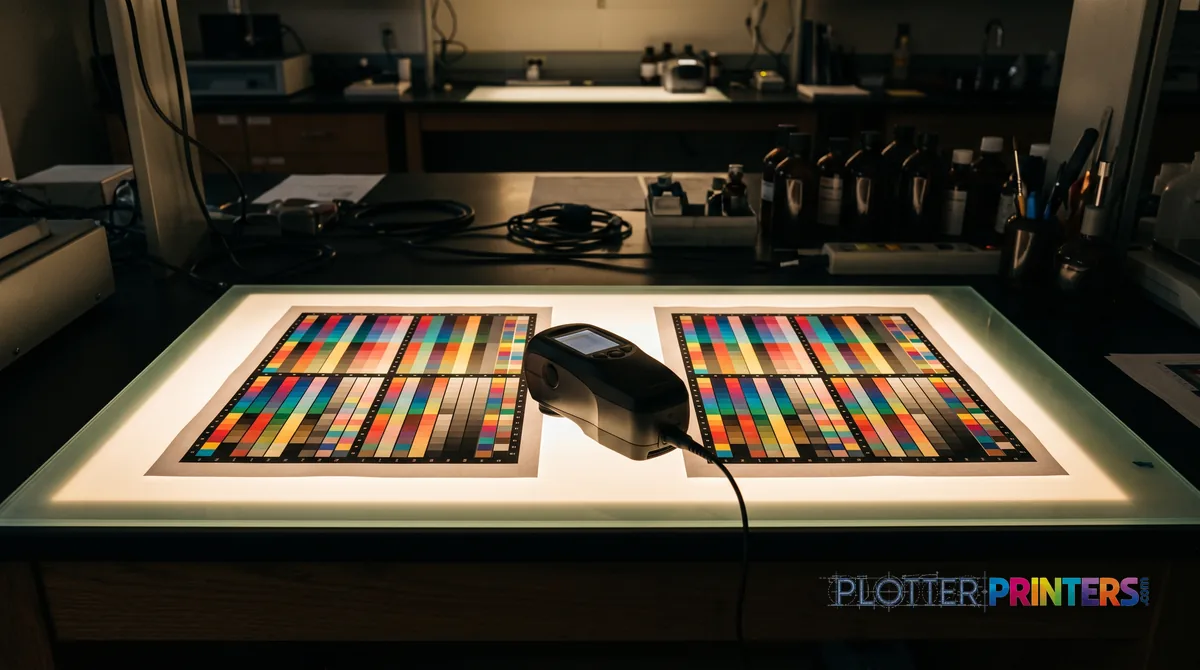
Here’s the part you should hear up front: we sell HP and Epson. We do not sell Canon. Canon coverage on this site is editorial. That sounds like a conflict until you flip it — we’ve run Canon machines’ color through the same lab process we use on HP, from Canon’s own ICC profiles, and we can’t make a dime off the result. When we say a Canon graphics machine holds a wide gamut, that’s a measurement, not a sales pitch we’d rather avoid.
So this page grades both brands with the same instruments: the same nine spec dimensions, the same measured color data, the same standards for line quality and media handling. Then it routes you honestly. If HP is the right tool, our DesignJet grids are right below. If Canon is the right tool, we say so, and you buy it from a Canon dealer with real service depth. The compare tool can put any Canon machine next to any HP machine with verified specs. The color hub carries both brands’ numbers side by side. Read on before you sign anything.

Same instruments, one of them we can't sell you
SHT 02 · PLOTTERPRINTERS ANALYST DESKMost ‘Canon vs HP’ pages are written by someone with a horse in the race. So are we — we’re an HP and Epson dealer in Mooresville, North Carolina. The difference is we’re telling you.
Here’s why that makes this comparison more useful, not less. We grade every machine on nine spec dimensions and we lab-measure ICC color the same way regardless of the badge. When we run those numbers on a DesignJet, sure, we’d love to sell it. When we run them on an imagePROGRAF, there’s nothing in it for us. We publish the Canon numbers anyway, next to HP’s, on the color hub.
That’s the whole point. Measured data on a machine we can’t profit from is the closest thing to an honest read you’ll get from a dealer. If the Canon number is better, the number says so, and so do we.
What we won’t do is service a Canon machine or sell you consumables for one — we don’t stock either. So the routing at the end of this page is real. Right tool, right dealer. We’d rather send you to a good Canon shop than sell you an HP that fits your workflow badly. A mismatched machine comes back to haunt everyone, usually at 4:45 on a Friday.
Bottom line: we measure both, we sell one, and we’ll tell you which is which every time.
Where Canon earns the look
SHT 03 · PLOTTERPRINTERS ANALYST DESKLet’s not damn Canon with faint praise. The imagePROGRAF line has real strengths, and pretending otherwise would make this whole exercise worthless.
Start with color. Canon’s graphics-class machines have a long heritage in the photo and fine-art world, and it shows in the gradients — the smooth ramp from a light sky to a dark one, the kind of transition that betrays banding on lesser hardware. For presentation boards, renderings and GIS base maps where the color is the deliverable, Canon’s graphics-class pigment machines compete hard. We’ve measured their gamut from Canon’s official profiles. The numbers are on the color hub so you can check the ramp yourself instead of taking anyone’s word.
On the CAD end, Canon fields credible technical machines across the 24-inch and 36-inch classes. Crisp linework on plain bond, sensible roll handling, the fundamentals done right. These aren’t afterthoughts built to fill a catalog — they’re serious plotters that will print a clean permit set all day.
And the documentation. Canon’s manuals and service literature are, frankly, good. Clear diagrams, findable answers. If you’ve ever stood in front of a machine at deadline hunting for a procedure that isn’t written down anywhere, you know how much that’s worth.
Bottom line: Canon is not the also-ran here. On color heritage and documentation especially, they set a bar HP has to clear.
Where HP argues back
SHT 04 · PLOTTERPRINTERS ANALYST DESKHP’s case isn’t that DesignJet out-specs Canon on every line. It’s breadth, tooling maturity, and — the part that shows up in year three — support depth.
Breadth first. The DesignJet line runs deep in the wide-format MFP class and in entry CAD, where a small firm just needs a reliable 24-inch machine that prints, scans and copies without a fight. If your shortlist includes an integrated scanner for as-builts and field markups, HP gives you more room to configure the right MFP for the job. That matters when you’re matching a machine to a plan room rather than a single desk.
Then the software. HP’s drivers and fleet-management tooling are mature — job accounting, departmental chargeback, unattended queue handling across multiple machines. A one-plotter studio won’t notice. An engineering department running several machines with project-level accounting absolutely will. The HP buying guide walks through where that tooling pays off.
The practical one is service. In the US market, DesignJet dealer and parts coverage runs deep. When a printhead fails the morning a bid is due, ‘who can be here today’ beats every spec on the sheet.
Where’s HP merely adequate? Raw color gamut on the graphics end is competitive but doesn’t automatically win — check the measured ramp on the color hub rather than assuming. On pure CAD linework, honestly, both brands are excellent and the tiebreaker is elsewhere.
Bottom line: HP wins on breadth, fleet software and US support — not on being universally ‘better’ hardware.
Class by class, in plain language
SHT 05 · PLOTTERPRINTERS ANALYST DESKModel names change every product cycle, so let’s compare structurally. For the actual numbers, the compare tool will stand any Canon machine next to any HP machine with verified specs and measured gamut.
Entry CAD (24-inch class). Single-roll desktop or cart plotters for A1/D-size, aimed at small offices that print occasionally. Both brands cover this well. HP tends to have more entry configurations and slightly deeper tooling; Canon’s entries are lean but solid. For a one-machine studio, the deciding factor is usually local support, not the spec.
Mainstream 36-inch CAD. The AEC workhorse — full ARCH E / A0, floor-standing, single or dual roll. Dual roll means two media loaded at once, say bond and gloss, so nobody’s swapping rolls mid-set. Both brands are genuinely strong here; linework on plain bond is excellent from either. See the 36-inch leaderboard for where the HP machines rank.
Wide-format MFP. Printer plus integrated scanner for plan rooms, as-builts and field markups. This is where HP’s line breadth shows — more MFP configurations to match to your scanning volume. Canon competes but with fewer options.
Color / graphics. Pigment-ink machines tuned for gamut and gradients — boards, renderings, GIS. Canon’s photo heritage makes this a real fight; don’t assume HP wins. Pull both onto the color hub and read the measured gamut before deciding.
Bottom line: CAD classes are close enough that support decides; the graphics class is where the two brands genuinely diverge, and the measured color tells you how.
The HP side, ranked live
SHT 06 · PLOTTERPRINTERS ANALYST DESKHP 36-inch CAD class
Ranked live by our spec-graded scoring; prices and stock are current. Canon machines live in our catalog as editorial pages — the compare tool puts any two head to head.
HP wide-format MFPs
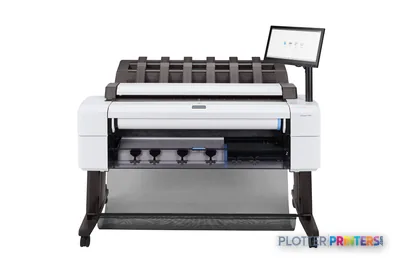 HP DesignJet T2600dr 36-in PostScript MFP — Plus Edition (Build Connected)3EK15D36"2400 dpiView details
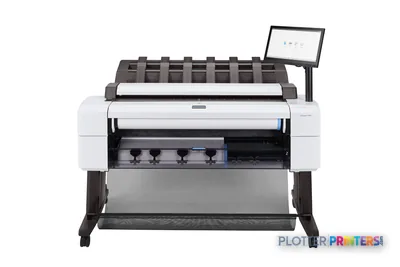 HP DesignJet T2600dr 36-in PostScript MFP — Plus Edition (Build Connected)3EK15P36"2400 dpiView details
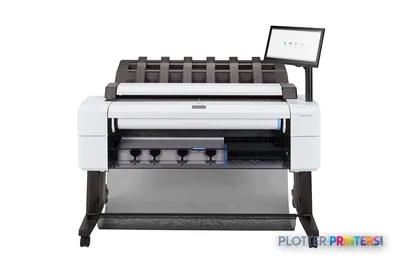 HP DesignJet T2600dr 36-in PostScript Multifunction Printer (Plus Edition)3EK15W36"2400 dpiView details
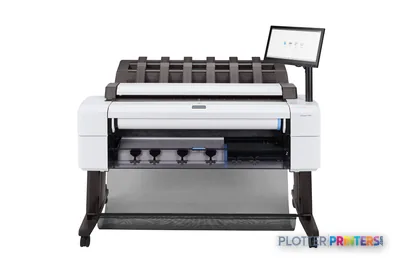 HP DesignJet T2600dr PS Managed MFP 36-in3EK15P#B192400 dpiView details
What actually decides it
Over five years, the spec delta you agonized over at purchase fades. What doesn’t fade: who supplies your ink, who fixes the machine, and who picks up the phone when it’s down and a bid is due.
That’s the honest calculus. A slightly-better-on-paper machine from a brand with thin local service will cost you more in downtime than it ever saved on the spec sheet. A slightly-lesser machine from a dealer who’s on-site the same day will quietly make you money.
So here’s our routing, and it’s real. We sell and service HP and Epson. If HP fits your workflow, the ranked picks below are current and the best-of list puts them in context — and a quote takes a few minutes. If your measured needs point to Canon — usually a specific graphics-class color case — then buy Canon, from a Canon dealer with the same service depth we’d give you. We won’t sell you a machine we don’t stock, and we won’t pretend the wrong tool is the right one.
Bottom line: pick the ecosystem you can live with for five years, not the spec you can win an argument with today.
Your questions, answered
SHT 08 · PLOTTERPRINTERS ANALYST DESKIs Canon or HP better for wide-format CAD plotting?
In the mainstream 36-inch CAD class, both brands print excellent linework on plain bond, and the raw spec gap is small. The tiebreaker is almost always ecosystem: consumable supply, driver and fleet tooling, and local service response. We grade both on the same nine dimensions — run your two candidates through the compare tool to see the verified specs side by side.
You sell HP but not Canon — can I trust your Canon coverage?
That’s the point. We measure Canon color from Canon’s official ICC profiles using the same lab process we use on HP, and we can’t earn a dime from any Canon machine. Measured data on hardware we don’t sell is about as unbiased as dealer content gets. When a Canon number beats HP, we publish it — it’s on the color hub next to HP’s.
Where is Canon genuinely stronger than HP?
Two places stand out. First, color heritage: Canon’s graphics-class machines have deep photo and fine-art roots, and their gradient smoothness competes hard for presentation boards and renderings. Second, documentation — Canon’s manuals and service literature are clear and thorough. On pure CAD linework, the two brands are close enough that support usually decides.
Where does HP have the advantage?
Line breadth in the MFP and entry-CAD classes, mature drivers and fleet-management tooling for job accounting and chargeback, and — practically — deep US dealer and parts coverage. That last one matters most when a printhead fails at deadline: whoever can be on-site today beats every spec on the sheet. A multi-machine department will feel HP’s software advantage more than a single-plotter studio.
ImagePROGRAF vs DesignJet — which for color and presentation work?
This is the one class where the brands genuinely diverge, so don’t assume. Canon’s photo heritage makes its graphics-class machines strong on gamut and gradients; HP is competitive but doesn’t automatically win. Pull both onto the color hub and read the measured gamut for your specific candidates before deciding. The color is the deliverable here — measure it, don’t guess.
If Canon is the right machine, will you still sell to me?
No — we don’t stock Canon and we don’t service it, so selling you one would be a disservice. If your measured needs point to Canon, we’ll tell you plainly and you should buy from a Canon dealer with real service depth. We’d rather route you correctly than sell you an HP that fits your workflow badly.
Does dye vs pigment ink matter in this comparison?
For AEC, yes. Pigment ink is the default: it’s water- and UV-resistant and archival, which matters for drawings that live outdoors or in files for years. Dye ink is more vivid and lower cost but fades faster. Both Canon and HP field pigment machines for technical and graphics work — check the specific machine’s ink type in the compare tool rather than assuming by brand.
How do I compare a specific Canon model against a specific HP model?
Use the compare tool. It puts any Canon machine next to any HP machine with verified datasheet specs and lab-measured gamut — the same instruments applied to both. Canon models live in our catalog as content pages reachable through that tool. For model-level color, the color hub carries both brands’ numbers. That’s where the real decision gets made, not on a marketing page.
What single factor should decide between the two brands?
The five-year ecosystem — supplies, service, and who answers the phone — beats any spec delta you can measure at purchase. A slightly-better machine with thin local support costs more in downtime than it ever saved. Pick the supply-and-service relationship you can live with for five years, then let the measured specs settle any remaining tie.
Do you service or supply consumables for Canon machines?
No. We’re an independent US dealer for HP DesignJet and Epson SureColor, based in Mooresville, North Carolina. We service what we sell. Canon coverage here is editorial only — we measure and report on those machines, but we don’t stock parts, ink or service for them. If you own or want a Canon, work with a Canon dealer for support.
The bottom line
SHT 09 · PLOTTERPRINTERS ANALYST DESK- Canon imagePROGRAF and HP DesignJet are both genuinely good — the real differences are emphasis, ecosystem and support, not one brand being better.
- We grade both brands on the same nine dimensions and the same lab-measured color, then sell only HP and Epson — which is exactly why our Canon data is worth reading.
- Canon's edges are color heritage in the graphics class and clear documentation; HP's are line breadth, mature fleet software and deep US service coverage.
- In the CAD classes the two brands are close enough that local support decides; the color/graphics class is where they genuinely diverge — read the measured gamut.
- Over five years, who supplies and services the machine matters more than any spec delta you argue about at purchase.
- If Canon is the right tool we'll say so and route you to a Canon dealer; if HP fits, the ranked grids and a quote are right here.
Cross-shopping the two lines?
We'll compare them with measured data — and tell you plainly if the right machine is one we don't sell.