
Home / Wide-Format Printers / HP PageWide XL
HP · Wide-Format Plotter
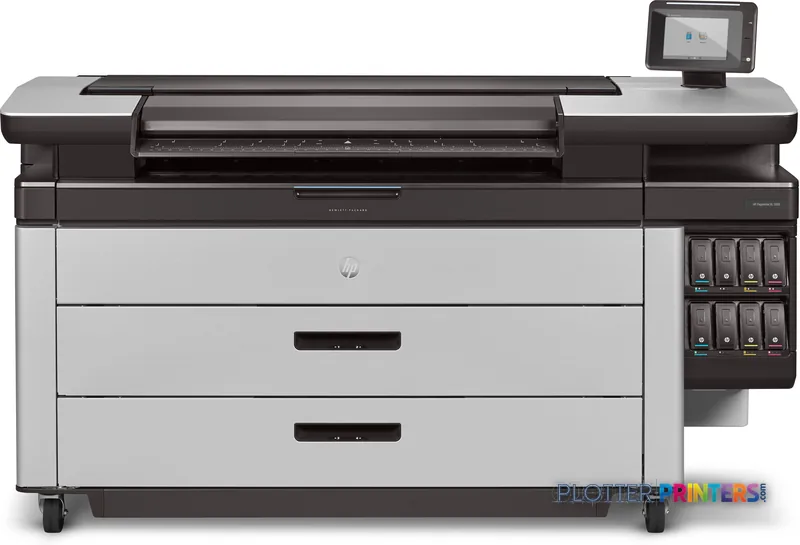
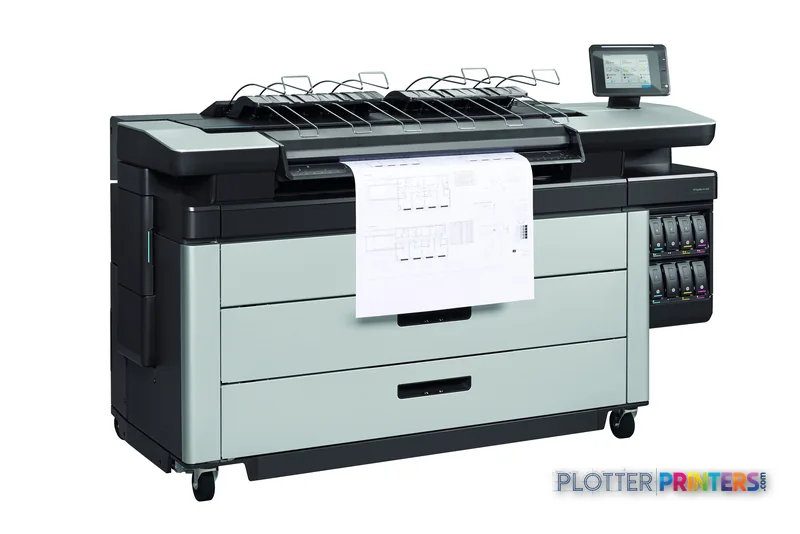
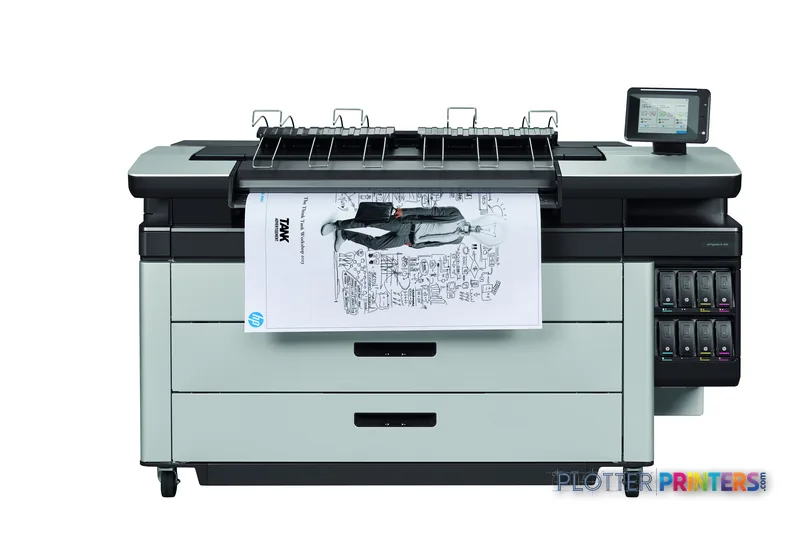
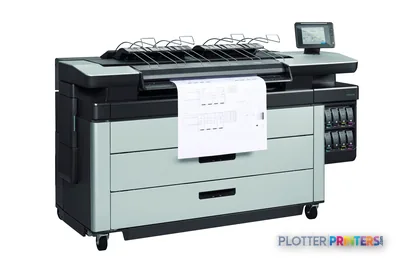
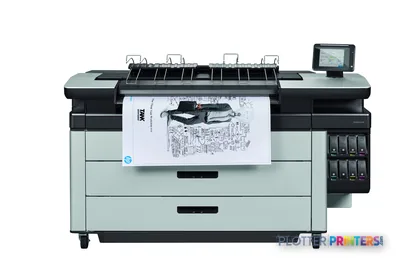
HP PageWide XL 5000
PageWide production printer
- ModelPageWide XL 5000
- Score66/100
Authorized HP dealerGenuine hardware & ink
Manufacturer warrantyExtension plans available
Free shippingContinental U.S.
Plotter specialistsAEC experts, not just sellers
Analyst take
- HP rates the PageWide XL 5000 at 300 A1 pages per hour in normal quality, making it relevant to recurring plan-set production.
- HP-GL/2 and PCL 3 support align it with established CAD-oriented print workflows.
- The 77 in. by 31 in. footprint and 914.9 lb weight require a planned print-room installation.
Not sure if the PageWide XL 5000 is right for you?
Compare key specs and an AI analyst read-out against similar models.
Overview
Built for the work
HP PageWide XL 5000, Inkjet, 1200 x 1200 DPI, HP-GL/2, PCL 3, Black, Cyan, Magenta, Yellow, 27.8 ft/min, 300 pph
- 2,019 ft²/hRated speed
- 8Ink channels
- 1,200 dpiMax resolution
Spec Analysis
overall
overall
Expert analysis
What you should know

Key takeaways
- HP rates the PageWide XL 5000 at 300 A1 pages per hour in normal quality, making it relevant to recurring plan-set production.
- HP-GL/2 and PCL 3 support align it with established CAD-oriented print workflows.
- The 77 in. by 31 in. footprint and 914.9 lb weight require a planned print-room installation.
- Optional folding, stacking, and scanning equipment matter when output must become usable field sets rather than loose sheets.
- A live test with line-heavy drawings, shaded plans, and difficult PDF files is more useful than relying on rated speed alone.
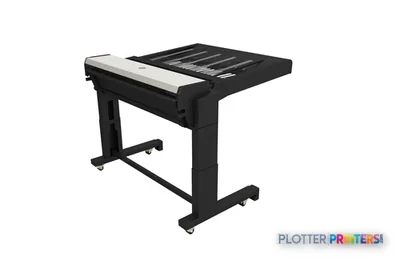
It is 4:45 p.m., the civil team has revised the utility sheets, and somebody needs a stack of readable color plans before the bid-room courier leaves. The HP PageWide XL 5000 is built for that kind of technical-document traffic: fast A1 output, color on ordinary technical media, and a footprint that belongs in a serious print room rather than beside the coffee machine.
HP rates it at 300 A1 pages per hour in normal quality, or 27.8 ft/min. That is meaningful when the queue contains plan revisions, coordination drawings, GIS maps, and marked-up construction sets—not when one presentation sheet needs fussy photo-grade color. Its HP-GL/2 and PCL 3 support also puts it in familiar territory for CAD-driven output. Bottom line: this is a production-minded AEC printer, not a decorative plotter with a hard hat nearby.
300 pphRated A1 speedNormal quality rating.
27.8 ft/minRated linear speedNormal quality rating.
1200 x 1200 DPIMaximum resolutionFor technical documents where line clarity matters.
77"FootprintMachine width; allow working room for loading and output.
Where it earns its floor space
The real fit is recurring technical output. Architects can use it for permit and issue sets. Engineering teams can move color-coded disciplines, utility plans, and coordination drawings without treating color as a special event. Contractors and construction managers can use it for current field sets, revisions, and marked-up sheets when the document cycle is measured in hours.
Its 8,192 MB of internal memory and 500 GB internal storage support a machine intended to receive work rather than merely wait for a single workstation. The USB Type-A connection is there, but a busy AEC operation should still test its actual submission path, driver behavior, file naming, and accounting workflow before signing off. A troublesome PDF at deadline has humbled better people than me.
For consumables, the specified supplies are HP 843C 400-ml Black PageWide XL Ink Cartridge, HP 843C 400-ml Cyan PageWide XL Ink Cartridge, HP 843C 400-ml Magenta PageWide XL Ink Cartridge, HP 843C 400-ml Yellow PageWide XL Ink Cartridge, and the HP 841 printhead. Bottom line: it makes sense when technical output is a shared operational service, not an occasional favor from the receptionist.
Media, finishing, and the part nobody should skip
The listed media types include bond, matte, postcard, and recycled paper. For AEC work, bond-paper performance is the practical question. Ask for your line-heavy CAD sheets, dense shaded plans, small annotation text, and a mixed batch of revision files. Resolution alone does not settle readability, processing delays, paper behavior, or the time an operator spends sorting output.
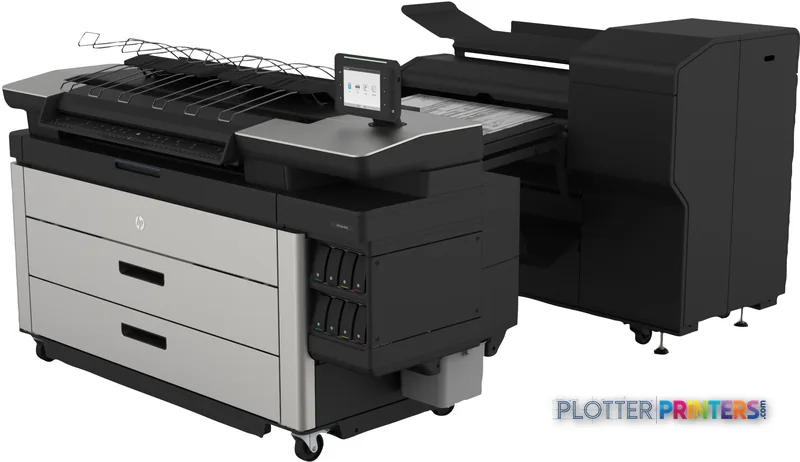
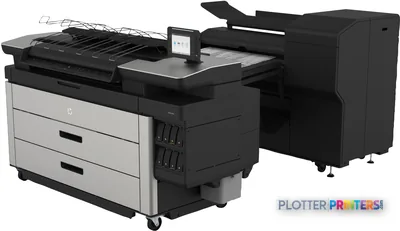
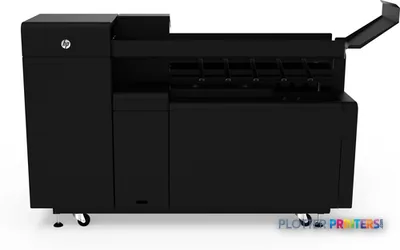
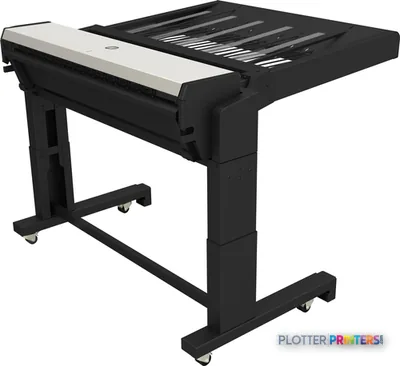
The machine can be paired with the HP F40, HP F60, or HP F70 catalog options, along with PageWide XL folders, a high-capacity stacker, and scanner accessories. Those are operational choices, not a substitute for mapping the handoff from printer to folded, distributed plan set.
The supplied catalog information does not establish a like-for-like PageWide XL printer step-up or step-down comparison. Treat the listed HP F40, HP F60, and HP F70 entries as workflow and finishing options, then confirm the exact configuration with the supplier. Bottom line: finishing is where a fast printer either saves the afternoon or creates a very efficient pile of paper.
Use the rated normal-quality speed as a planning reference for A1 output, then build in time for file processing, media changes, pickup, and folding.
One set: – · Weekly plotting time: –
Computed from the manufacturer's rated 2,019 ft²/h. Real-world mixed sets run slower — treat this as a best case for comparing machines, not a promise.
Where it is not the right tool
This is not automatically the answer for a small office that prints a few plans each week, lacks a dedicated output area, or mainly needs photographic presentation boards. At 77 in. wide, 31 in. deep, 51 in. high, and 914.9 lbs, it needs deliberate placement. Its typical power consumption is listed at 460 W, with an 800 W power supply figure; facilities and IT should confirm the installation requirements for the intended site.
It also should not be chosen on a rated-page-per-hour figure alone. Run an acceptance test with your own HP-GL/2 files, PCL 3 workflow, color overlays, and worst-behaved PDFs. If presentation-image detail is the leading requirement, compare output samples against a Canon GP-300 36-in or review a side-by-side comparison with the Canon iPF760 36-in. Bottom line: buy it for sustained technical-document work, not for a spec-sheet race or a once-a-month color board.
Continue the evaluation
The read
The HP PageWide XL 5000 fits AEC departments that need frequent, shared, color-capable technical output and have the space, staffing, and finishing plan to support it. HP’s 300 A1-pages-per-hour normal-quality rating is worth attention, but the buying decision should rest on a live test of your files, your paper, and your 4:45 p.m. workflow. Bottom line: if plan production is a daily operation, this machine deserves a serious trial; if it is occasional, its footprint and process discipline may be more machine than the office needs.
Where it sits in the field: see the head-to-head against the HP F40 or the full class leaderboard.
Spec analysis
How the specs grade
Overall performance
within PageWide production printers
70% spec coverage
- This printer
Verified specifications
The specs that decide it
| Print technology | Inkjet |
|---|---|
| Maximum resolution | 1200 x 1200 DPI |
| Number of print cartridges | 8 |
| Page description languages | PostScript®manufacturer-verified |
| Internal memory | 8192 MB |
| Maximum print size | A1 (594 x 841 mm) |
| Power consumption | 460 W |
manufacturer-verified = checked against the manufacturer’s official datasheet, not aggregator data. Everything else is standards-body / catalog data we consider reliable.
Specifications
Full technical detail
Print technologyInkjet
Max resolution1200 x 1200 DPI
ConnectivityUSB
Use caseGIS / Mapping
Printing
| Colour | Yes |
|---|---|
| Print technology | Inkjet |
| Printing colours | Black, Cyan, Magenta, Yellow |
| Maximum resolution | 1200 x 1200 DPI |
| Number of print cartridges | 8 |
| Page description languages | HP-GL/2, PCL 3 |
| Print speed (normal quality) | 27.8 ft/min |
| Print speed (normal quality, A1) | 300 pph |
Performance
| Storage media | HDD |
|---|---|
| Product colour | Black, White |
| Internal memory | 8192 MB |
| Internal storage capacity | 500 GB |
Paper handling
| Maximum print size | A1 (594 x 841 mm) |
|---|---|
| Paper tray media types | Bond paper, Matte paper, Postcard, Recycled paper |
Ports & interfaces
| USB port | Yes |
|---|---|
| USB connector | USB Type-A |
| USB 2.0 ports quantity | 1 |
Weight & dimensions
| Depth | 800 mm |
|---|---|
| Width | 1960 mm |
| Height | 1303 mm |
| Weight | 415 kg |
Power
| Power supply | 800 W |
|---|---|
| Power consumption (typical) | 460 W |
Operational conditions
| Operating temperature (T-T) | 5 – 40 °C |
|---|---|
| Operating relative humidity (H-H) | 20 – 80% |
Packaging data
| Package depth | 1068 mm |
|---|---|
| Package width | 2180 mm |
| Package height | 1764 mm |
| Package weight | 521 kg |
Everything that fits the HP PageWide XL 5000
The full supplies hub lists every cartridge, printhead, roll and accessory verified against the manufacturer's own documentation for this machine.
7 ink cartridges · 1 printhead · 4 paper & media items · 3 accessories
HP PageWide XL 5000 ink and paper →Supplies
Compatible ink, printheads & media
Genuine consumables that fit the HP PageWide XL 5000 — only the cartridges, printheads and media compatible with this model.
Ink Cartridges 7
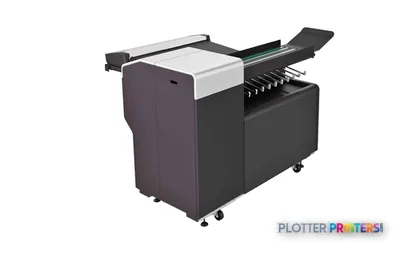 HP PageWide XL Folder with Tab Applicator
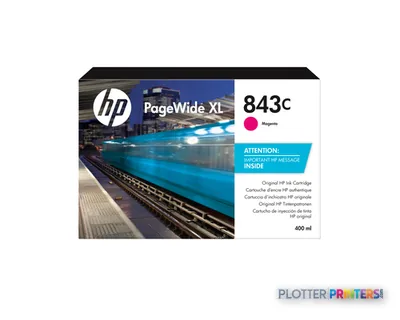 HP 843C 400-ml Magenta PageWide XL Ink Cartridge
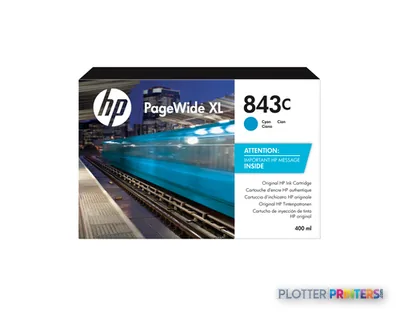 HP 843C 400-ml Cyan PageWide XL Ink Cartridge
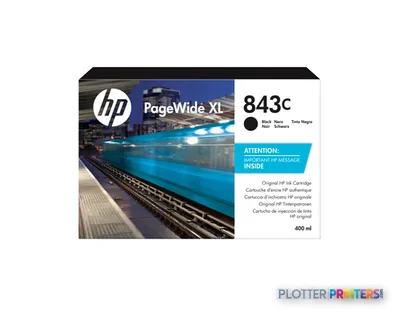 HP 843C 400-ml Black PageWide XL Ink Cartridge
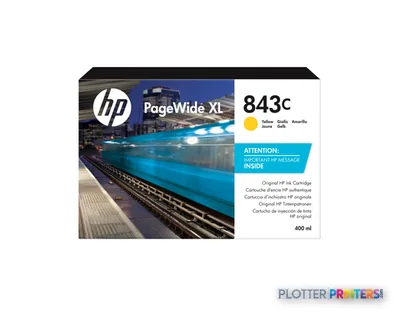 HP 843C 400-ml Yellow PageWide XL Ink Cartridge
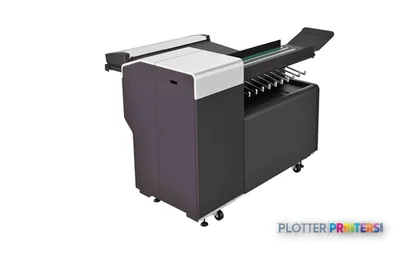 HP PageWide XL Folder with Scandinavian Tab Applicator
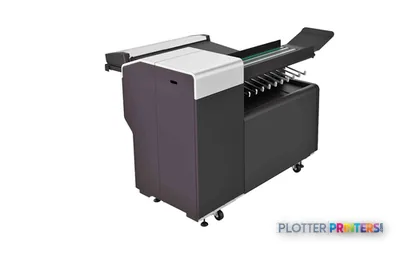 HP F60 Folder with Tab Applicator
Printheads 1
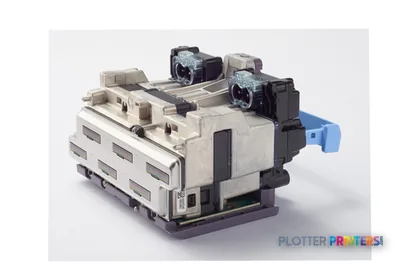
Paper & Media 4
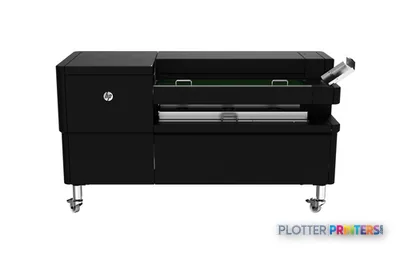
Questions
Straight answers
What AEC work is the HP PageWide XL 5000 suited to?
It is suited to frequent technical-document output such as permit sets, issue sets, coordination drawings, GIS maps, field revisions, and color-coded plans. Its rated normal-quality A1 speed is 300 pph.
Does it support CAD-oriented print languages?
Yes. The listed page-description languages are HP-GL/2 and PCL 3. Confirm the driver and submission workflow with your own applications and files during evaluation.
What is the largest listed print size?
The supplied specification lists A1, 23 in. x 33 in. (594 x 841 mm), as the maximum print size.
What supplies does this printer use?
The listed inks are the HP 843C 400-ml Black, Cyan, Magenta, and Yellow PageWide XL Ink Cartridges. The listed printhead is the HP 841.
Can it be configured for folded plan sets?
Listed options include the HP F40, HP F60, and HP F70, plus PageWide XL folder, stacker, and scanner accessories. Confirm the exact finishing configuration and workflow before purchase.
What should a buyer test before committing?
Test your own line-heavy CAD sheets, small annotations, color overlays, shaded drawings, and difficult PDF files. Also test loading, output handling, folding, and the actual operator steps needed to produce a finished set.
Ready to put the HP PageWide XL 5000 to work?
Configuration, media and a quote tailored to your workflow — from AEC plotter specialists.