
Home / Wide-Format Printers / Epson SureColor
Epson · Wide-Format Plotter
Epson C11CF40201
wide-format printer
- ModelC11CF40201
Authorized Epson dealerGenuine hardware & ink
Manufacturer warrantyExtension plans available
Free shippingContinental U.S.
Plotter specialistsAEC experts, not just sellers
Analyst take
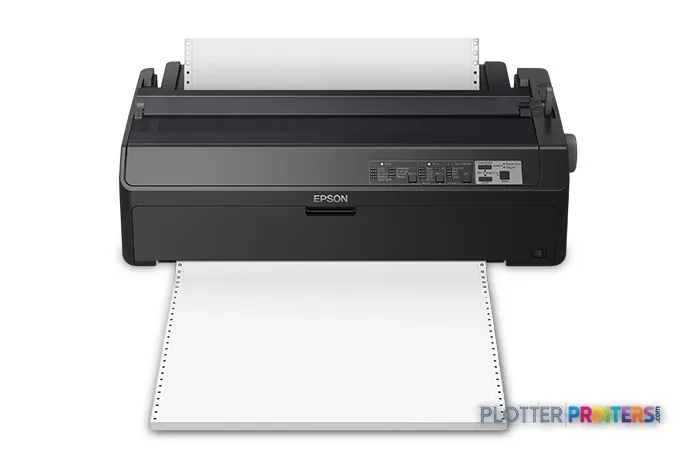
- This is a 24-pin impact dot-matrix printer for forms and narrow-form text — not a plan-set plotter.
- Max print length is 22 in (558.8 mm), 136-column class; it cannot produce full-size D/E drawings.
- Best for multi-part forms, delivery tickets, continuous logs and labels in a GC yard or back office.
Not sure if the C11CF40201 is right for you?
Compare key specs and an AI analyst read-out against similar models.
Overview
A 24-Pin Impact Printer for Forms, Not Plan Sets
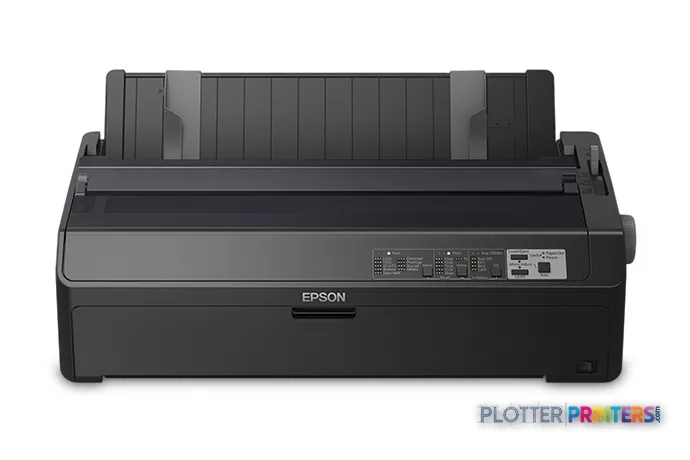
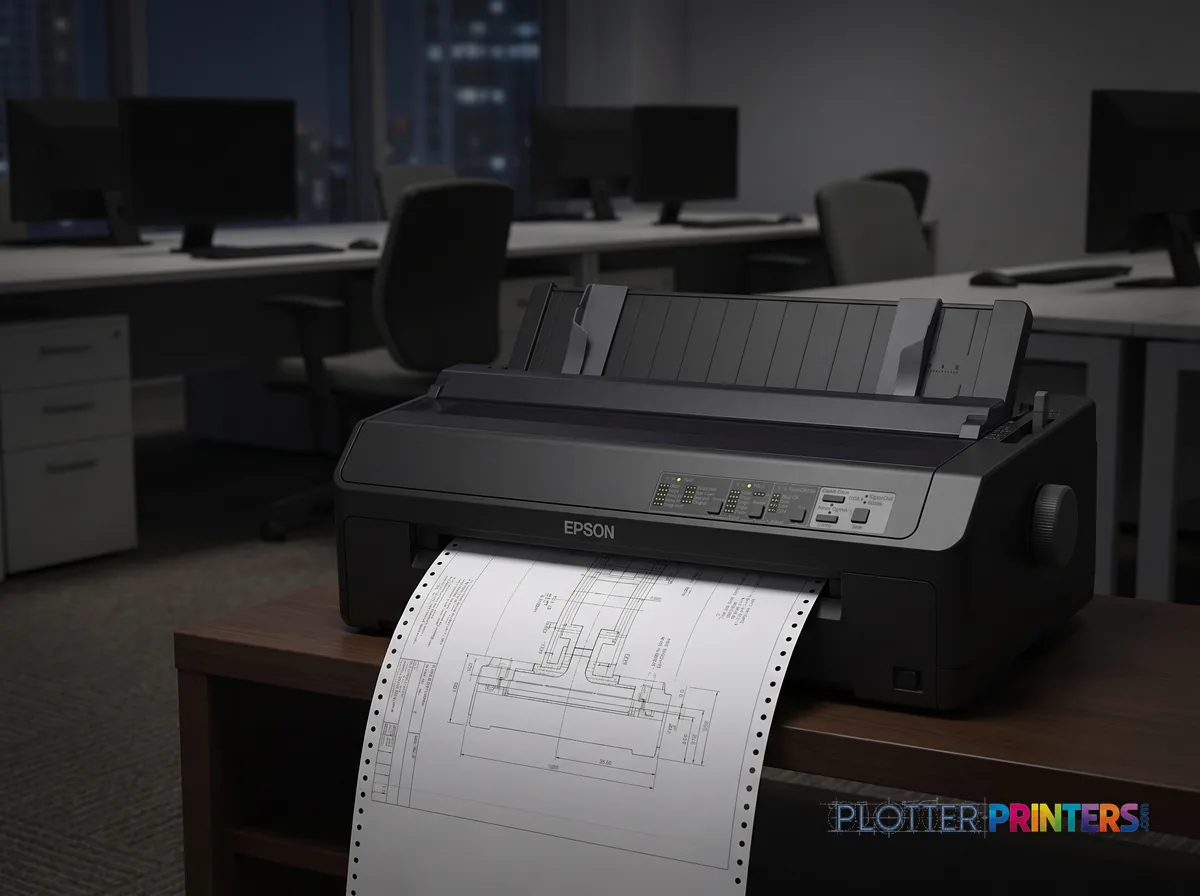
Let’s clear something up before anyone signs a PO. Despite the way this SKU sometimes gets listed, the Epson C11CF40201 is a 24-pin dot matrix impact printer — not a wide-format plotter. It weighs 20.7 lbs, sits about 24.1 inches wide, and speaks Epson ESC/P2 and PPDS. That’s the profile of a workhorse for multipart forms, not D-size drawings.
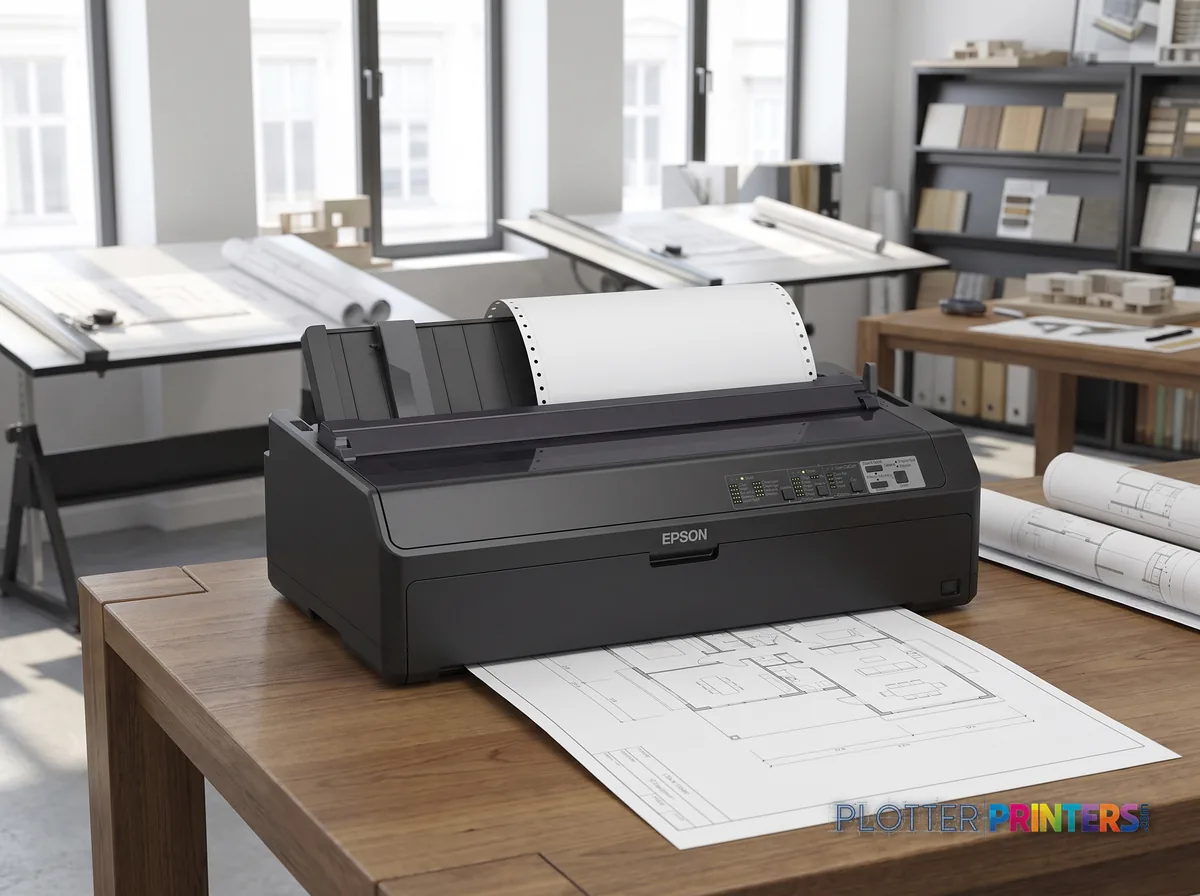
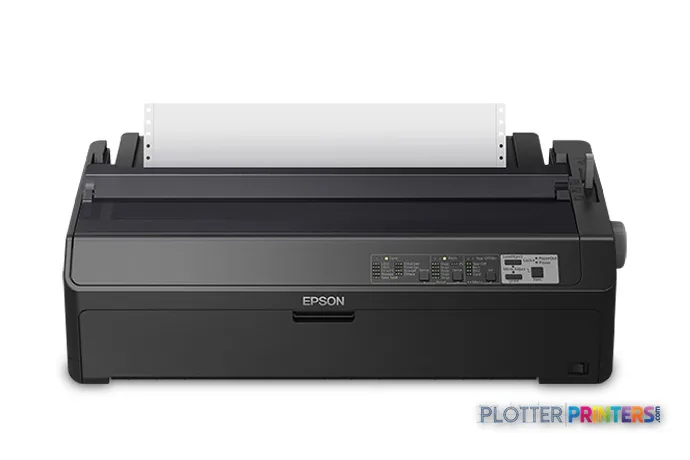
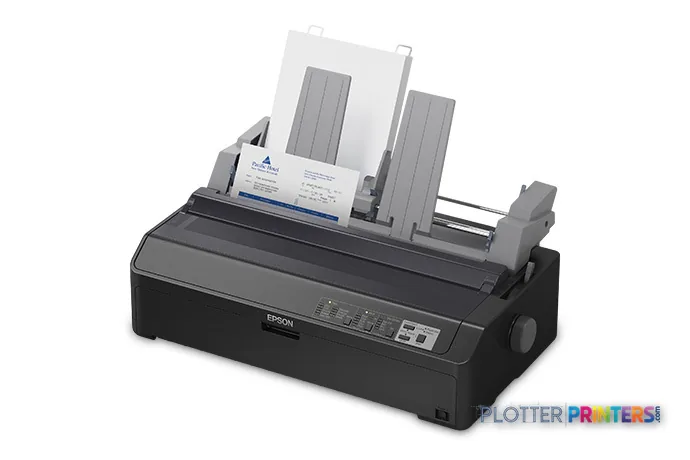
So who’s standing at the output tray? Not the architect chasing a 4:45 permit set. This is the machine in the back office that hammers out carbon-copy delivery tickets, purchase orders, packing slips and labels — the paperwork that keeps a construction office legally covered. Impact printing exists for one reason drawings don’t need: pressure through multipart carbonless forms. It handles envelopes, labels and continuous roll media, runs on 100–240V, and carries ENERGY STAR. It uses the Epson S015335 ribbon.
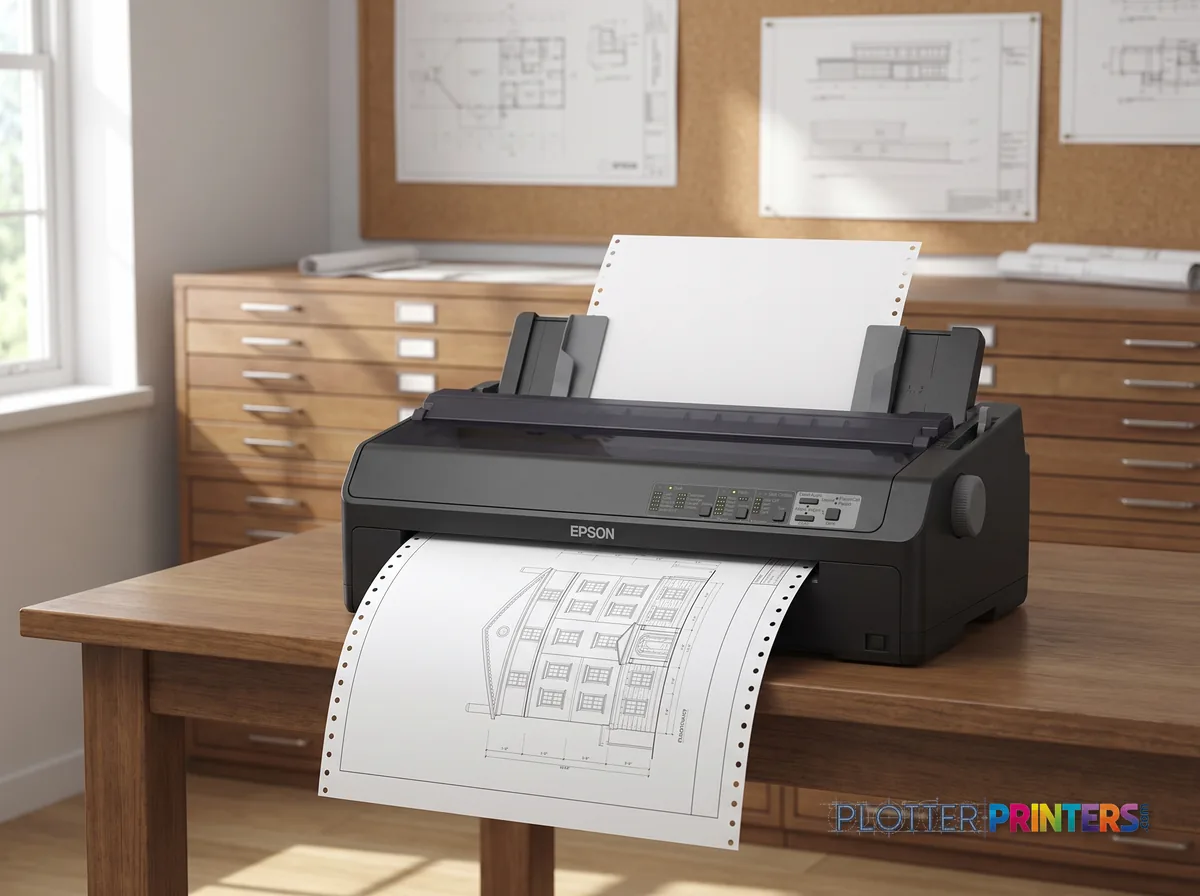
Where it’s the wrong tool: any actual plan production. It can’t image a bid set, a redline, or a GIS map. If you need wide-format output, you’re shopping a different category entirely — an inkjet or LED plotter, none of which sit in this product’s family.
At a glance
- Print technology
- 24-pin impact (dot matrix)
- Page description
- Epson ESC/P2, PPDS
- Media types
- Envelopes, labels, continuous roll
- Dimensions (W×D×H)
- 24.1 × 12.6 × 6.9 in
- Weight
- 20.7 lbs
- Power
- 100–240V, 50–60 Hz; 52W typical, 12W standby
- Noise (printing)
- 55 dB
- Ribbon
- Epson S015335
Ideal for: back-office multipart forms, delivery tickets, POs, packing slips and labels in a construction or supply office. Not the tool for: any wide-format work — bid sets, permit sets, redlines, as-builts, presentation boards or GIS maps.
Expert analysis
What you should know
Key takeaways
- This is a 24-pin impact dot-matrix printer for forms and narrow-form text — not a plan-set plotter.
- Max print length is 22 in (558.8 mm), 136-column class; it cannot produce full-size D/E drawings.
- Best for multi-part forms, delivery tickets, continuous logs and labels in a GC yard or back office.
- Scores 18/100 for field office and 5/100 for as-builts — both gated out by drawing size.
- Ribbon-based consumables mean low per-page text cost; Epson rates ribbon life ~8 million characters.
- Networkable via 100Base-TX and USB 2.0; no scanner, no roll switching, no plan collation.
Picture the moment a permit set has to go out the door: a stack of drawings, a title block that has to line up, and a runner waiting by the door. Now picture the printer that produces the multi-part delivery ticket, the pick list, or the continuous-form field log that rides along with that set. That second job is not a plotter’s job — and this Epson is not, despite the catalog label, a plotter. The Epson C11CF40201 (MPN C11CF40201) is a 24-pin impact dot-matrix printer. It puts ink on paper by striking a ribbon with wire pins, the same durable, no-nonsense technology that has quietly kept invoicing, logistics, and multi-part-form workflows running for decades.
It is important to be clear about that from the first paragraph, because this machine appears in a wide-format context where architects and engineers expect roll-fed D- and E-size drawings. It does not do that. Its maximum print length is 22 in (558.8 mm) and it handles a paper width in the 136-column class — narrow-form technical and office printing, not sheet plotting. If you came here looking to plot Arch D bid sets, this is the wrong tool, and our own scoring reflects it.
Who this is actually for
Our spec-derived use-case engine scores this machine at 18/100 for a field office and 5/100 for as-builts and archives, and in both cases the hard gate it fails is drawing size. Translated into plain workflow terms: it cannot produce full-size plan sheets, and it has no integrated scanner, so it plays no part in the redline-and-return loop that as-built work depends on. Those low numbers are not a knock on the machine’s quality — they are simply telling you it was scored against jobs it was never built to do.
Where it earns its keep is the paperwork that surrounds a project rather than the drawings themselves. Think multi-part delivery tickets and bills of lading at a contractor’s yard, continuous-form daily logs, label base sheets, envelopes, card stock, and the carbonless multi-part forms that impact printing produces in a single pass because the pins physically transfer through the layers. A survey crew’s field paperwork, a GC’s back-office forms room, or a facilities desk still running legacy accounting software are the realistic homes for this printer. It is a supporting player in an AEC operation, not a production-drawing device.
What the verified data says
The dossier here is unusually well-sourced — 38 of 49 facts are manufacturer-cited, with seven values where the Epson datasheet corrected the aggregated feed. Epson quotes draft throughput at 550 cps and a separate rated figure of 121 cps for higher-quality output, with the 136-column carriage width defining the media it accepts. As always with rated speeds, character-per-second figures describe the print engine in motion, not a job’s real turnaround once form feeds, tear-off, and operator handling are counted. The print head is a 24-pin design, which is the configuration that gives dot-matrix its more legible, letter-quality-capable text versus older 9-pin units.
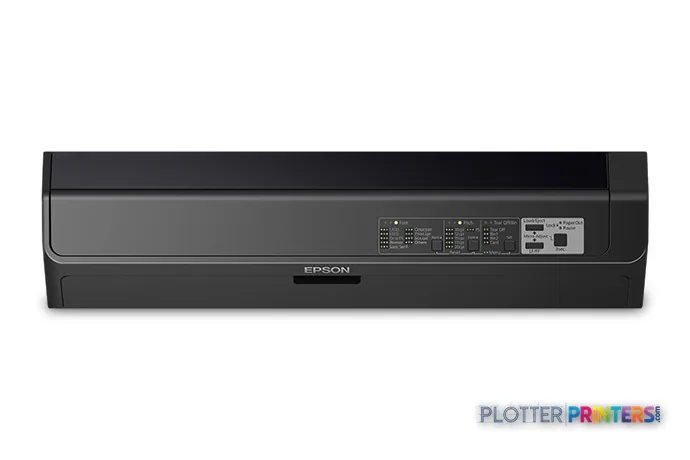
Connectivity is modest but genuinely networkable: 100Base-TX wired LAN plus USB 2.0, driven from a physical panel of six switches and ten LEDs. It speaks Epson ESC/P2 and PPDS page languages. Buffer memory is 128 KB (a manufacturer correction to the feed). The datasheet also corrected the physical envelope, which matters if you’re placing it: roughly 24.1 in (612 mm) wide, 12.6 in (320 mm) deep, and just 6.9 in (176.5 mm) tall, at 20.7 lb (9.4 kg). Driver support is listed for Windows 10, 7, 8, Vista and XP, with legacy bundled drivers going back to Windows 95/98/NT — a useful signal that this platform is meant to keep old form-printing hosts alive.
Ink, media and running-cost character
The consumable is an Epson genuine fabric ribbon, not an ink cartridge or toner, and that shapes the economics in a specific way. Epson rates ribbon life at approximately 8 million characters and print-head durability at 400 million strokes per wire — figures that point to very low cost per page for text and form work, which is exactly why impact printers survive in high-volume forms environments. We won’t put a dollar figure on cost-per-page because the dossier doesn’t carry verified yields against pricing, but qualitatively, ribbon-based text printing is among the cheapest per-character output you can run.
Media handling is where the machine is both flexible and limited. Epson lists cut single sheets, multi-part cut sheets, continuous paper (single and multi-part), No. 6 and No. 10 envelopes, label base sheets, card, and roll paper — the multi-part and continuous-form support being the whole point. Media thickness tops out around 0.009 in (0.22 mm) for the thickest paths. But it is all narrow-form, and there is no automatic roll switching or plan-set collation here, so it should be judged strictly against the forms workflow you have in mind.
How it compares
If your requirement is narrow-form or fewer-part work, the cheaper sibling deserves a look this SKU makes more sense where you need the wider carriage or the heavier media path. The cohort also lists cross-vendor machines that solve entirely different problems: the HP LaserJet 2430dtn is a discontinued monochrome office laser — better for clean single-part letter/legal documents but incapable of multi-part impact forms — while the HP DesignJet T1100 MFP (a 44-in device) and the DesignJet H45100/H45500 EU units are true wide-format plotters. If your actual need is D/E-size drawings or a scan-copy-plot station, those DesignJets are the category to shop, not this printer. They appear here as neighbors in a scoring graph, not as substitutes.
Variants, lifecycle and procurement
This model is sold in this width only, so there is no width-selection decision to make; the C11CF40202 is listed as an edition variant worth confirming with your reseller if regional bundling matters. The machine is on market with a rated service life of 25,000 power-on hours at 25% duty, and Epson’s impact line has a long track record of consumable availability — ribbons for current LQ-class printers are widely stocked, which reduces the supply risk that often kills off older platforms. It carries ENERGY STAR and draws roughly 52 W typical, 12 W standby, and under 1 W in sleep, with a 55 dB printing sound level — audible enough that a shared back office, not a quiet design studio, is the right room for it.
What we could not verify
There is no monthly duty-cycle recommendation in our data beyond the 25,000-hour service figure, and no independent lab reviews are on file, so real-world throughput on your specific forms should be confirmed. We also don’t have verified ribbon pricing or yield-per-dollar, so treat the running-cost commentary as directional. Finally, confirm current Windows 11 driver availability with Epson directly if your form-host machines have been updated — the listed driver support tops out at Windows 10.
Verified specifications
The specs that decide it
| Print technology | Impact dot matrixmanufacturer-verified |
|---|---|
| Print head | 24 pinsmanufacturer-verified |
| Max print length | 22 in (558.8 mm)manufacturer-verified |
| Rated speed (draft / quality) | 550 cps / 121 cpsmanufacturer-verified |
| Ink platform | Epson genuine ribbonsmanufacturer-verified |
| Ribbon life | Approx. 8 million charactersmanufacturer-verified |
| Connectivity | 100Base-TX wired LAN + USB 2.0manufacturer-verified |
| Buffer size | 128KB |
| Dimensions (W x D x H) | 24.1 in x 12.6 in x 6.9 in (612 x 320 x 176.5 mm) |
| Weight | 20.7 lb (9.4 kg) |
manufacturer-verified = checked against the manufacturer’s official datasheet, not aggregator data. Everything else is standards-body / catalog data we consider reliable.
Specifications
Full technical detail
Printing
| Print head | 24-pin |
|---|---|
| Page description languages | Epson ESC/P2, PPDS |
Performance
| Buffer size | 128 KB |
|---|---|
| Sound pressure level (printing) | 55 dB |
Paper handling
| Paper tray media types | Envelopes, Labels, Roll |
|---|
Weight & dimensions
| Depth | 12.6" (320 mm) |
|---|---|
| Width | 24.1" (612.1 mm) |
| Height | 6.9" (175.3 mm) |
| Weight | 20.7 lbs (9.39 kg) |
Power
| AC input voltage | 100 – 240 V |
|---|---|
| AC input frequency | 50 – 60 Hz |
| Power consumption (standby) | 12 W |
| Power consumption (typical) | 52 W |
Other features
| Safety | Safety Standards: UL62368-1, CAN/CSA C22.2 No.60950-1, IEC/EN62368-1, EMI: FCC part15 subpart B class A, ICES-003 Class A, CE Markings: EN62368-1, EN55032 class A, EN61000-3-2, EN61000-3-3, E55024 |
|---|---|
| Optional connectivity | Ethernet |
Packaging data
| Bundled software | Drivers Windows 95, 98, 2000, Me, XP and NT 4.0 |
|---|
Sustainability
| Sustainability certificates | ENERGY STAR |
|---|
System requirements
| Windows operating systems supported | Windows 10, Windows 7, Windows 8, Windows Vista, Windows XP |
|---|
Supplies
Compatible ink, printheads & media
Genuine consumables that fit the Epson C11CF40201 24-Pin Impact Printer — only the cartridges, printheads and media compatible with this model.
Ink Cartridges 1
Accessories 7
 Epson SIDM Paper Roll Holder for LX-300+II/1170II, FX-890/A, FX-2190, LQ-690/300+II series
 Epson SIDM Push/pull tractor unit for FX-2190, LQ-2090
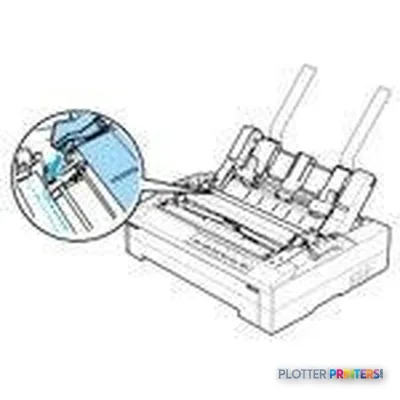 Epson SIDM Single Sheet Feeder 50 sheets for LQ-2090, LX-1170II, FX-1180/2190
 Epson SIDM Single Sheet Feeder 150 sheets for FX-2190, LQ-1170/2090
 Epson SIDM Type B EpsonNet 10/100 Base Tx Internal Print Server 5
 Epson SIDM Serial I/F board, no buffer type-B plug-in card RS232D/20mA
 Epson Wide Pull Tractor Unit FX-2190II/LQ-2090II
Questions
Straight answers
Can this print architectural or engineering drawings?
No. This is a 24-pin impact printer, not a plotter. It has no wide-format carriage and cannot image D-size or larger drawings. For plan production you need a wide-format inkjet or LED system, which is a different product category.
Why would an AEC office buy an impact printer at all?
For the paperwork that surrounds a project rather than the drawings themselves. Impact printing puts real pressure on the page, so it’s still the practical choice for multipart carbonless forms — delivery tickets, POs, packing slips — where a copy has to press through to a second and third sheet.
What ribbon does it use?
The Epson S015335 ribbon. Because it’s impact, you’re buying ribbons rather than ink cartridges or toner — a low per-page consumable for text-heavy forms work.
What operating systems does it support?
The listed Windows support runs from Windows XP and Vista through Windows 7, 8 and 10. Note the bundled drivers reference much older releases, so IT should confirm a current driver before deployment.
Is networking included?
Ethernet is available as optional connectivity rather than standard. If you plan to share this on a print-room network, budget for that option and confirm availability with your dealer.
How loud is it, and does that matter in an office?
It’s rated at 55 dB while printing. Impact printers are inherently noisier than inkjet or laser because the pins physically strike the ribbon. In a quiet open office that’s noticeable; in a back room running forms, it’s a non-issue.
Ready to put the Epson C11CF40201 to work?
Configuration, media and a quote tailored to your workflow — from AEC plotter specialists.